
Aristobulus
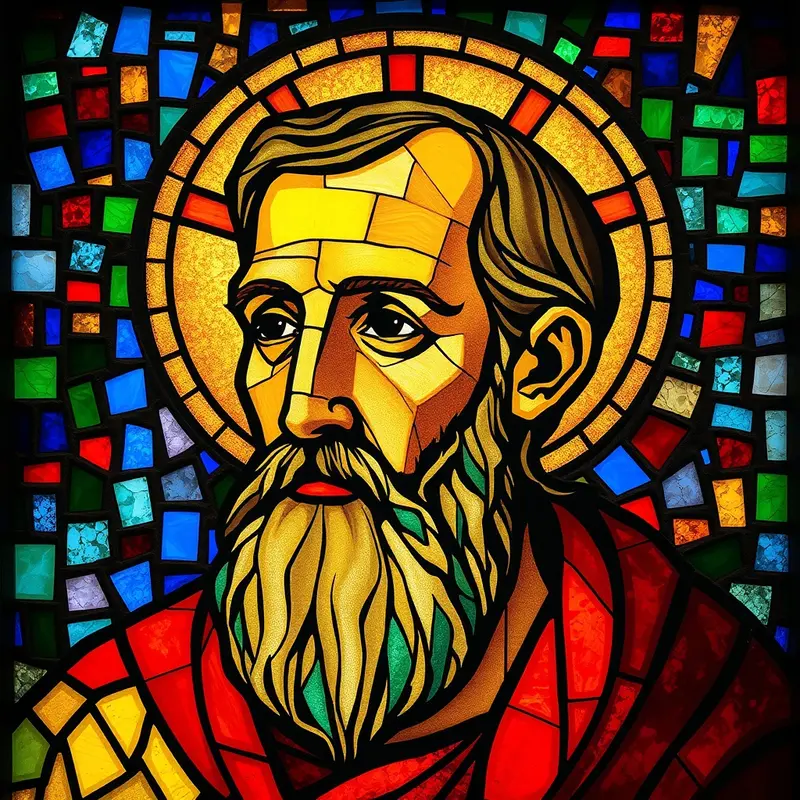
Paul sends greetings to those who belong to the household of Aristobulus, suggesting that Aristobulus was a prominent believer in Rome.
Biography
Aristobulus is mentioned only obliquely in the New Testament, appearing in Romans 16:10 when Paul sends greetings to "those who belong to the household of Aristobulus." The phrasing is notably indirect: Paul greets members of the household rather than Aristobulus himself, suggesting the man may have been deceased, absent, or a non-believer while members of his extended household, perhaps slaves and freedmen, had come to faith in Christ. Some scholars identify this Aristobulus with a grandson of Herod the Great by the same name who lived in Rome and had connections to the imperial court, which would lend the greeting social and historical specificity. However, this identification remains speculative and the biblical text provides no further detail.
Significance
The brief reference to Aristobulus's household in Romans 16:10 offers a glimpse into how the early Christian movement penetrated social networks across all strata of Roman society, including households connected to political elites. The fact that faith spread even among those attached to Herodian circles, the very dynasty responsible for John the Baptist's beheading and complicit in Christ's trial, illustrates the transformative reach of the gospel. Theologically, this passage underscores Paul's vision of a community where social boundaries are transcended by shared faith in Christ (Galatians 3:28), and where God's redemptive work takes root in unexpected places and households.
Verse Appearances (1)
Romans
References
- Orr, J. (ed.) (1915) The International Standard Bible Encyclopedia. Chicago: Howard-Severance Company. [Public Domain]
- Tyndale House, Cambridge (n.d.) Translators Individualised Proper Names with all References (TIPNR). STEPBible. Available at: https://www.stepbible.org. [CC BY 4.0]
- Church of England (1769) The Holy Bible, Authorized (King James) Version. [Public Domain]