
Balaam
Balaam was a pagan prophet hired by Balak to curse Israel, but he blessed them instead.
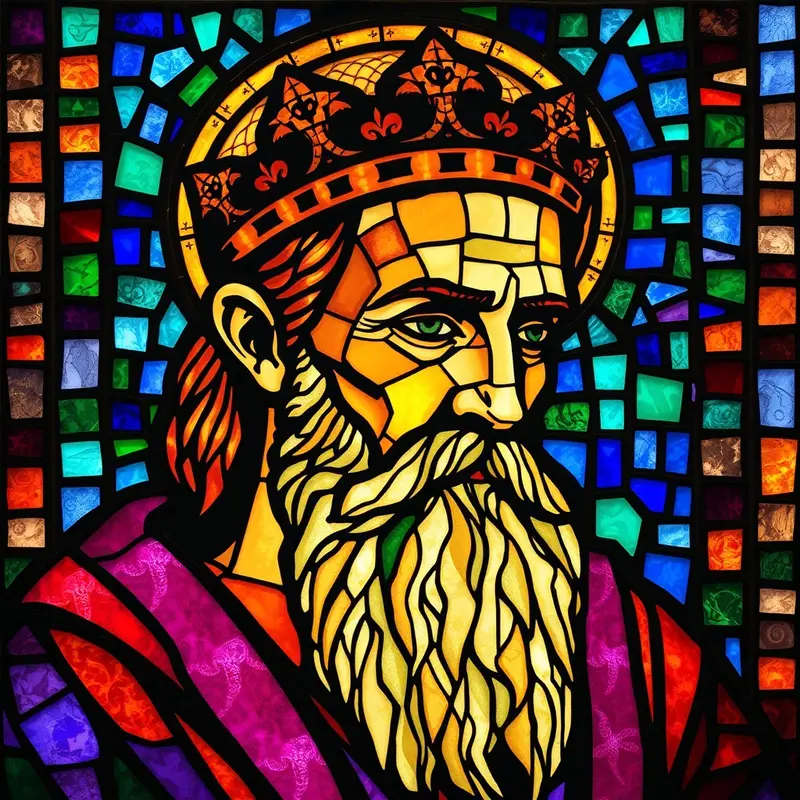
Biography
Balaam son of Beor was a non-Israelite diviner of considerable renown, dwelling near the Euphrates at Pethor (Numbers 22:5). When Balak, king of Moab, grew alarmed at Israel's advance through Transjordan, he dispatched messengers with divination fees to hire Balaam to curse the people. God warned Balaam not to go, then permitted it under strict conditions. Traveling on his donkey, Balaam was twice blocked by the Angel of the LORD, whom only his donkey could see; the animal spoke miraculously to rebuke him (Numbers 22:28). Standing at overlook points above the Israelite camp, Balaam delivered four oracles, each a blessing rather than a curse, including the famous messianic prophecy of a star rising from Jacob (Numbers 24:17). He was later slain in battle against Midian (Numbers 31:8).
Significance
Balaam's story demonstrates the absolute sovereignty of God over those who oppose His purposes. Despite being employed to undermine Israel, Balaam could only speak what God put in his mouth, illustrating that no human or supernatural agency can thwart divine covenant blessings (Numbers 23:20). His star prophecy in Numbers 24:17 became a foundational messianic text pointing toward David and ultimately to Christ. Yet the New Testament remembers Balaam as a cautionary figure, Jude 11, 2 Peter 2:15, and Revelation 2:14 warn against following 'the way of Balaam,' linking him to counsel that led Israel into sexual immorality and idolatry at Peor. His legacy is thus profoundly dual: a vessel for divine truth who nonetheless pursued corrupt gain.
Verse Appearances (16)
Deuteronomy
Nehemiah
Micah
2 Peter
Jude
Revelation
References
- Orr, J. (ed.) (1915) The International Standard Bible Encyclopedia. Chicago: Howard-Severance Company. [Public Domain]
- Tyndale House, Cambridge (n.d.) Translators Individualised Proper Names with all References (TIPNR). STEPBible. Available at: https://www.stepbible.org. [CC BY 4.0]
- Church of England (1769) The Holy Bible, Authorized (King James) Version. [Public Domain]