
Darius
Darius, king of Persia, issued a decree allowing the rebuilding of the Temple in Jerusalem. (Ezr.4.5; Hag.1.1,15; 2.10; Zec.1.1,7; 7.1; Ezr.4.24; 5.5,6,7; 6.1,12,13,14,15)
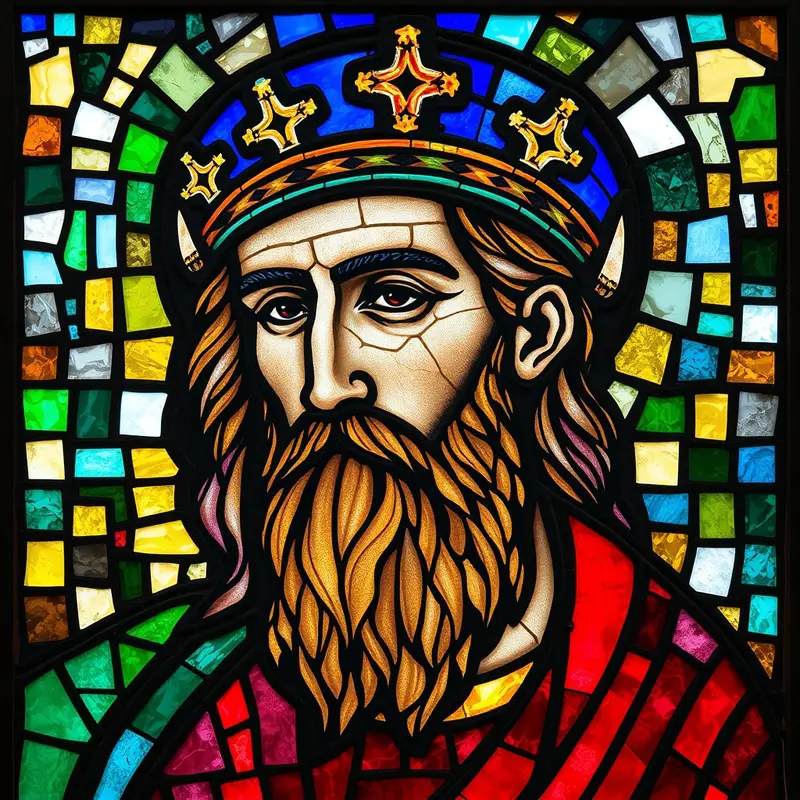
Biography
Darius I of Persia (reigned 522-486 BC), also known as Darius the Great, plays a significant role in the biblical accounts of the Temple's reconstruction. When the rebuilding project stalled due to opposition from adversaries who wrote letters of complaint to the Persian court (Ezra 4:5, 24), it was Darius who, upon finding the original decree of Cyrus in the royal archives at Ecbatana, reaffirmed and expanded the edict to allow the Temple's completion (Ezra 6:1-12). The prophets Haggai and Zechariah both dated their ministries to the second year of Darius (Haggai 1:1; Zechariah 1:1), making his reign the backdrop for two crucial prophetic books. The Temple was completed in the sixth year of his reign (Ezra 6:15).
Significance
Darius I holds a pivotal place in redemptive history as the Persian king whose royal authority, and whose archival diligence, secured the completion of the Second Temple. The rebuilt Temple was not merely a physical structure but the renewed center of Israel's covenant worship and the place where God's glory could dwell among his people once again. Haggai and Zechariah's prophetic ministries during his reign injected eschatological vision into the restoration project, pointing beyond the Second Temple to a greater glory to come (Haggai 2:9). Darius thus stands as an instrument of divine providence, illustrating that God employs the bureaucratic machinery of world empires to fulfill his promises to his covenant people.
Verse Appearances (16)
References
- Orr, J. (ed.) (1915) The International Standard Bible Encyclopedia. Chicago: Howard-Severance Company. [Public Domain]
- Tyndale House, Cambridge (n.d.) Translators Individualised Proper Names with all References (TIPNR). STEPBible. Available at: https://www.stepbible.org. [CC BY 4.0]
- Wikidata contributors (n.d.) Wikidata. Available at: https://www.wikidata.org. [CC0]
- Church of England (1769) The Holy Bible, Authorized (King James) Version. [Public Domain]