
Elisha
Elisha was a prophet who performed many miracles and served as a spiritual leader in Israel after Elijah (1Ki.19; 2Ki.2-13).
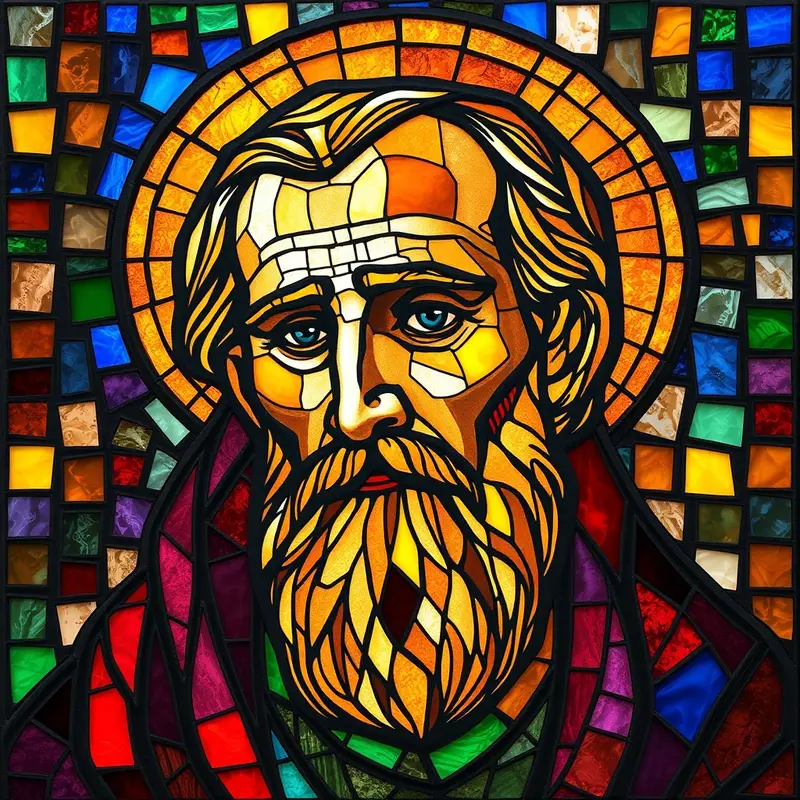
Biography
Elisha was called by God while plowing a field when the prophet Elijah cast his mantle over him (1 Kgs 19:19–21). He immediately left his family and livelihood to follow Elijah, serving as his assistant until Elijah's dramatic departure in a chariot of fire (2 Kgs 2:1–12). Elisha received a double portion of Elijah's spirit and then embarked on a prophetic ministry spanning multiple decades under the reigns of Jehoram, Jehu, Jehoahaz, and Joash. His ministry was marked by an extraordinary series of miracles: purifying the waters of Jericho, multiplying a widow's oil, raising the Shunammite's son from death, healing Naaman's leprosy, feeding a hundred men, and causing an iron axe head to float (2 Kgs 2–6). Even after his death, his bones raised a dead man (2 Kgs 13:21).
Significance
Elisha stands as one of the most miracle-laden figures in the Old Testament, and his ministry carries deep typological significance pointing toward Jesus Christ. His healing of Naaman, a Gentile, prefigures the extension of God's grace beyond Israel, a point Jesus himself highlighted in Luke 4:27. The multiplication of food, the raising of the dead, and the restoration of sight all parallel Jesus's own works, establishing Elisha as a prophetic anticipation of the messianic age. Theologically, Elisha demonstrates that God's power is not diminished with the passing of one servant; the Spirit transferred to Elisha confirmed the continuity and faithfulness of divine purpose across generations. His ministry also powerfully affirms that God shows compassion to the poor, the widow, and the foreigner.
Verse Appearances (53)
2Kgs
Luke
References
- Orr, J. (ed.) (1915) The International Standard Bible Encyclopedia. Chicago: Howard-Severance Company. [Public Domain]
- Tyndale House, Cambridge (n.d.) Translators Individualised Proper Names with all References (TIPNR). STEPBible. Available at: https://www.stepbible.org. [CC BY 4.0]
- Wikidata contributors (n.d.) Wikidata. Available at: https://www.wikidata.org. [CC0]
- Church of England (1769) The Holy Bible, Authorized (King James) Version. [Public Domain]