
Enoch
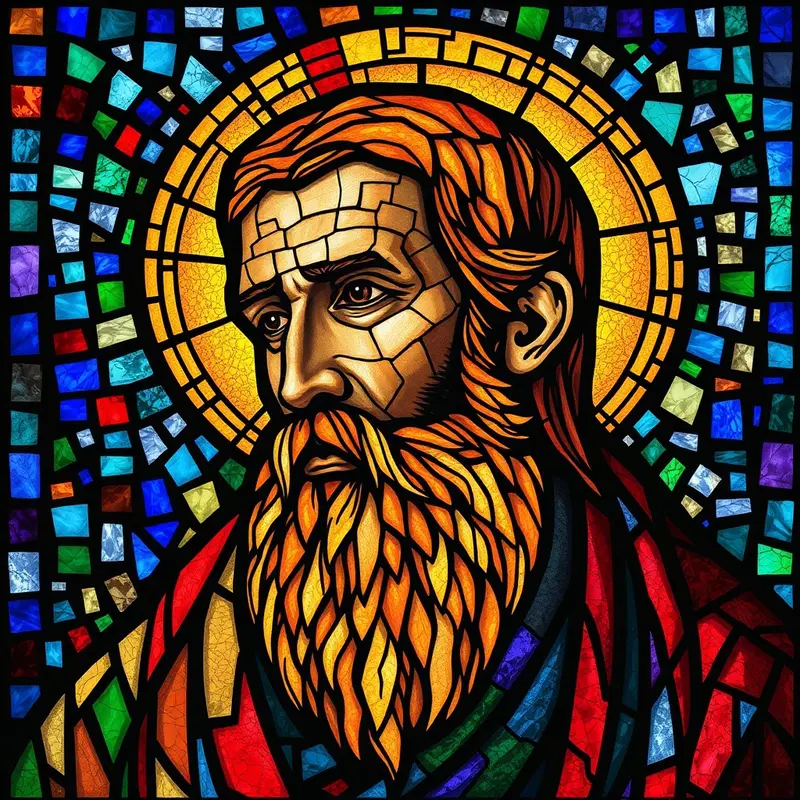
Enoch, the son of Jared, walked with God and was taken by Him without experiencing death (Gen.5.18,19,21,22,23,24; Heb.11.5).
Biography
Enoch, the son of Jared and the seventh patriarch in the line of Seth, stands as one of the most extraordinary figures in the antediluvian world. Born in the seventh generation from Adam, he lived for 365 years, a notably short lifespan compared to his contemporaries, and is distinguished above all others in the genealogy of Genesis 5 by the remarkable statement: "Enoch walked with God" (Genesis 5:22, 24). This phrase, repeated twice, marks him as a man of exceptional communion with the divine.
Rather than dying as all others in the genealogy did, Enoch was taken by God, disappearing from the earth without experiencing death. The New Testament confirms and expands on this tradition: Hebrews 11:5 identifies Enoch as a man of faith whose life pleased God, while Jude 1:14 cites a prophetic oracle attributed to him.
Significance
Enoch is theologically significant as a prototype of the life of faith and an anticipation of the resurrection hope. His translation, being taken directly into God's presence without death, prefigures the ultimate destiny of the redeemed and points to the possibility of intimate fellowship with God even in a fallen world. Hebrews 11:5 places him in the great hall of faith, noting that he was commended as one who pleased God before he was taken.
His life disrupts the otherwise unbroken refrain of 'and he died' in Genesis 5, inserting a note of grace and hope into a genealogy of mortality. Enoch thus becomes a sign that death does not have the final word in God's economy.
Verse Appearances (10)
References
- Orr, J. (ed.) (1915) The International Standard Bible Encyclopedia. Chicago: Howard-Severance Company. [Public Domain]
- Tyndale House, Cambridge (n.d.) Translators Individualised Proper Names with all References (TIPNR). STEPBible. Available at: https://www.stepbible.org. [CC BY 4.0]
- Wikidata contributors (n.d.) Wikidata. Available at: https://www.wikidata.org. [CC0]
- Church of England (1769) The Holy Bible, Authorized (King James) Version. [Public Domain]