
Hagar
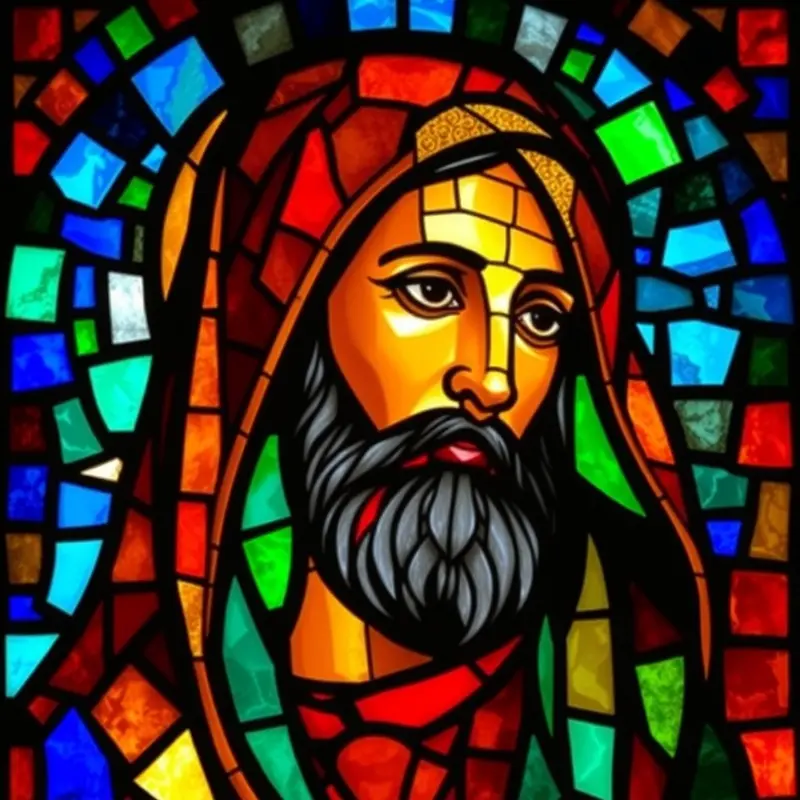
Hagar, Sarah's Egyptian maidservant, bore Abraham a son named Ishmael and is also mentioned in Paul's allegory in Galatians.
Biography
Hagar was an Egyptian slave woman who served in Abraham and Sarah's household and became central to one of the Bible's most complex family dramas. When Sarah remained childless after years of waiting for God's promised heir, she gave Hagar to Abraham as a concubine according to the custom of the day (Genesis 16:2–3). When Hagar conceived, tension erupted between the two women, and Hagar fled into the wilderness. There, the angel of the Lord appeared to her at a spring, making her the first person in Scripture to receive an angelic visitation, and directed her to return. God promised that her son Ishmael would become a great nation. Years later, after Isaac's birth, Sarah demanded Hagar's expulsion, and God again met her in the wilderness, providing water and renewing the promise (Genesis 21:14–19). Paul later used Hagar allegorically in Galatians 4:24–25 to represent the Sinai covenant.
Significance
Hagar's story is remarkable for its theological depth. She is the only person in the Old Testament who gives God a name, El Roi, 'the God who sees me' (Genesis 16:13), an act that testifies to an encounter of profound personal intimacy with the divine. Her experience reveals that God's care extends beyond the covenant community to the marginalized and vulnerable. The New Testament's use of Hagar in Galatians 4 elevates her story to a typological plane, contrasting law and grace, bondage and freedom. Her life teaches that God sees the suffering of the outcast and that his purposes are not confined to those at the center of human privilege.
Verse Appearances (12)
References
- Orr, J. (ed.) (1915) The International Standard Bible Encyclopedia. Chicago: Howard-Severance Company. [Public Domain]
- Tyndale House, Cambridge (n.d.) Translators Individualised Proper Names with all References (TIPNR). STEPBible. Available at: https://www.stepbible.org. [CC BY 4.0]
- Wikidata contributors (n.d.) Wikidata. Available at: https://www.wikidata.org. [CC0]
- Church of England (1769) The Holy Bible, Authorized (King James) Version. [Public Domain]