
Isaac
Isaac was the son of Abraham and Sarah, and the father of Jacob and Esau. God made a covenant with him, renewing the promises given to Abraham (Gen.26.2-5).
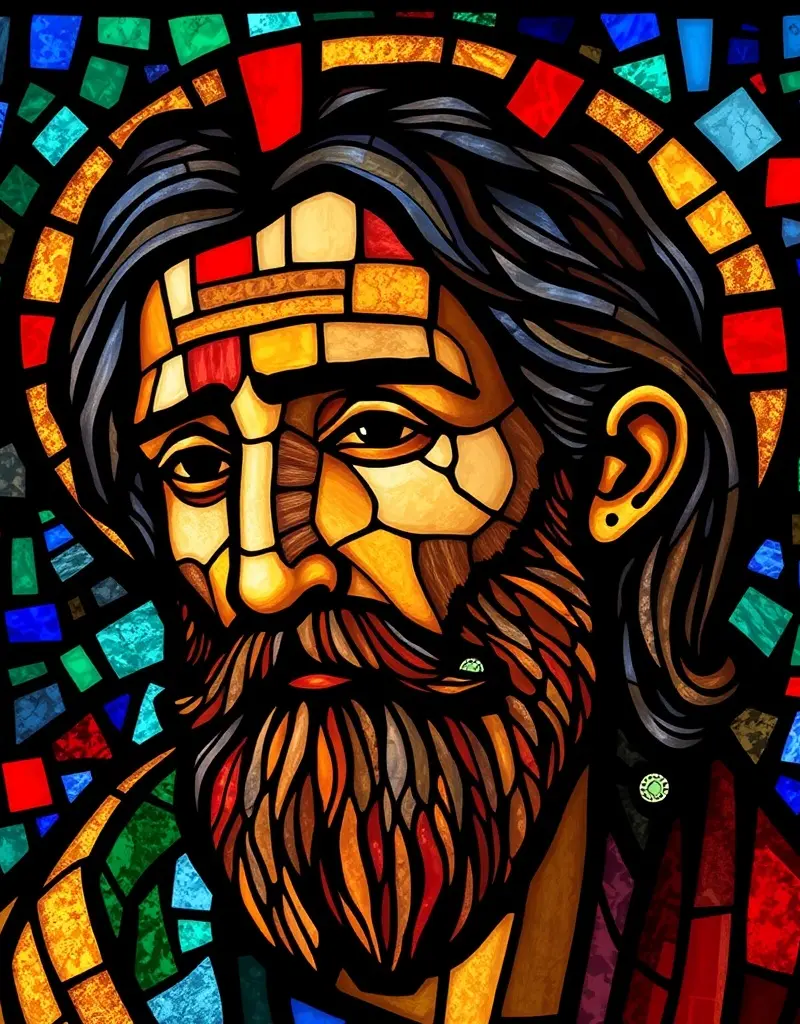
Biography
Isaac was the long-awaited son born to Abraham and Sarah in their old age, the child of promise through whom God chose to perpetuate the covenant he had established with Abraham (Genesis 17:19; 21:1-3). His very name, meaning 'he laughs,' commemorated the incredulous laughter of both his parents upon learning of his miraculous conception. His life was marked by pivotal covenant moments: the near-sacrifice on Mount Moriah, where God provided a substitute ram in his place (Genesis 22); his marriage to Rebekah, arranged by divine guidance (Genesis 24); and the renewal of the Abrahamic covenant directly with him at Beersheba (Genesis 26:2-5). He fathered twin sons, Esau and Jacob, through whom the covenant line continued, despite family conflict and deception.
Significance
Isaac occupies a unique position in redemptive history as both heir and type. His miraculous birth from a barren womb prefigures the supernatural character of God's saving acts throughout Scripture, culminating in the virgin birth of Jesus. His near-sacrifice on Moriah is one of the most theologically charged episodes in the Old Testament, interpreted by the New Testament as a foreshadowing of the Father's offering of his own Son (Hebrews 11:17-19). The New Testament explicitly names Isaac as a child of promise in contrast to Ishmael, using his birth to illustrate the nature of grace over human effort (Galatians 4:28; Romans 9:7). He is invoked throughout Scripture in the covenant formula 'the God of Abraham, Isaac, and Jacob.'
Verse Appearances (84)
Genesis
Exodus
Leviticus
Numbers
Deuteronomy
Joshua
1 Kings
2 Kings
2 Chronicles
Psalms
Jeremiah
Mark
Romans
Galatians
James
References
- Orr, J. (ed.) (1915) The International Standard Bible Encyclopedia. Chicago: Howard-Severance Company. [Public Domain]
- Tyndale House, Cambridge (n.d.) Translators Individualised Proper Names with all References (TIPNR). STEPBible. Available at: https://www.stepbible.org. [CC BY 4.0]
- Church of England (1769) The Holy Bible, Authorized (King James) Version. [Public Domain]