
Jacob
Jacob was the father of Joseph, the husband of Mary, the mother of Jesus (Mat.1.15-16).
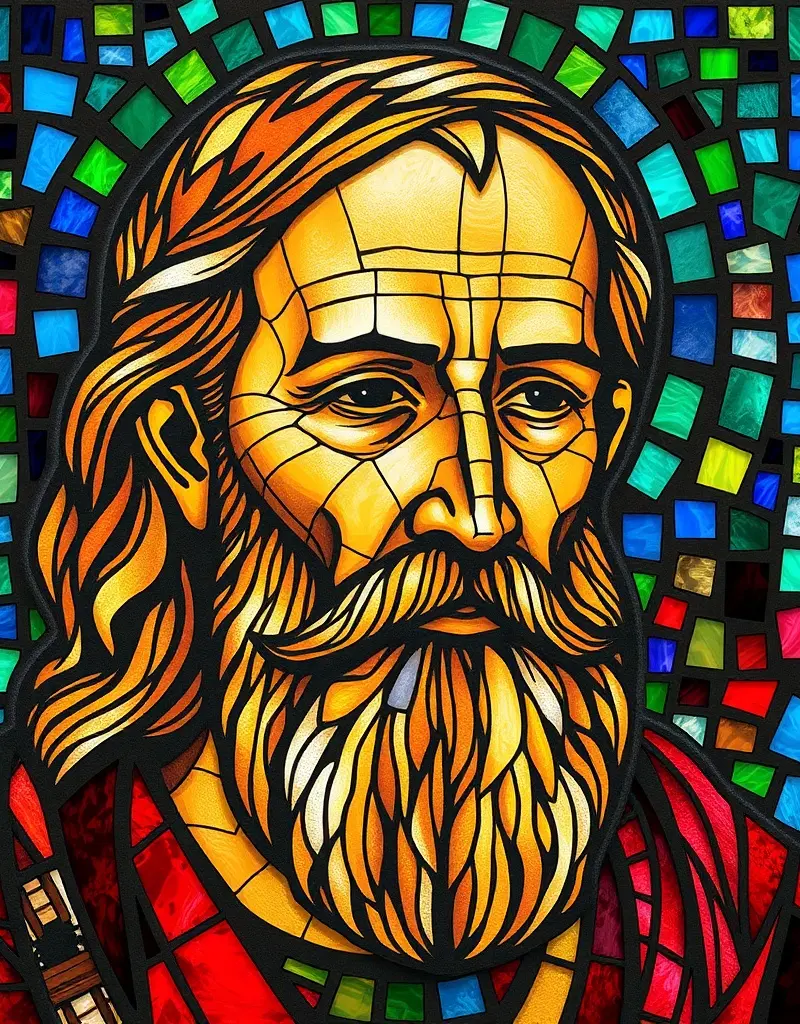
Biography
Jacob appears in Matthew's genealogy of Jesus Christ as the father of Joseph, the husband of Mary, from whom Jesus was born (Matthew 1:15-16). This Jacob is part of the royal Davidic lineage traced from Abraham through David and the kings of Judah down to the birth of the Messiah. While he is not described elsewhere in the New Testament, his place in the genealogy is significant: he bridges the period from the Babylonian exile to the incarnation, representing the final generations through whom the Davidic line was preserved. Joseph, his son, though not the biological father of Jesus, served as the legal father who conferred the Davidic inheritance upon Jesus, fulfilling the messianic expectation of a king from David's house.
Significance
Jacob's position in Matthew's genealogy of Christ carries profound theological weight, even though he is mentioned by name alone. The entire genealogy of Matthew 1 is constructed to demonstrate that Jesus is the legitimate heir to the Davidic throne and the fulfillment of God's covenant promises spanning two thousand years. Jacob is one of the final links in this chain of promise, the grandfather of the one who would legally bear the title Son of David. His inclusion reminds readers that God faithfully preserved the messianic lineage through ordinary, unnamed individuals, obscure fathers and sons, until the fullness of time when the Son of God was born of a woman (Galatians 4:4).
Verse Appearances (2)
Matthew
References
- Orr, J. (ed.) (1915) The International Standard Bible Encyclopedia. Chicago: Howard-Severance Company. [Public Domain]
- Tyndale House, Cambridge (n.d.) Translators Individualised Proper Names with all References (TIPNR). STEPBible. Available at: https://www.stepbible.org. [CC BY 4.0]
- Church of England (1769) The Holy Bible, Authorized (King James) Version. [Public Domain]
- Claus Westermann (1985) Genesis 12–36: A Commentary. doi:10.2307/1518137.Extensive form-critical commentary covering the Jacob cycle and its traditional history.
- Walter Brueggemann (1982) Genesis. Interpretation: A Bible Commentary for Teaching and Preaching.Theologically rich commentary treating the Jacob narratives as paradigms of divine encounter.
- Michael Fishbane (1985) Biblical Interpretation in Ancient Israel. doi:10.1093/0198266995.001.0001.Includes major treatment of inner-biblical exegesis involving Jacob traditions and their later reworkings.
- E. A. Speiser (1964) Genesis. Anchor Bible, vol. 1.Philological and ANE comparative commentary treating the Jacob cycle against Hurrian parallels.