
Jerah
Jerah was one of the sons of Joktan, a descendant of Shem, as recorded in the Table of Nations in Genesis and 1 Chronicles.
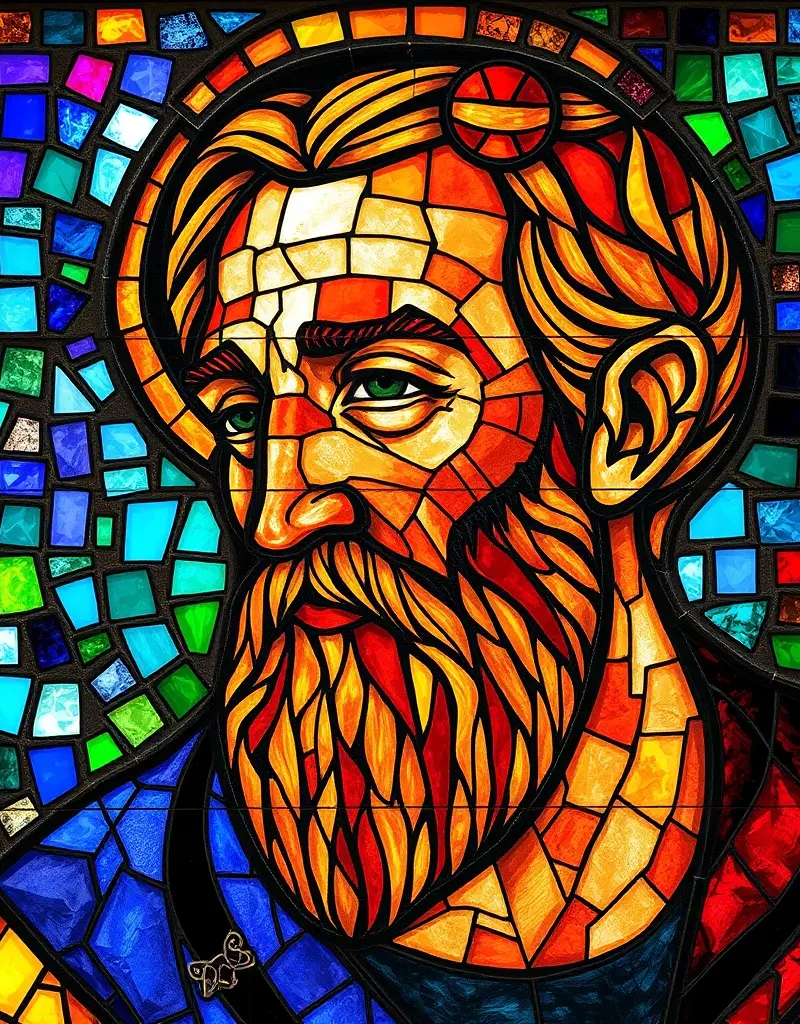
Biography
Jerah was a son of Joktan, a grandson of Eber, and a great-great-grandson of Shem, Noah's son. He appears in the Table of Nations in Genesis 10:26 and its parallel in 1 Chronicles 1:20 as one of thirteen sons born to Joktan, whose descendants are understood to have settled various regions of the ancient Arabian Peninsula. The name Jerah is connected linguistically to the Hebrew word for moon, and some scholars have associated him with an early Semitic people who venerated lunar deities in southern Arabia. Like most figures in the Table of Nations, Jerah functions as an eponymous ancestor rather than a developed narrative character, representing a clan or people group that emerged from the post-flood dispersal of humanity.
Significance
Jerah's inclusion in the Table of Nations carries theological weight as part of Scripture's sweeping declaration that all the peoples of the earth trace their origin to one Creator God. Genesis 10 establishes that the diversity of nations, including distant Arabian clans like Jerah's, unfolds under God's sovereign governance of history. Far from a mere genealogical curiosity, Jerah represents the global scope of God's providential ordering of humanity. His lineage also situates Israel within the broader family of nations, reminding readers that God's election of Abraham came not to exclude the nations but ultimately to bless them (Genesis 12:3).
Verse Appearances (2)
Genesis
1 Chronicles
References
- Orr, J. (ed.) (1915) The International Standard Bible Encyclopedia. Chicago: Howard-Severance Company. [Public Domain]
- Tyndale House, Cambridge (n.d.) Translators Individualised Proper Names with all References (TIPNR). STEPBible. Available at: https://www.stepbible.org. [CC BY 4.0]
- Church of England (1769) The Holy Bible, Authorized (King James) Version. [Public Domain]