
Jeroboam
Jeroboam I was the first king of the northern kingdom of Israel after the split of the united monarchy following Solomon's reign.
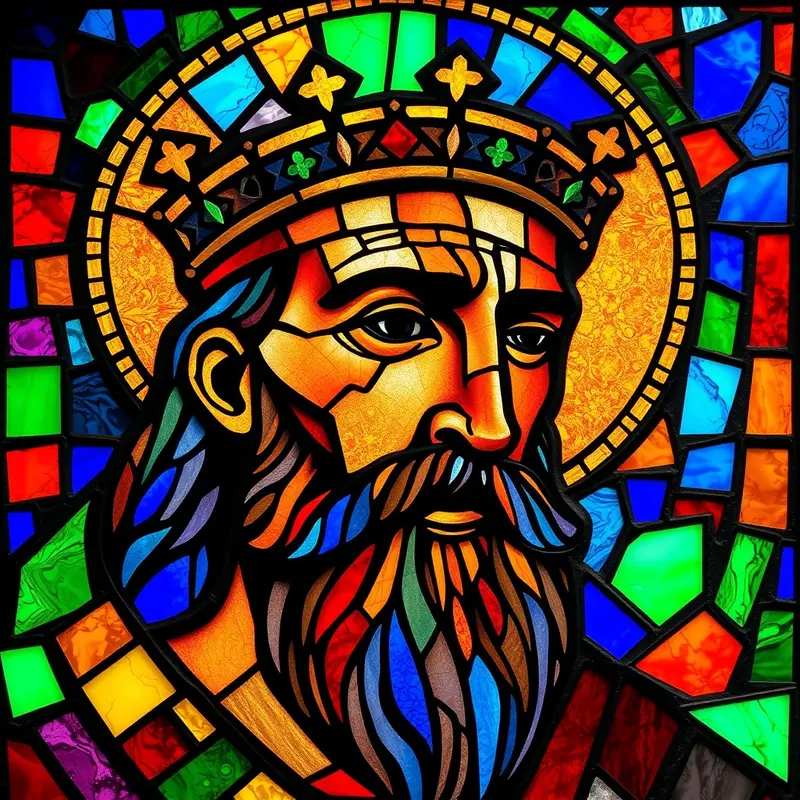
Biography
Jeroboam I was the son of Nebat, an Ephraimite official under Solomon who rose to become the first king of the northern kingdom of Israel following the catastrophic political rupture of 930 BCE (1 Kings 11-12). The prophet Ahijah of Shiloh anointed him with a divine commission to rule ten tribes, citing Solomon's apostasy as the cause of the division. Initially a capable administrator overseeing Solomon's labor gangs, Jeroboam fled to Egypt when Solomon sought his life, returning only after Solomon's death. When Rehoboam's harsh response to the assembly at Shechem triggered the revolt, Jeroboam was proclaimed king over Israel. He then erected golden calves at Bethel and Dan, declaring them the gods who brought Israel out of Egypt, an act of political idolatry that would define his legacy.
Significance
Jeroboam I stands as one of the Old Testament's most consequential negative figures. His establishment of rival worship sites at Bethel and Dan (1 Kings 12:28-29) was a calculated political move to prevent his subjects from returning to Jerusalem and shifting their loyalty to the Davidic house, but it introduced structural idolatry into northern Israel's religious life. The phrase 'the sin of Jeroboam' becomes a recurring standard of judgment against every subsequent northern king (1 Kings 15:26, 34; 16:19, etc.), making him the archetype of leadership that exploits religion for political ends. His story is a solemn warning about the devastating, multigenerational consequences of a leader's spiritual failures on an entire community.
Verse Appearances (81)
1Kgs
2Kgs
References
- Orr, J. (ed.) (1915) The International Standard Bible Encyclopedia. Chicago: Howard-Severance Company. [Public Domain]
- Tyndale House, Cambridge (n.d.) Translators Individualised Proper Names with all References (TIPNR). STEPBible. Available at: https://www.stepbible.org. [CC BY 4.0]
- Wikidata contributors (n.d.) Wikidata. Available at: https://www.wikidata.org. [CC0]
- Church of England (1769) The Holy Bible, Authorized (King James) Version. [Public Domain]