
Joab
Joab, David's nephew and commander of his army, was a key figure in David's reign, known for his military prowess and loyalty (2Sa.8.16; 1Ch.11.6).
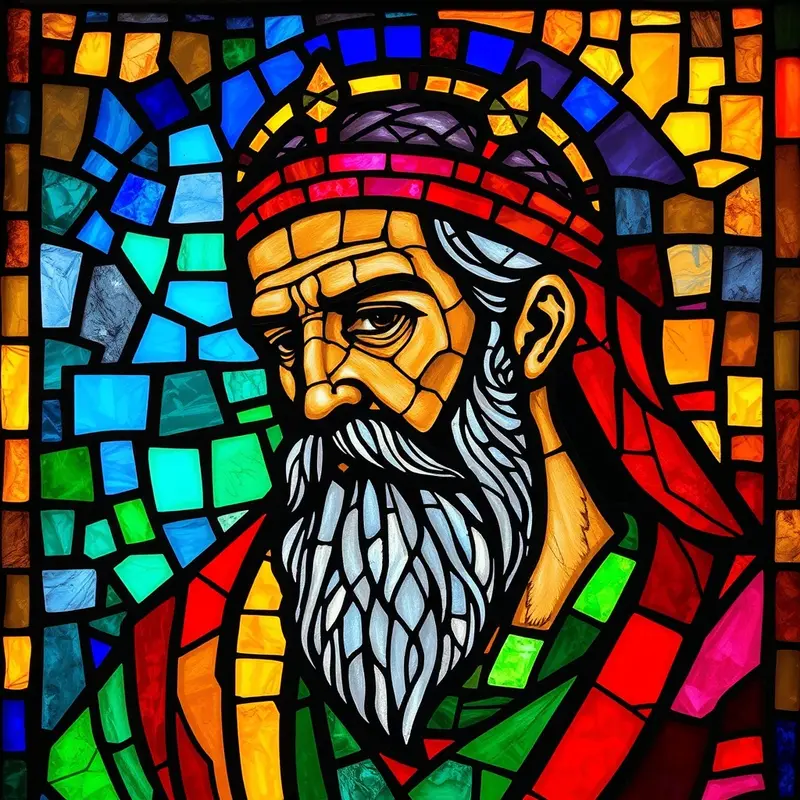
Biography
Joab son of Zeruiah was the most powerful military commander in ancient Israel during David's reign, serving as commander-in-chief of the royal army for virtually the entire duration of the united monarchy (2 Samuel 8:16; 1 Chronicles 11:6). The nephew of David through his sister Zeruiah, Joab proved himself a formidable warrior, famously capturing Jerusalem by leading an assault through the water shaft (1 Chronicles 11:6). He prosecuted David's wars with ruthless efficiency, defeating the Ammonites, Edomites, and Arameans. Yet his career was shadowed by acts of personal vengeance, the murder of Abner (2 Samuel 3:27), the killing of Absalom against David's explicit order (2 Samuel 18:14), and the slaying of Amasa (2 Samuel 20:10), moral failures that accumulated against him.
Significance
Joab stands as one of Scripture's most complex moral figures, a man of extraordinary competence and loyalty to David's throne whose methods repeatedly violated God's standards of justice. His career illustrates the dangerous tension between political pragmatism and covenant ethics. David's deathbed instruction to Solomon to bring Joab to account (1 Kings 2:5-6) underscores that even decades of distinguished service cannot excuse injustice before God. Joab's ultimate fate, executed by Benaiah at Solomon's command while clinging to the horns of the altar (1 Kings 2:34), demonstrates the biblical principle that those who live by the sword must ultimately answer before a just God for every act of bloodshed.
Verse Appearances (120)
1Sam
2Sam
1Kgs
1Chr
Ps
References
- Orr, J. (ed.) (1915) The International Standard Bible Encyclopedia. Chicago: Howard-Severance Company. [Public Domain]
- Tyndale House, Cambridge (n.d.) Translators Individualised Proper Names with all References (TIPNR). STEPBible. Available at: https://www.stepbible.org. [CC BY 4.0]
- Wikidata contributors (n.d.) Wikidata. Available at: https://www.wikidata.org. [CC0]
- Church of England (1769) The Holy Bible, Authorized (King James) Version. [Public Domain]