
Kedar
Kedar was a son of Ishmael and the eponymous ancestor of a nomadic Arab tribe known for their tents and flocks.
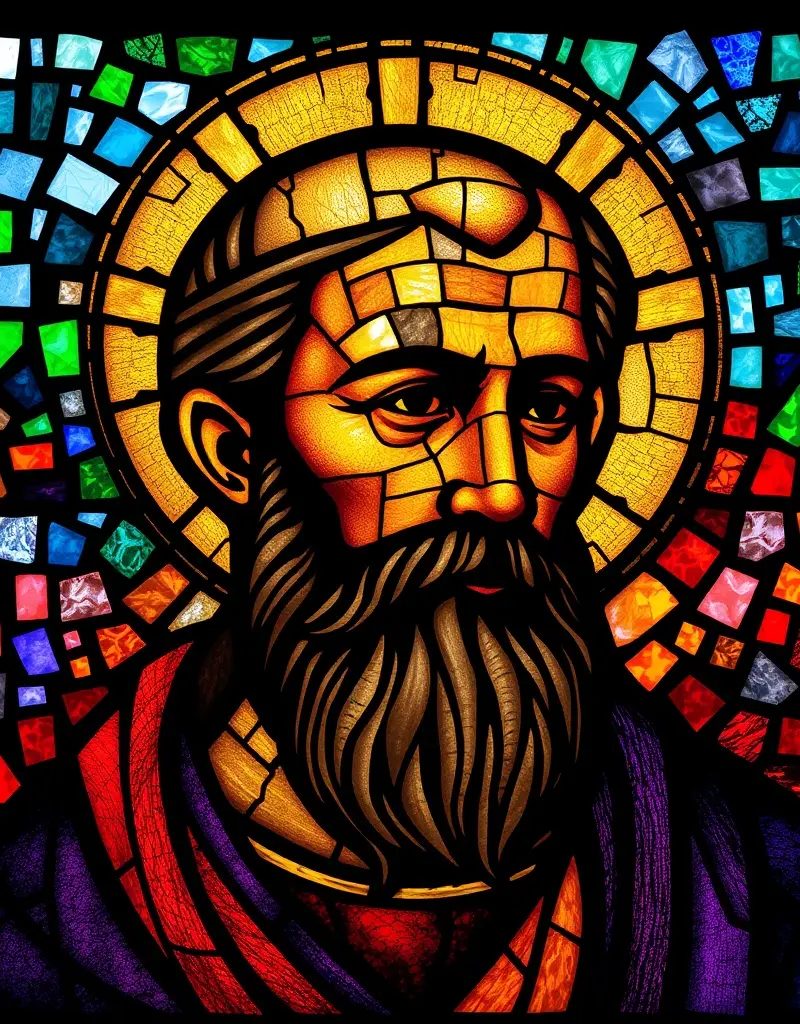
Biography
Kedar was the second son of Ishmael (Genesis 25:13) and the forefather of a powerful confederation of nomadic Arab tribes that bore his name for centuries. The Kedarites inhabited the desert regions east and southeast of Canaan, ranging across the Arabian Peninsula and the Syrian steppe. They were renowned as expert archers (Isaiah 21:17) and wealthy pastoralists whose black goat-hair tents became a cultural emblem, the Song of Solomon opens with the beloved comparing her own dark beauty to 'the tents of Kedar' (Song of Solomon 1:5). Ancient Near Eastern records, including Assyrian annals, attest to the military and commercial significance of the Kedarite tribal federation, which periodically posed challenges to imperial powers. Biblical prophets, including Isaiah, Jeremiah, and Ezekiel, addressed oracles both of judgment and of eschatological hope to Kedar, treating them as a paradigmatic desert people at the margins of the covenant world.
Significance
Kedar's theological significance spans both warning and promise. As a descendant of Ishmael, Kedar stands within the line of Abraham yet outside the covenant line of Isaac, illustrating how God's blessing extends in partial ways even to those outside the primary covenant while the specific promises flow through Israel. The prophetic oracles concerning Kedar (Isaiah 21:13-17; 60:7) are particularly striking: Isaiah 60 envisions Kedar's flocks streaming to Jerusalem to glorify God, anticipating the eschatological ingathering of the nations. This transforms Kedar from a symbol of wilderness remoteness into a figure for the universal scope of God's redemptive purposes, foreshadowing the New Testament vision of peoples from every nation worshipping the God of Israel.
Verse Appearances (11)
Genesis
1 Chronicles
Psalms
Song of Solomon
Jeremiah
Ezekiel
References
- Orr, J. (ed.) (1915) The International Standard Bible Encyclopedia. Chicago: Howard-Severance Company. [Public Domain]
- Tyndale House, Cambridge (n.d.) Translators Individualised Proper Names with all References (TIPNR). STEPBible. Available at: https://www.stepbible.org. [CC BY 4.0]
- Church of England (1769) The Holy Bible, Authorized (King James) Version. [Public Domain]