
Kedemah
Kedemah was a son of Ishmael, while the Nodab were a Hagrite tribe defeated by the Reubenites, Gadites, and half-tribe of Manasseh.
Biography
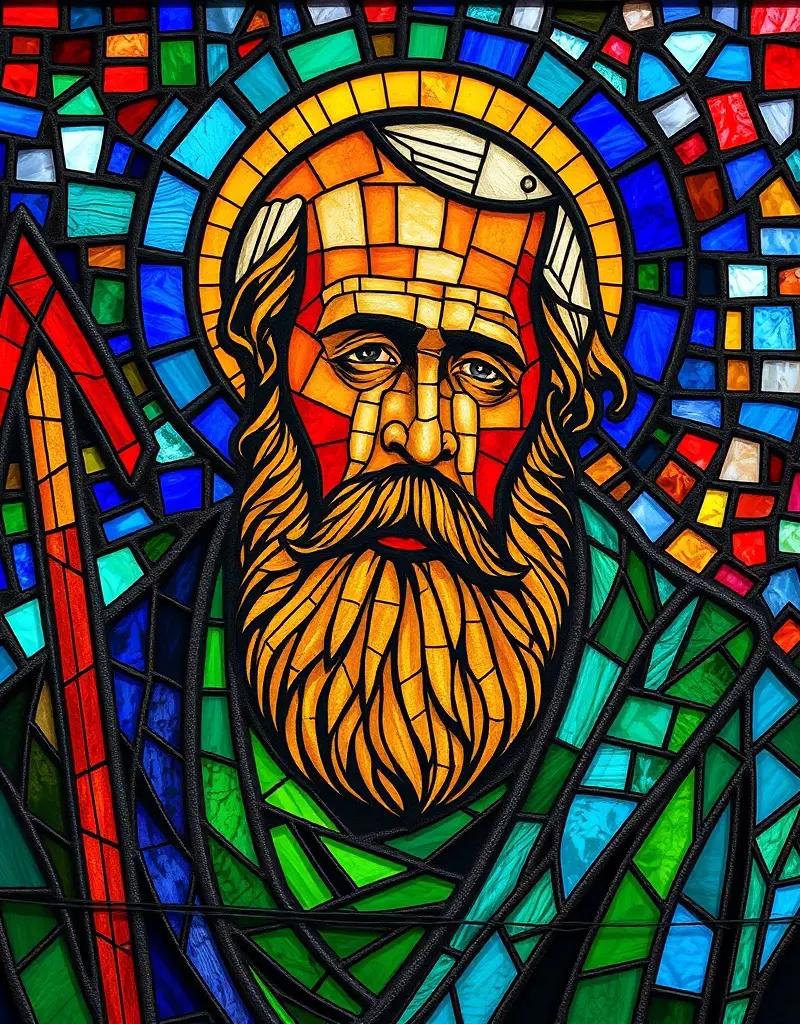
Kedemah was the youngest of Ishmael's twelve sons, listed last in the genealogy of Genesis 25:15 and its parallel in 1 Chronicles 1:31. His name derives from the Hebrew word for 'east' or 'eastward,' possibly indicating the geographical orientation of the tribe descended from him or his position as the 'last' or 'easternmost' of Ishmael's progeny. As with many of the Ishmaelite tribal ancestors, Kedemah is mentioned only in genealogical lists, and no narrative episode is attached to his name in the biblical text. The twelve sons of Ishmael were understood to be the progenitors of twelve tribal chieftains, mirroring in structure, though not in covenant standing, the twelve sons of Jacob who would form the tribes of Israel. Kedemah's descendants presumably settled in the Arabian desert regions east of Canaan, contributing to the complex mosaic of Semitic peoples that populated the ancient Near East.
Significance
Kedemah's inclusion in the Ishmaelite genealogy reflects the biblical concern to show that God's promise to Abraham extended meaningfully, if not covenantally, to Ishmael's line. In Genesis 17:20, God explicitly promised to make Ishmael fruitful, to multiply him greatly, and to make him the father of twelve princes, a promise Kedemah's birth helps fulfill. The parallel structure of twelve Ishmaelite princes and twelve Israelite patriarchs invites theological reflection on the relationship between election and common grace: God's sovereign ordering of nations encompasses both the covenant people and their wider kin. Kedemah thus stands as a quiet testament to the faithfulness of God's word, whose promises, even those made to those outside the primary covenant, come to fruition.
Verse Appearances (3)
Genesis
1 Chronicles
References
- Orr, J. (ed.) (1915) The International Standard Bible Encyclopedia. Chicago: Howard-Severance Company. [Public Domain]
- Tyndale House, Cambridge (n.d.) Translators Individualised Proper Names with all References (TIPNR). STEPBible. Available at: https://www.stepbible.org. [CC BY 4.0]
- Church of England (1769) The Holy Bible, Authorized (King James) Version. [Public Domain]