
Leah
Leah, the first wife of Jacob and mother of six of his sons and his daughter Dinah (Gen.29-30; 35.23).
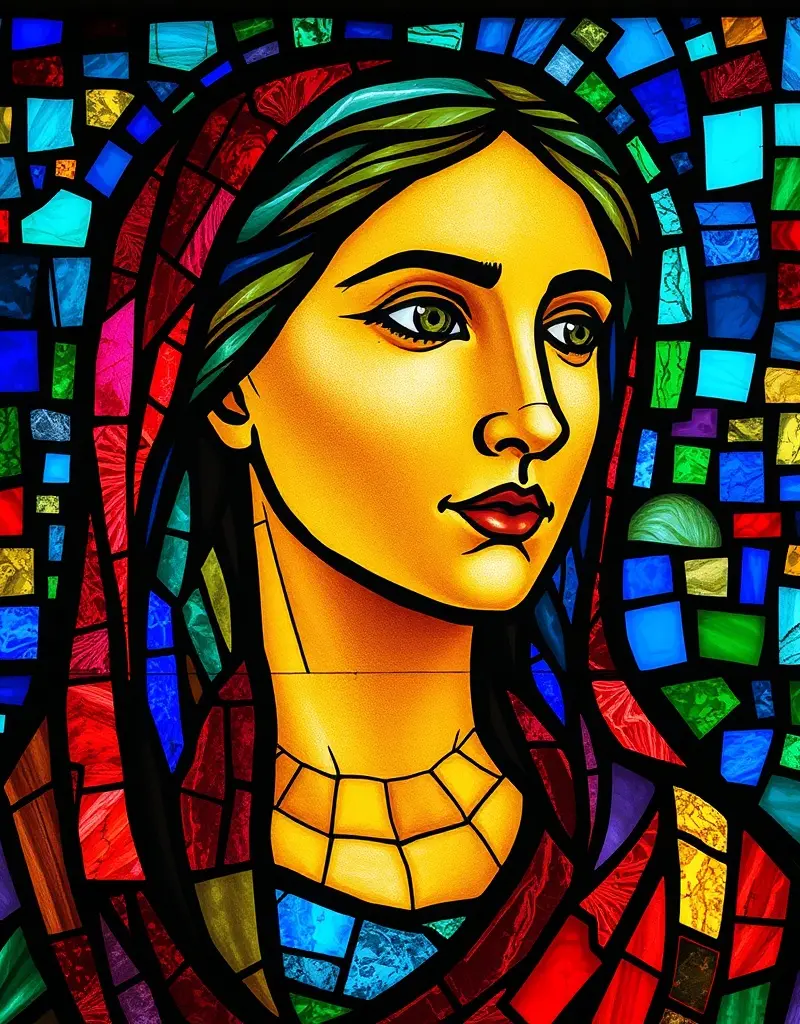
Biography
Leah was the elder daughter of Laban of Haran, given in marriage to Jacob through her father's deception on the night Jacob had labored seven years to marry her younger sister Rachel (Genesis 29:23-25). She is described as having weak or gentle eyes, in contrast to the beautiful Rachel, and became Jacob's unloved wife, a condition acknowledged openly in Scripture. Yet through God's compassion for her affliction, Leah bore Jacob six sons: Reuben, Simeon, Levi, Judah, Issachar, and Zebulun, as well as his daughter Dinah (Genesis 29-30; 35:23). These sons became patriarchs of six of Israel's twelve tribes. Most notably, Judah, through whom the messianic line descended, was Leah's son. She died before Jacob's family descended to Egypt and was buried in the cave of Machpelah alongside Abraham, Sarah, Isaac, and Rebekah (Genesis 49:31), a place of patriarchal honor.
Significance
Leah's life is a profound meditation on divine reversal and sovereign grace. Unloved by her husband, she was deeply loved by God, who opened her womb while Rachel remained barren. Through Leah's sons, particularly Levi and Judah, two of the most consequential lineages in redemptive history were established: the priestly tribe and the royal, messianic line. Jesus Christ traces his human ancestry through Judah and therefore through Leah (Matthew 1; Luke 3). Leah's story dismantles the assumption that the favored, the beautiful, or the chosen-by-human-preference are the instruments of divine purpose. She embodies the biblical principle that God exalts the humble and that his covenant purposes work through the overlooked and the suffering.
Verse Appearances (16)
References
- Orr, J. (ed.) (1915) The International Standard Bible Encyclopedia. Chicago: Howard-Severance Company. [Public Domain]
- Tyndale House, Cambridge (n.d.) Translators Individualised Proper Names with all References (TIPNR). STEPBible. Available at: https://www.stepbible.org. [CC BY 4.0]
- Church of England (1769) The Holy Bible, Authorized (King James) Version. [Public Domain]