
Maaseiah
Maaseiah, an Israelite, was among those who had married foreign women during the time of Ezra (Ezr.10.30).
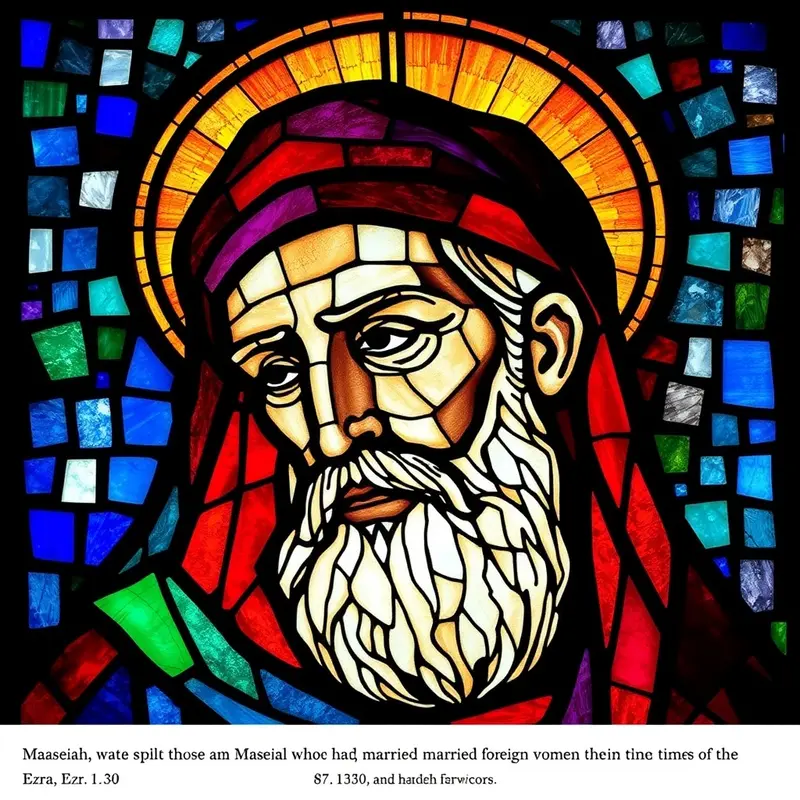
Biography
Maaseiah was an Israelite from the sons of Pahath-moab who was found to have married a foreign wife during the reforms led by Ezra after the return from Babylonian exile (Ezra 10:30). The sons of Pahath-moab were a large clan who had returned to Judah with Zerubbabel and later with Ezra, and their significant numbers meant their compliance was essential to the success of the reform movement. Maaseiah was among those who responded to Ezra's public call to separate from foreign marriages that threatened the religious distinctiveness of the restored community. By agreeing to the dissolution of his marriage, Maaseiah participated in the painful but necessary process of reestablishing covenantal boundaries that had been compromised during the years of exile and resettlement.
Significance
Maaseiah's story illustrates the costly nature of covenant faithfulness. The intermarriage crisis addressed in Ezra 10 was not merely a matter of ethnic preference but of theological survival: foreign wives brought foreign worship practices that could corrupt Israel's devotion to Yahweh, as the nation's history had repeatedly demonstrated. Maaseiah's compliance with Ezra's directive shows that ordinary Israelites, not just priests and Levites, bore responsibility for maintaining the community's holiness. His example speaks to the broader biblical principle that every member of God's people is called to make sacrifices for the sake of communal faithfulness.
Verse Appearances (1)
Ezra
References
- Orr, J. (ed.) (1915) The International Standard Bible Encyclopedia. Chicago: Howard-Severance Company. [Public Domain]
- Tyndale House, Cambridge (n.d.) Translators Individualised Proper Names with all References (TIPNR). STEPBible. Available at: https://www.stepbible.org. [CC BY 4.0]
- Wikidata contributors (n.d.) Wikidata. Available at: https://www.wikidata.org. [CC0]
- Church of England (1769) The Holy Bible, Authorized (King James) Version. [Public Domain]