
Manoah
Manoah, Samson's father from the tribe of Dan, was visited by the Angel of the Lord who announced Samson's birth (Jdg.13; 16.31).
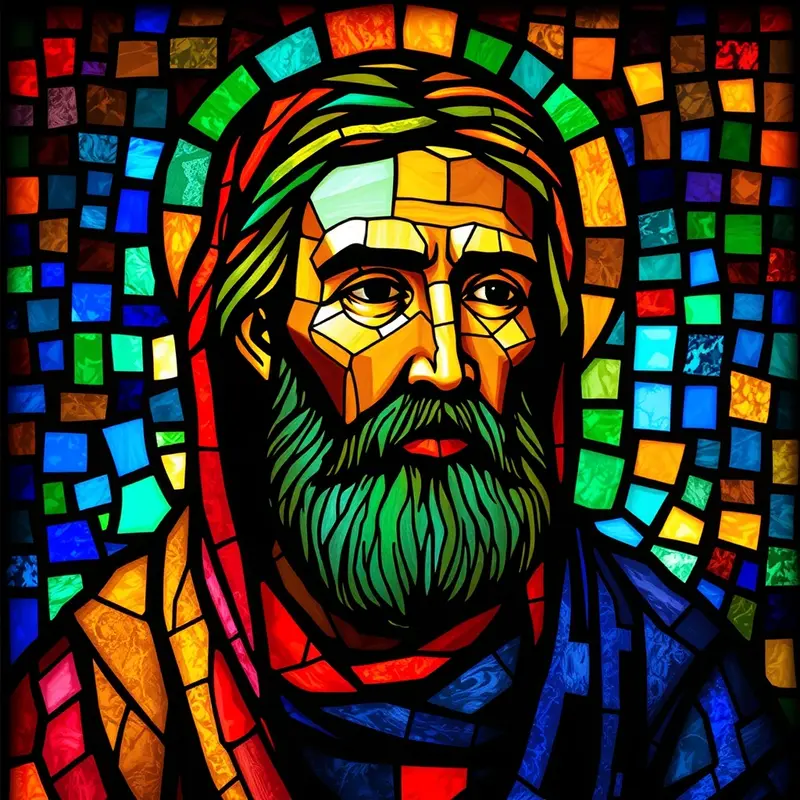
Biography
Manoah was a man from the tribe of Dan, living in the town of Zorah, who became the father of Samson, Israel's renowned judge. His story unfolds in Judges 13, where the Angel of the Lord first appeared to his barren wife to announce that she would conceive a son dedicated as a Nazirite from birth. When his wife reported this encounter, Manoah earnestly prayed for the angel to return and instruct them on how to raise the promised child. The Angel appeared again, and Manoah prepared a burnt offering. As the flame ascended from the altar, the Angel of the Lord ascended in the flame, prompting Manoah to fear they would die for having seen God (Judg. 13:22). His wife's faith reassured him, and together they raised Samson according to the divine instructions.
Significance
Manoah's narrative reveals the human encounter with the divine in its most intimate form: the promise of a child through whom God would begin to deliver Israel from Philistine oppression. His prayer for further instruction (Judg. 13:8) models the posture of a faithful parent seeking God's guidance. The theophanic visitation he witnessed, with the Angel ascending in the altar flame, prefigures the sacrificial themes that culminate in Christ. Manoah's initial fear of death upon seeing God contrasts with his wife's perceptive faith, illustrating that spiritual insight is not determined by gender or social position. As Samson's father, Manoah played a foundational role in raising the instrument of God's deliverance, however imperfect that instrument proved to be.
Verse Appearances (14)
References
- Orr, J. (ed.) (1915) The International Standard Bible Encyclopedia. Chicago: Howard-Severance Company. [Public Domain]
- Tyndale House, Cambridge (n.d.) Translators Individualised Proper Names with all References (TIPNR). STEPBible. Available at: https://www.stepbible.org. [CC BY 4.0]
- Wikidata contributors (n.d.) Wikidata. Available at: https://www.wikidata.org. [CC0]
- Church of England (1769) The Holy Bible, Authorized (King James) Version. [Public Domain]