
Melchizedek
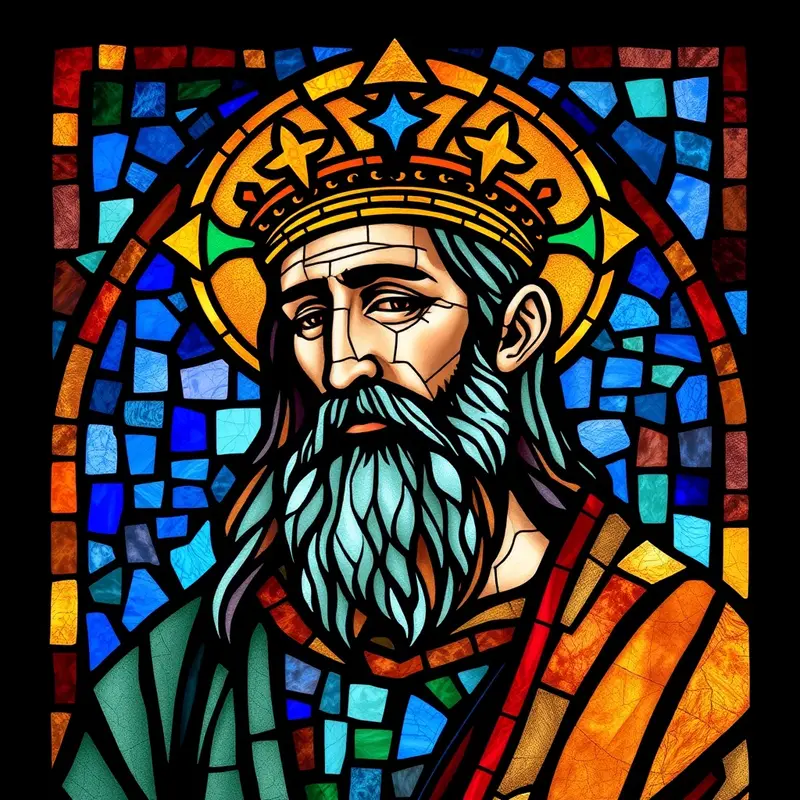
Melchizedek, king of Salem and priest of God Most High, who blessed Abraham (Gen.14.18).
Biography
Melchizedek is one of Scripture's most enigmatic and theologically profound figures. He appears without genealogy or introduction in Genesis 14:18-20 as king of Salem and priest of God Most High (El Elyon), greeting Abraham with bread and wine after his victory over the coalition of kings and pronouncing a blessing upon the patriarch. Abraham responded by giving him a tithe of all the spoils. Psalm 110:4 revives Melchizedek's memory in a messianic oracle, declaring that the coming king would be 'a priest forever after the order of Melchizedek.' The author of Hebrews develops this typology extensively in chapters 5-7, arguing that Melchizedek's priesthood, predating and surpassing the Levitical system, prefigures Christ's eternal and superior priestly ministry. His dual office of king and priest was unique in the biblical narrative.
Significance
Melchizedek stands as one of the most important typological figures in all of Scripture. His unprecedented combination of royal and priestly offices anticipates the person of Christ, who alone perfectly unites these roles. The author of Hebrews argues that Melchizedek's priesthood, being without recorded beginning or end, symbolizes Christ's eternal, indestructible priesthood that supersedes the Levitical order (Hebrews 7:1-17). Abraham's act of tithing to Melchizedek demonstrates the superiority of this priestly order, since even Levi, still in Abraham's loins, symbolically paid homage. Melchizedek's offering of bread and wine has also been seen as a foreshadowing of the Eucharist. His appearance in Genesis reveals that God's saving purposes were never confined to a single nation but encompassed a universal priesthood fulfilled in Jesus Christ.
Verse Appearances (11)
References
- Orr, J. (ed.) (1915) The International Standard Bible Encyclopedia. Chicago: Howard-Severance Company. [Public Domain]
- Tyndale House, Cambridge (n.d.) Translators Individualised Proper Names with all References (TIPNR). STEPBible. Available at: https://www.stepbible.org. [CC BY 4.0]
- Wikidata contributors (n.d.) Wikidata. Available at: https://www.wikidata.org. [CC0]
- Church of England (1769) The Holy Bible, Authorized (King James) Version. [Public Domain]