
Naphtali
Naphtali, the sixth son of Jacob and second son of Bilhah, was the founder of the Israelite tribe that bore his name.
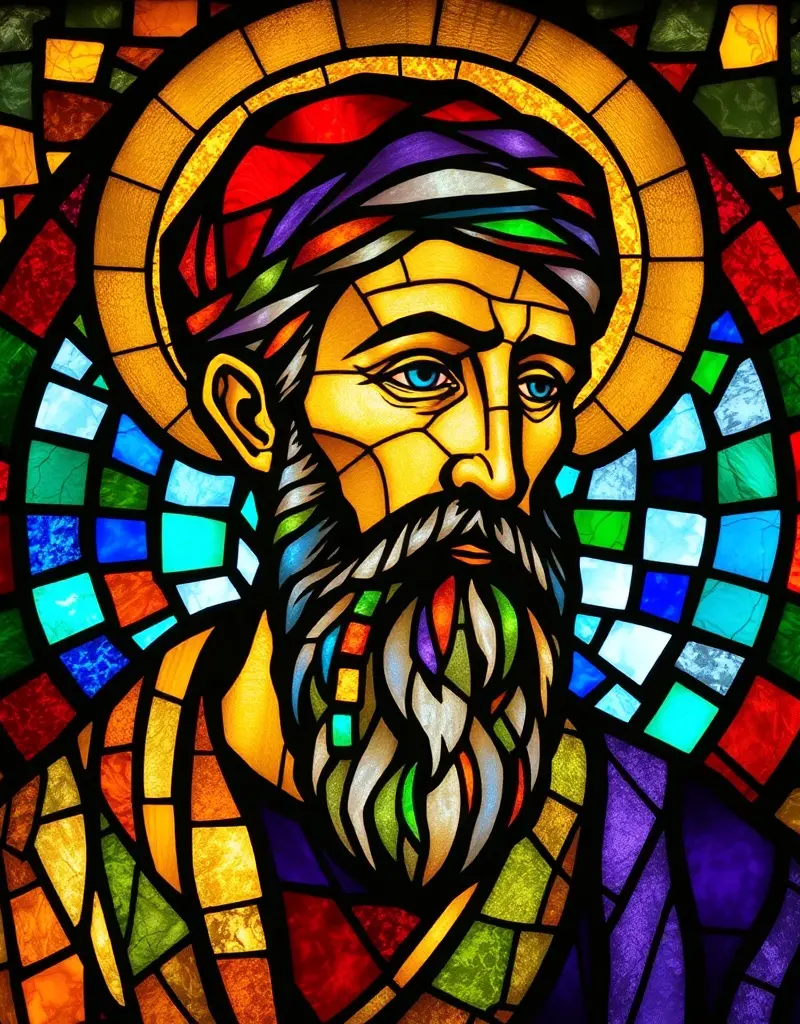
Biography
Naphtali was the sixth son born to the patriarch Jacob and the second son borne by Bilhah, Rachel's maidservant (Genesis 30:7-8). His name, meaning 'my wrestling,' was given by Rachel, who declared, 'With mighty wrestlings I have wrestled with my sister, and I have prevailed.' Naphtali became the founder of one of the twelve tribes of Israel, which received its territorial allotment in the fertile regions of upper Galilee (Joshua 19:32-39). In Jacob's final blessing, Naphtali is described as 'a doe set free that bears beautiful fawns' (Genesis 49:21), suggesting swiftness and grace. Moses' blessing praised the tribe as 'abounding with favor' and 'full of the blessing of the Lord' (Deuteronomy 33:23). The tribe of Naphtali later distinguished itself in the military victories under Deborah and Barak against the Canaanite commander Sisera (Judges 4:6-10).
Significance
Naphtali holds deep messianic significance because the tribal territory in Galilee became the primary stage of Jesus' public ministry. Isaiah prophesied that 'the land of Zebulun and the land of Naphtali' would see a great light (Isaiah 9:1-2), a prophecy Matthew explicitly identifies as fulfilled when Jesus began preaching in Capernaum (Matthew 4:13-16). The tribe's association with freedom, beauty, and divine blessing foreshadowed the good news that would one day radiate from its ancestral lands. Naphtali's warriors displayed courage under Deborah and Barak, demonstrating that faithfulness in battle yields victory through God's power. The tribe thus serves as a bridge between patriarchal promise and messianic fulfillment, its territory becoming hallowed ground in redemptive history.
Verse Appearances (50)
Exodus
Numbers
2 Kings
1 Chronicles
2 Chronicles
Psalms
Isaiah
Matthew
Revelation
References
- Orr, J. (ed.) (1915) The International Standard Bible Encyclopedia. Chicago: Howard-Severance Company. [Public Domain]
- Tyndale House, Cambridge (n.d.) Translators Individualised Proper Names with all References (TIPNR). STEPBible. Available at: https://www.stepbible.org. [CC BY 4.0]
- Church of England (1769) The Holy Bible, Authorized (King James) Version. [Public Domain]