
Rechab
Rechab and his brother Baanah were captains in Ishbosheth's army during the time of David.
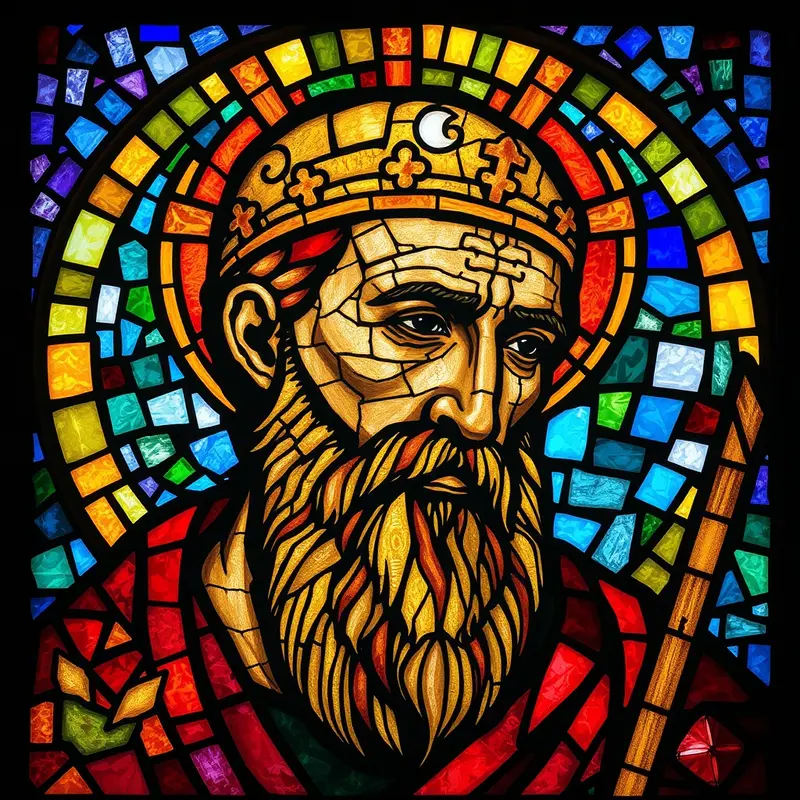
Biography
Rechab, son of Rimmon the Beerothite, was a military captain who served in the army of Ishbosheth, Saul's son and rival to David for the throne of Israel. Together with his brother Baanah, Rechab assassinated Ishbosheth while he rested during the heat of the day, beheading him and bringing his head to David at Hebron (2 Samuel 4:1-8). The brothers apparently expected David to reward them for eliminating his rival, but David was horrified by their treachery. Citing his own response to the Amalekite who claimed to have killed Saul, David condemned Rechab and Baanah as wicked men who had murdered a righteous man in his own house. He ordered their execution, and their hands and feet were cut off and displayed at the pool of Hebron as a public repudiation of their crime.
Significance
Rechab's story serves as a powerful demonstration of David's commitment to moral integrity and his refusal to achieve power through unjust means. Though Ishbosheth's death cleared David's path to the throne of all Israel, David recognized that legitimacy could not be built on assassination. By punishing Rechab and Baanah, David established a precedent that ends do not justify means in God's kingdom. The episode reinforces the biblical principle that God alone is the true kingmaker, and those who attempt to advance His purposes through violence and treachery bring judgment upon themselves. David's response anticipated his later grief over Abner's murder and reflected his deep trust in God's sovereign timing.
Verse Appearances (4)
References
- Orr, J. (ed.) (1915) The International Standard Bible Encyclopedia. Chicago: Howard-Severance Company. [Public Domain]
- Tyndale House, Cambridge (n.d.) Translators Individualised Proper Names with all References (TIPNR). STEPBible. Available at: https://www.stepbible.org. [CC BY 4.0]
- Wikidata contributors (n.d.) Wikidata. Available at: https://www.wikidata.org. [CC0]
- Church of England (1769) The Holy Bible, Authorized (King James) Version. [Public Domain]