
Sceva
Sceva was a Jewish chief priest whose seven sons attempted to exorcise demons in the name of Jesus, as mentioned in the book of Acts.
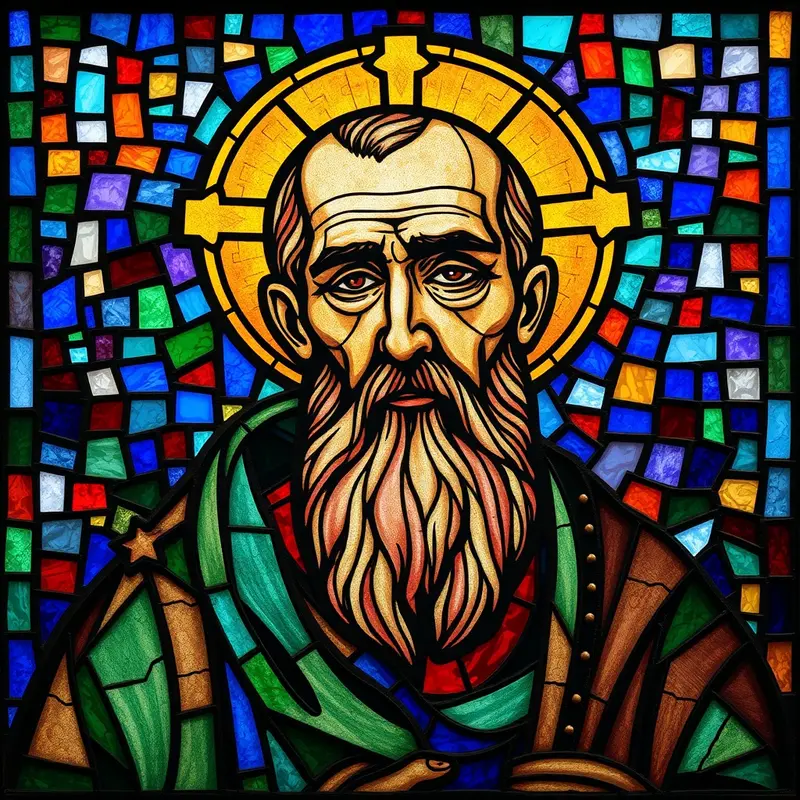
Biography
Sceva was identified in Acts 19:14 as a Jewish chief priest residing in Ephesus, though his precise priestly credentials have been debated by scholars, the title may have been self-assumed or loosely applied. His seven sons, observing the remarkable miracles performed through Paul in Ephesus, attempted to replicate apostolic exorcisms by invoking 'the Jesus whom Paul preaches' as a power formula. In a dramatic reversal, the demonized man they confronted overpowered them, leaving them fleeing wounded and naked (Acts 19:15–16). The incident swiftly became known throughout Ephesus and produced widespread reverence for the name of Jesus, culminating in a public burning of magical texts worth fifty thousand drachmas. Sceva himself does not appear personally in the encounter; he is known only through the failed enterprise of his sons.
Significance
The episode involving Sceva's sons illuminates a critical theological distinction between genuine apostolic authority grounded in personal relationship with Jesus Christ and the attempted magical manipulation of divine power as a technique. The demon's chilling response: 'Jesus I know, and Paul I know, but who are you?' (Acts 19:15), underscores that spiritual authority cannot be borrowed, purchased, or imitated. The incident served as a catalyst for the Ephesian revival, demonstrating God's jealousy for the integrity of the gospel and His use of even dramatic failures to advance His kingdom. The story warns against treating the name of Jesus as a religious formula divorced from living faith and repentance, a concern that remains pastorally relevant in every generation.
Verse Appearances (1)
Acts
References
- Orr, J. (ed.) (1915) The International Standard Bible Encyclopedia. Chicago: Howard-Severance Company. [Public Domain]
- Tyndale House, Cambridge (n.d.) Translators Individualised Proper Names with all References (TIPNR). STEPBible. Available at: https://www.stepbible.org. [CC BY 4.0]
- Wikidata contributors (n.d.) Wikidata. Available at: https://www.wikidata.org. [CC0]
- Church of England (1769) The Holy Bible, Authorized (King James) Version. [Public Domain]