
Shalmaneser
Shalmaneser, king of Assyria, besieged Samaria and conquered the northern kingdom of Israel, exiling its inhabitants and ending the kingdom's existence.
Biography
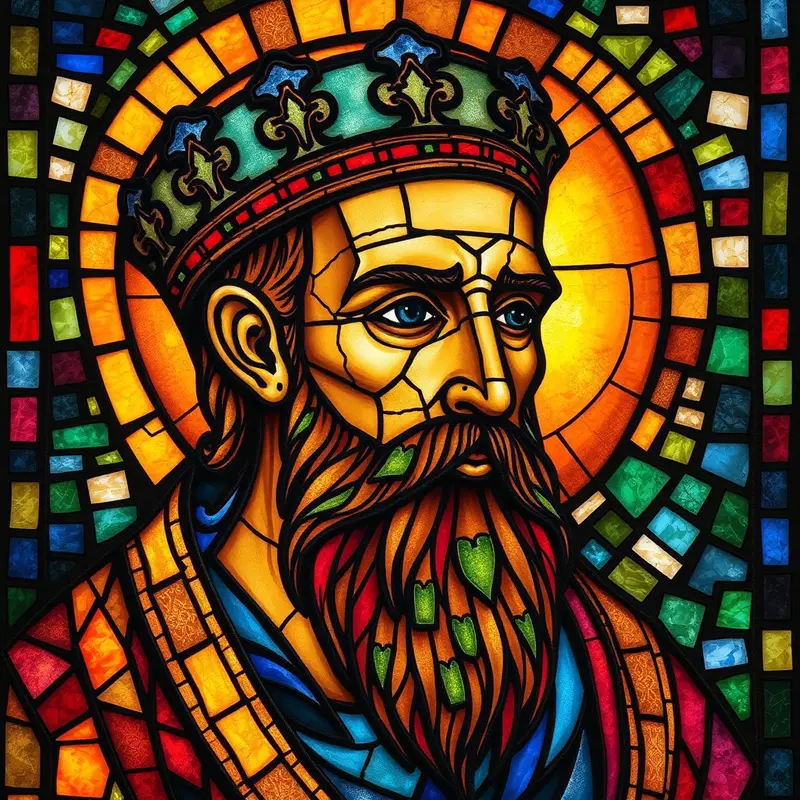
Shalmaneser V was king of Assyria from approximately 727 to 722 BC and is the foreign monarch who initiated the siege of Samaria, capital of the northern kingdom of Israel, recorded in 2 Kings 17:3–6 and 18:9–10. He came against Hoshea, Israel's last king, when Hoshea withheld tribute and sought an alliance with Egypt, a diplomatic rebellion that triggered Assyrian military response. Shalmaneser imprisoned Hoshea and besieged Samaria for three years. The city fell in 722 BC, though Shalmaneser apparently died during or shortly after the siege, with his successor Sargon II claiming credit for the final conquest and deportation of Israelite inhabitants in Assyrian annals. His campaign brought to an end the northern kingdom of Israel, scattering its population in fulfillment of repeated prophetic warnings from Amos, Hosea, and earlier prophets.
Significance
Shalmaneser V functions in biblical narrative as an instrument of divine judgment upon the northern kingdom of Israel. The theological interpretation of his conquest in 2 Kings 17:7–23 is unambiguous: Israel's exile was not the result of Assyrian military superiority alone but of the nation's persistent covenant violations, worshiping foreign gods, rejecting the prophets, and breaking the statutes of Moses. Shalmaneser thus exemplifies the biblical pattern of God using foreign empires as agents of disciplinary judgment upon His unfaithful people, a theme prominent in Isaiah, Jeremiah, and Habakkuk. His campaign warns every generation that political power and national security are ultimately contingent on faithfulness to God, and that covenantal apostasy, however long tolerated, will ultimately provoke divine response.
Verse Appearances (3)
Hosea
References
- Orr, J. (ed.) (1915) The International Standard Bible Encyclopedia. Chicago: Howard-Severance Company. [Public Domain]
- Tyndale House, Cambridge (n.d.) Translators Individualised Proper Names with all References (TIPNR). STEPBible. Available at: https://www.stepbible.org. [CC BY 4.0]
- Wikidata contributors (n.d.) Wikidata. Available at: https://www.wikidata.org. [CC0]
- Church of England (1769) The Holy Bible, Authorized (King James) Version. [Public Domain]