
Shamgar
Shamgar, the son of Anath, was a judge of Israel who delivered the nation by killing 600 Philistines with an oxgoad.
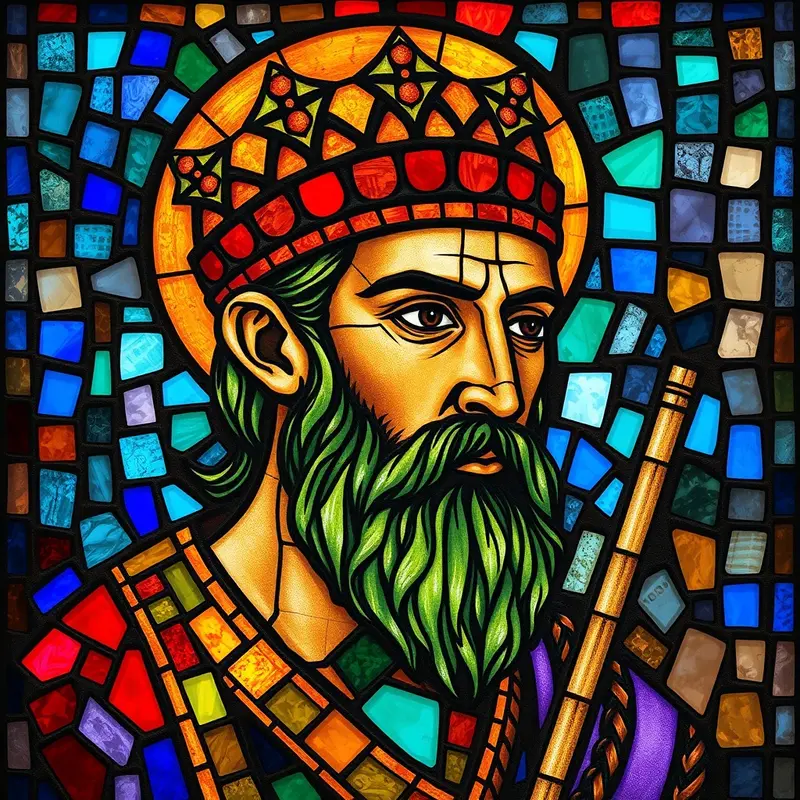
Biography
Shamgar son of Anath was one of the minor judges of Israel, whose extraordinary military exploit is recorded in a single verse, Judges 3:31, with a brief additional reference in the Song of Deborah (Judges 5:6). Operating during a period of severe Philistine oppression, Shamgar single-handedly killed six hundred Philistines using an oxgoad, an agricultural implement typically used to prod livestock, approximately eight feet in length with a metal tip. His name is possibly of Hurrian origin, suggesting he may have been of non-Israelite ancestry or from a border community, yet Scripture credits him with delivering Israel. The Song of Deborah's reference to the days of Shamgar as a time when roads were abandoned and travel ceased (Judges 5:6) confirms the severity of Philistine domination that preceded and followed his deliverance, placing his victory within a cycle of oppression, deliverance, and renewed crisis.
Significance
Shamgar's deliverance of Israel with an oxgoad rather than conventional weapons is a deliberate theological statement about the nature of divine empowerment. Like Samson's jawbone or David's sling, the improbable weapon underscores that Israel's victories are secured not by military might but by God's sovereign power working through unconventional means and unlikely agents (1 Samuel 17:47). Shamgar may well have been a Gentile or marginal figure, yet God used him to save His people, anticipating the New Testament's consistent theme of divine strength manifested through human weakness (1 Corinthians 1:27–28). His brief appearance in the canon reminds readers that God's redemptive activity is not constrained by human expectation, social convention, or conventional resources, and that faithful action in one's immediate context can have community-wide salvific consequences.
Verse Appearances (2)
References
- Orr, J. (ed.) (1915) The International Standard Bible Encyclopedia. Chicago: Howard-Severance Company. [Public Domain]
- Tyndale House, Cambridge (n.d.) Translators Individualised Proper Names with all References (TIPNR). STEPBible. Available at: https://www.stepbible.org. [CC BY 4.0]
- Wikidata contributors (n.d.) Wikidata. Available at: https://www.wikidata.org. [CC0]
- Church of England (1769) The Holy Bible, Authorized (King James) Version. [Public Domain]