
Terah
Terah was the father of Abraham, Nahor, and Haran, who left Ur to settle in Haran.
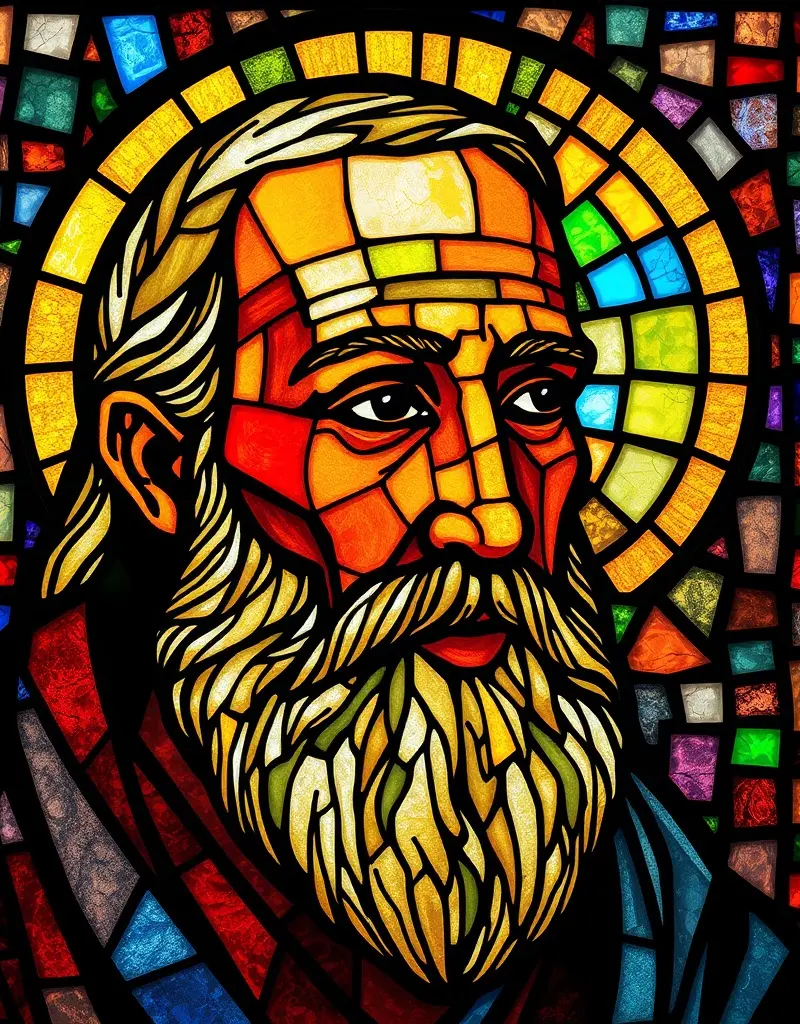
Biography
Terah was the son of Nahor and father of Abram (Abraham), Nahor, and Haran, living in Ur of the Chaldeans (Genesis 11:26-32). According to Joshua 24:2, Terah's household served other gods, placing him within the polytheistic culture of ancient Mesopotamia. Yet Terah himself initiated the great migration that would culminate in Israel's founding: he took his family, including Abram, Sarai, and Lot, and departed Ur with the intention of reaching the land of Canaan. They traveled as far as Haran, where Terah died at the age of 205. He thus began a journey he did not complete, and it fell to his son Abraham to carry forward what the father had started. Terah appears in the New Testament genealogy of Jesus (Luke 3:34).
Significance
Terah occupies a liminal place in the history of redemption: a man who moved toward the Promised Land without arriving, who set in motion a journey he was not chosen to complete. His partial obedience, or perhaps his incomplete call, highlights by contrast the radical faith of his son Abraham, who left Haran at God's explicit command (Genesis 12:1-4). Terah's idolatrous background (Joshua 24:2) reminds readers that God's elective grace operates not from human virtue but from divine sovereign choice. His story prefigures a recurring biblical pattern: God working through broken, partial, and even pagan lineages to advance His purposes, and calling descendants to go further than their forebears.
Verse Appearances (5)
References
- Orr, J. (ed.) (1915) The International Standard Bible Encyclopedia. Chicago: Howard-Severance Company. [Public Domain]
- Tyndale House, Cambridge (n.d.) Translators Individualised Proper Names with all References (TIPNR). STEPBible. Available at: https://www.stepbible.org. [CC BY 4.0]
- Church of England (1769) The Holy Bible, Authorized (King James) Version. [Public Domain]