
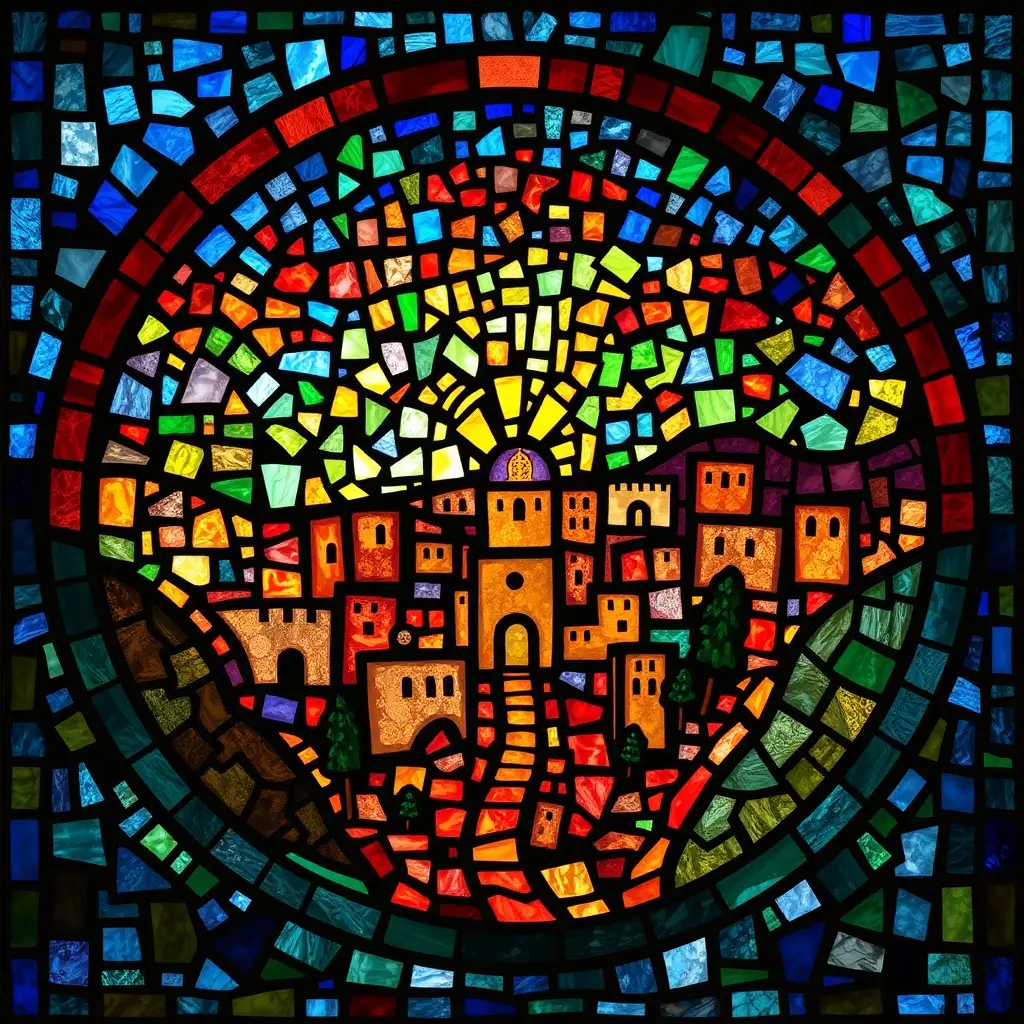
City of Salt
City of Salt is an ancient city mentioned in the Old Testament, located in the region of Judea in modern-day Israel. Known today as Qumran. It appears across 1 verse in Scripture.
Biblical History
The City of Salt appears once in the Old Testament, listed among the wilderness cities allocated to the tribe of Judah during the division of the land under Joshua (Joshua 15:62). It is grouped alongside En Gedi and five other settlements in the desolate region bordering the Dead Sea, suggesting it served as a remote outpost in the Judean wilderness. The name likely derives from the salt-rich terrain characteristic of the Dead Sea region, where mineral deposits and evaporite formations are abundant. While the city receives no further narrative attention in Scripture, its location in the wilderness zone held significance for those who sought refuge in these remote areas. The broader Judean wilderness, stretching from the highlands down to the Rift Valley, served as a place of retreat for figures including David during his flight from Saul. The inclusion of the City of Salt in the tribal allotment underscores Israel's claim to even the most austere territories of the Promised Land.
Archaeological & Historical Notes
Scholars have long proposed an identification of the City of Salt with Khirbet Qumran, situated on a marl terrace above the northwestern shore of the Dead Sea. Qumran is best known as the site where the Dead Sea Scrolls were discovered in 1947 in nearby caves. Excavations by Roland de Vaux in the 1950s revealed an Iron Age occupation level beneath the later Second Temple period settlement, lending credence to the biblical identification. The site's proximity to salt formations and its geographic alignment with other cities listed in Joshua 15 support this association, though the identification remains provisional among scholars.
Verse Appearances (1)
Josh
References
- Orr, J. (ed.) (1915) The International Standard Bible Encyclopedia. Chicago: Howard-Severance Company. [Public Domain]
- OpenBible.info (n.d.) Bible Geocoding. Available at: https://www.openbible.info/geo/. [CC BY 4.0]
- Bagnall, R. et al. (eds.) (n.d.) Pleiades: A Gazetteer of Past Places. Available at: https://pleiades.stoa.org. [CC BY 3.0]
- Wikidata contributors (n.d.) Wikidata. Available at: https://www.wikidata.org. [CC0]
- Lawrence, D. et al. (2025) Villages to Empires: a settlement dataset for the Southern Levant. doi:10.5281/zenodo.15111732. [CC BY 4.0]
- Church of England (1769) The Holy Bible, Authorized (King James) Version. [Public Domain]