
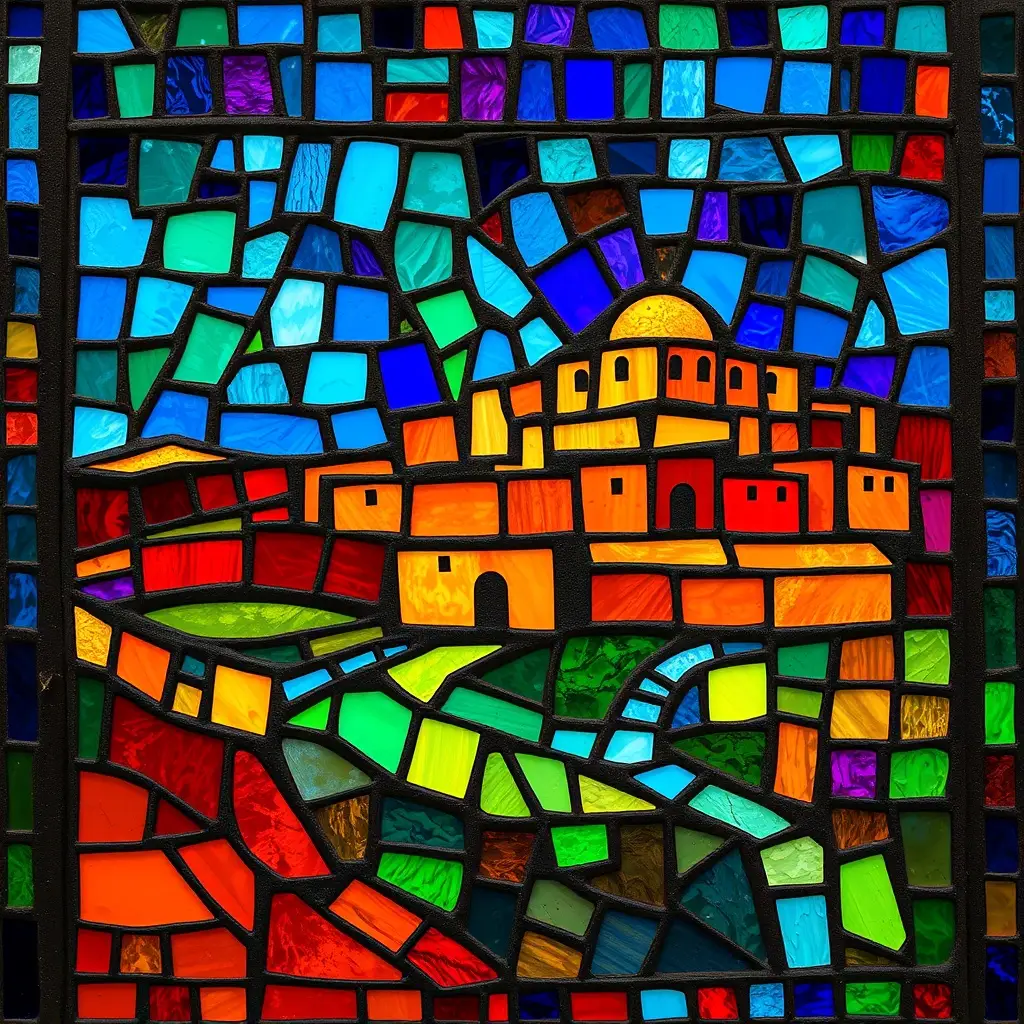
Hazar-gaddah
Hazar-gaddah is an ancient city mentioned in the Old Testament, located in the region of Judea in modern-day Israel. Known today as Tel Beer Sheva. It appears across 1 verse in Scripture.
Biblical History
Hazar-gaddah, meaning "village of Gad" or "enclosure of good fortune," appears once in the Old Testament in the list of cities allotted to the tribe of Judah in the Negev district. Joshua 15:27 includes Hazar-gaddah among the cities of the southern portion of Judah's inheritance, naming it alongside Heshmon and Beth-pelet in a cluster of settlements near the Beer-sheba basin. The distribution of cities in Joshua 15 reflects the administrative geography of the tribal territories as established during the Israelite settlement period, and Hazar-gaddah represents one of the southernmost settlements claimed by Judah in the Negev. The name's Gadite associations are somewhat anomalous for a Judahite city, possibly reflecting earlier population movements or the mixed settlement patterns of the Negev borderlands. The Beer-sheba region in which Hazar-gaddah apparently lay was a zone of considerable biblical importance, it was the site of Abraham's covenant with Abimelech (Genesis 21), the southern boundary marker of Israel expressed in the phrase "from Dan to Beer-sheba," and a center of administrative and religious life during the monarchy. Hazar-gaddah's inclusion in the Judahite city list affirms the biblical picture of substantial Israelite settlement in the Negev during the Iron Age.
Archaeological & Historical Notes
The association of Hazar-gaddah with Tel Beer Sheva reflects geographic proximity rather than a precise identification, as Tel Beer Sheva (Tel es-Saba) is most commonly identified with biblical Beer-sheba itself. Excavations at Tel Beer Sheva have been extensive, conducted primarily by Yohanan Aharoni and Zeev Herzog, revealing a well-planned Iron Age city with a distinctive tripartite storehouse complex, a horned altar, and a deep water system. The surrounding area contains multiple Iron Age sites that may correspond to the cluster of Judahite Negev cities listed in Joshua 15. The precise location of Hazar-gaddah among these remains unresolved without additional epigraphic evidence.
Verse Appearances (1)
Josh
References
- Orr, J. (ed.) (1915) The International Standard Bible Encyclopedia. Chicago: Howard-Severance Company. [Public Domain]
- OpenBible.info (n.d.) Bible Geocoding. Available at: https://www.openbible.info/geo/. [CC BY 4.0]
- Bagnall, R. et al. (eds.) (n.d.) Pleiades: A Gazetteer of Past Places. Available at: https://pleiades.stoa.org. [CC BY 3.0]
- Wikidata contributors (n.d.) Wikidata. Available at: https://www.wikidata.org. [CC0]
- Lawrence, D. et al. (2025) Villages to Empires: a settlement dataset for the Southern Levant. doi:10.5281/zenodo.15111732. [CC BY 4.0]
- Church of England (1769) The Holy Bible, Authorized (King James) Version. [Public Domain]