
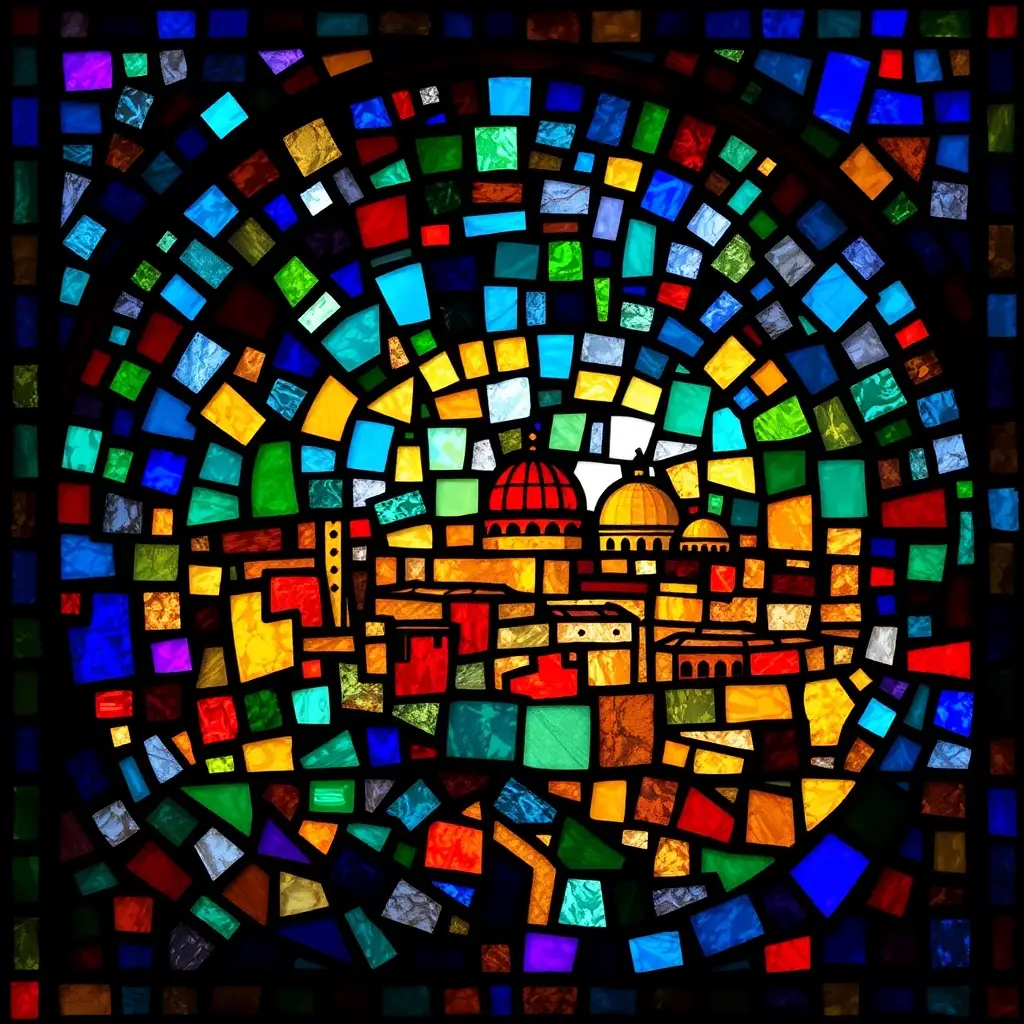
Second Quarter
Second Quarter is an ancient city mentioned in the Old Testament, located in the region of Judea in modern-day Israel. Known today as Jerusalem. It appears across 4 verses in Scripture.
Biblical History
The Second Quarter (Hebrew: Mishneh) refers to a distinct district of Jerusalem mentioned in several Old Testament passages. It first appears in 2 Kings 22:14 and the parallel account in 2 Chronicles 34:22, where the prophetess Huldah is described as residing in the Second Quarter of Jerusalem during the reign of King Josiah (circa 622 BC). When the Book of the Law was discovered during Temple renovations, it was Huldah in the Mishneh whom the king's officials consulted, and she delivered the Lord's devastating oracle of judgment against Judah. The district also appears in Zephaniah 1:10, where the prophet warns that on the day of the Lord's judgment, "a cry will go up from the Fish Gate, wailing from the Second Quarter, and a loud crash from the hills." Nehemiah 3:9-12 mentions the "district" of Jerusalem in the context of wall repairs, which may reference the same area. The Second Quarter likely represented the expansion of Jerusalem westward onto the Western Hill during the eighth-seventh centuries BC, reflecting the city's growth under the Davidic monarchy.
Archaeological & Historical Notes
The Second Quarter (Mishneh) is identified with the Western Hill of Jerusalem, the area of the city's expansion beyond the original City of David and Temple Mount. Archaeological evidence from Hezekiah's era (late eighth century BC) confirms significant westward growth, including the discovery of the Broad Wall in the Jewish Quarter, a massive fortification seven meters thick, built by Hezekiah to protect the expanded city. Excavations by Nahman Avigad uncovered Israelite-period houses, pottery, and administrative artifacts in this district. The expansion is attributed to the influx of refugees following the fall of the northern kingdom in 722 BC. Today, the area corresponds roughly to the Jewish and Armenian Quarters of Jerusalem's Old City.
Verse Appearances (4)
References
- Orr, J. (ed.) (1915) The International Standard Bible Encyclopedia. Chicago: Howard-Severance Company. [Public Domain]
- OpenBible.info (n.d.) Bible Geocoding. Available at: https://www.openbible.info/geo/. [CC BY 4.0]
- Bagnall, R. et al. (eds.) (n.d.) Pleiades: A Gazetteer of Past Places. Available at: https://pleiades.stoa.org. [CC BY 3.0]
- Wikidata contributors (n.d.) Wikidata. Available at: https://www.wikidata.org. [CC0]
- Lawrence, D. et al. (2025) Villages to Empires: a settlement dataset for the Southern Levant. doi:10.5281/zenodo.15111732. [CC BY 4.0]
- Church of England (1769) The Holy Bible, Authorized (King James) Version. [Public Domain]