
Aretas
Aretas, the king of the Nabataeans, governed Damascus and tried to arrest Paul.
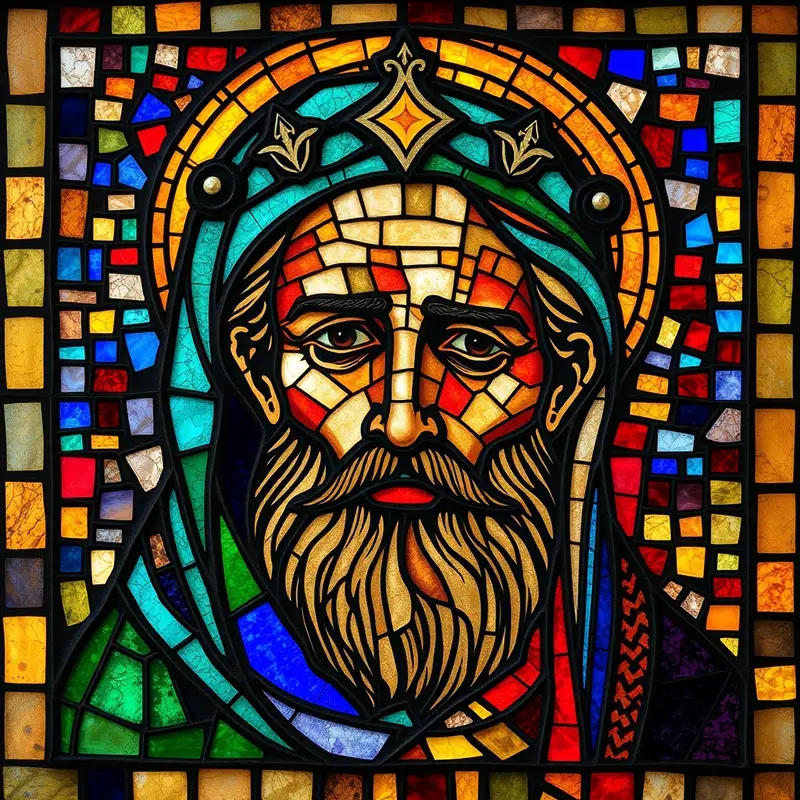
Biography
Aretas IV Philopatris was king of the Nabataean Arabs from approximately 9 BC to AD 40, ruling from the magnificent rock-hewn city of Petra. He is mentioned in 2 Corinthians 11:32, where Paul recounts that the governor under Aretas kept watch over the city of Damascus in order to seize him, and Paul escaped by being lowered in a basket through a window in the city wall. This episode corresponds roughly with the early period following Paul's conversion (Acts 9:23–25). Aretas had strong political motivations to control Damascus and its surrounding region, and his conflict with the Herods, his daughter had been the first wife of Herod Antipas, who divorced her to marry Herodias, shaped the political landscape of the eastern Mediterranean in the New Testament period.
Significance
Aretas IV occupies a unique position in biblical history as a pagan king whose political machinations were unwittingly employed to test and strengthen the resolve of the apostle Paul. The escape from Damascus (2 Corinthians 11:32–33; Acts 9:24–25) came very early in Paul's apostolic career and illustrates the immediate and intense opposition that greeted his proclamation of Christ. Paul's willingness to catalogue this humiliating flight, lowered in a basket like a fugitive, as part of his apostolic "boasting in weakness" (2 Corinthians 11:30) turns a near-capture into a theological testimony: God's power is made perfect in human weakness. Aretas also appears in Josephus, grounding Paul's narrative in verifiable history and confirming the historical reliability of the New Testament's biographical details.
Verse Appearances (1)
2 Corinthians
References
- Orr, J. (ed.) (1915) The International Standard Bible Encyclopedia. Chicago: Howard-Severance Company. [Public Domain]
- Tyndale House, Cambridge (n.d.) Translators Individualised Proper Names with all References (TIPNR). STEPBible. Available at: https://www.stepbible.org. [CC BY 4.0]
- Church of England (1769) The Holy Bible, Authorized (King James) Version. [Public Domain]