
Artemas
Artemas was a companion of Paul who could potentially replace Titus in Crete (Titus 3:12).
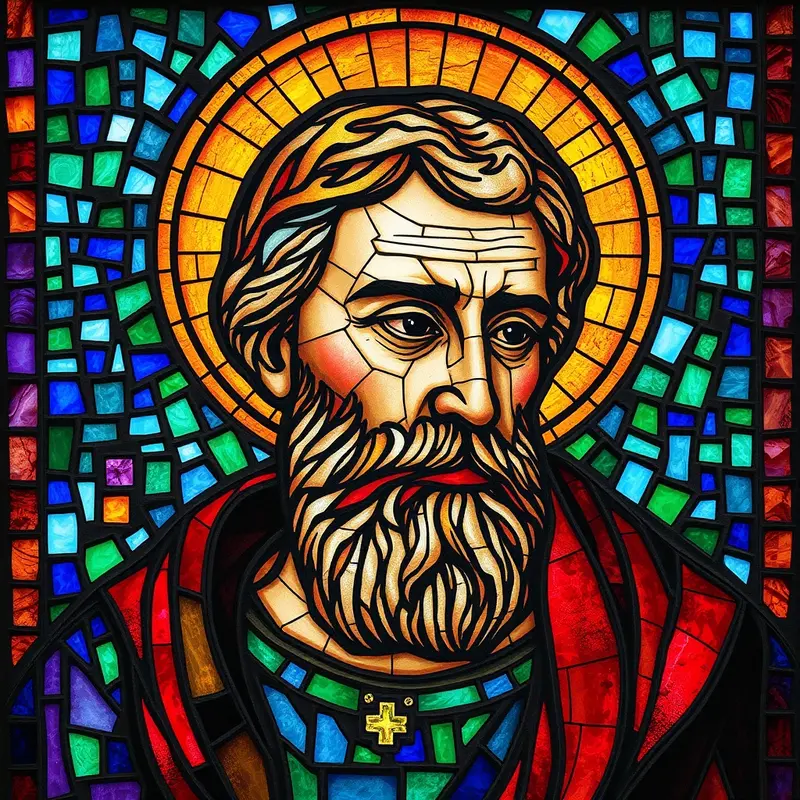
Biography
Artemas is mentioned only once in the New Testament, in Titus 3:12, where Paul tells Titus that he intends to send either Artemas or Tychicus to Crete so that Titus might then join Paul in Nicopolis, where Paul planned to winter. This brief reference reveals that Artemas was trusted enough by Paul to be considered for independent ministry leadership, capable of overseeing the churches of Crete in Titus's absence. His name is Greek (a shortened form of Artemidoros, meaning "gift of Artemis"), suggesting a Gentile background. Beyond this single verse, the New Testament says nothing more of him. Early church tradition mentions Artemas as a bishop, though such traditions cannot be confirmed by Scripture alone.
Significance
Though Artemas appears only in a single verse, his mention in Titus 3:12 illuminates the organized and networked character of Paul's missionary enterprise. Paul maintained a circle of reliable co-workers, including Tychicus (Ephesians 6:21; Colossians 4:7; 2 Timothy 4:12) and Artemas, who could be deployed to serve churches as circumstances required. This flexibility and interdependence was essential to the health of the early Christian mission. Theologically, Artemas represents the many unnamed and barely-named workers whose faithful service sustained the apostolic mission, reminding readers that the body of Christ's advance has always depended on the faithful contributions of those the world and even church history scarcely notices (1 Corinthians 12:22–24).
Verse Appearances (1)
Titus
References
- Orr, J. (ed.) (1915) The International Standard Bible Encyclopedia. Chicago: Howard-Severance Company. [Public Domain]
- Tyndale House, Cambridge (n.d.) Translators Individualised Proper Names with all References (TIPNR). STEPBible. Available at: https://www.stepbible.org. [CC BY 4.0]
- Church of England (1769) The Holy Bible, Authorized (King James) Version. [Public Domain]