
Barachel
Barachel the Buzite was the father of Elihu, one of the men who spoke to Job.
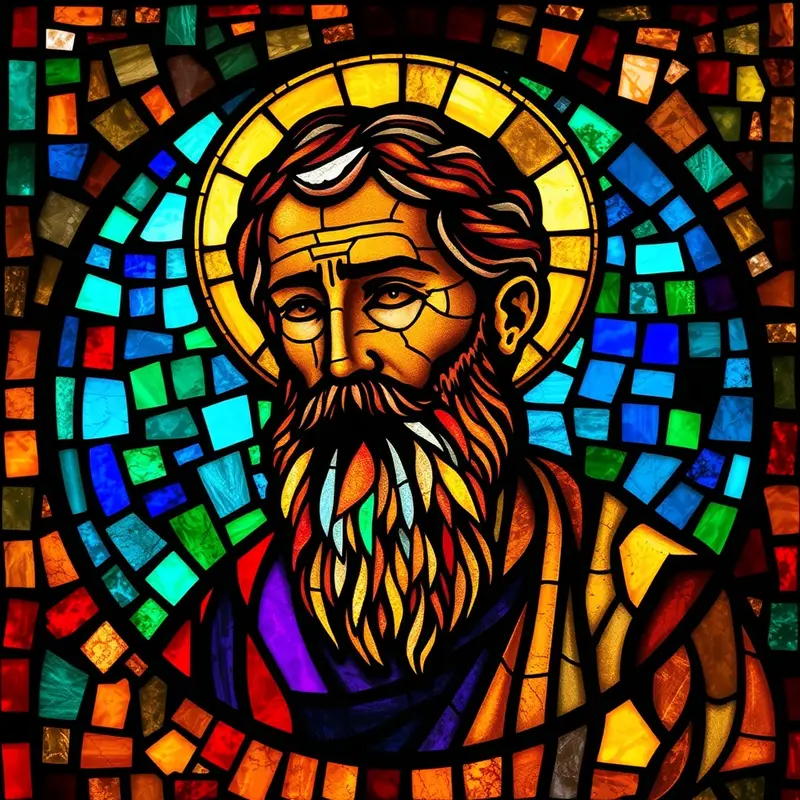
Biography
Barachel the Buzite was the father of Elihu, the fourth and final human speaker in the book of Job (Job 32:2, 6). His name means 'God blesses' in Hebrew, and his designation as 'the Buzite' connects him to Buz, a son of Nahor, Abraham's brother (Genesis 22:21), placing him within the broader Semitic world of the patriarchal era east of Canaan. Barachel himself never speaks in the narrative, but his careful identification, by name, clan, and tribe of Ram, suggests that Elihu's lineage carried weight in the ancient context, lending credibility to his intervention in Job's dispute. As a Buzite, Elihu was not an Israelite, reflecting the universal scope of wisdom traditions in the ancient Near East. Barachel's legacy was entirely realized in the son he fathered.
Significance
Barachel's significance lies entirely in his paternity of Elihu, whose speeches in Job 32–37 occupy a unique position in the book's theology. Unlike the three friends whom God rebukes for speaking wrongly (Job 42:7), Elihu is not explicitly condemned, and several scholars regard his speeches as a preparation for the divine speeches in Job 38–41. That Barachel's name means 'God blesses' carries ironic resonance, his son was born into a tradition of wisdom and blessing, yet must wrestle with the most profound questions of suffering and divine justice. Barachel's Buzite lineage reminds readers that wisdom and genuine insight into God's ways were not confined to Israel alone but were gifts distributed across humanity according to God's sovereign grace.
Verse Appearances (2)
References
- Orr, J. (ed.) (1915) The International Standard Bible Encyclopedia. Chicago: Howard-Severance Company. [Public Domain]
- Tyndale House, Cambridge (n.d.) Translators Individualised Proper Names with all References (TIPNR). STEPBible. Available at: https://www.stepbible.org. [CC BY 4.0]
- Wikidata contributors (n.d.) Wikidata. Available at: https://www.wikidata.org. [CC0]
- Church of England (1769) The Holy Bible, Authorized (King James) Version. [Public Domain]