
Barak
Barak, son of Abinoam, led the Israelites to victory against Canaanite forces under Deborah's leadership.
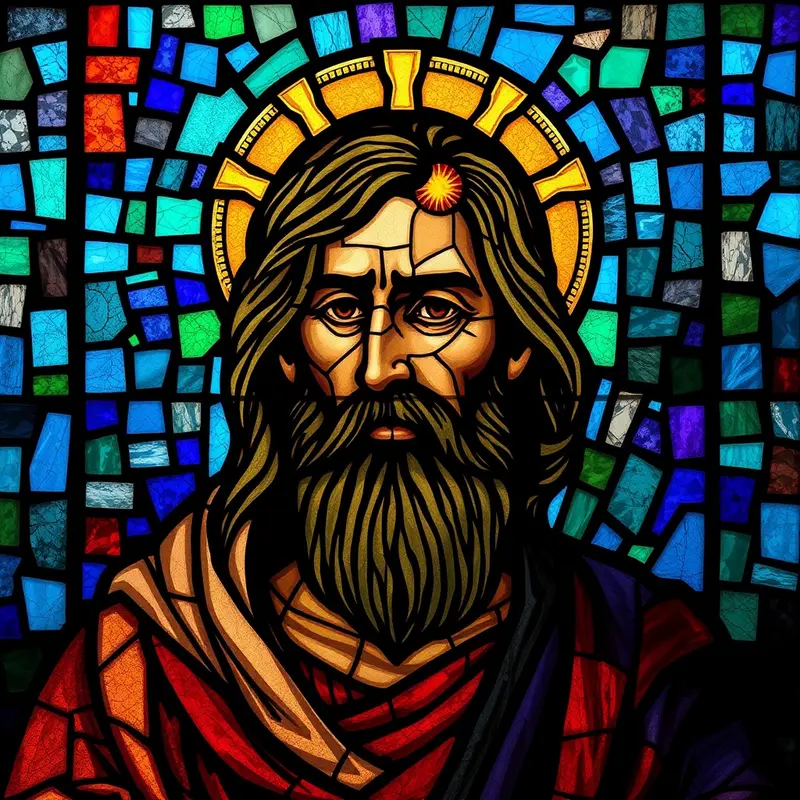
Biography
Barak son of Abinoam, from Kedesh in Naphtali, was the military commander whom the prophetess and judge Deborah summoned to lead Israel's forces against the Canaanite army of Jabin, king of Hazor, commanded by the general Sisera (Judges 4:6). Deborah conveyed God's command to Barak to mobilize ten thousand men from Naphtali and Zebulun and attack Sisera at the Kishon River. Barak agreed only on the condition that Deborah accompany him, a condition she accepted while warning him that the glory of the victory would go to a woman. The battle was a decisive rout: God threw Sisera's forces into panic, the Kishon swept away the chariots, and the entire army was destroyed. Sisera himself fled and was killed by Jael. Barak and Deborah celebrated the victory with a triumphant song (Judges 5). He is honored in Hebrews 11:32 among the heroes of faith.
Significance
Barak's story is theologically rich in its exploration of faith, leadership, and divine initiative. His hesitation to go without Deborah has been variously interpreted, as a lack of faith, as prudent deference to prophetic authority, or as an expression of dependence on God's word through His prophet. Whatever the motivation, Scripture ultimately honors him in Hebrews 11 as a man of faith, suggesting that imperfect, conditionally expressed faith can still be counted as genuine trust in God. The battle against Sisera also demonstrates that God can overthrow superior military technology, iron chariots, through the simple deployment of His people. Barak prefigures the principle that victory belongs to those who respond to God's command, however haltingly.
Verse Appearances (7)
References
- Orr, J. (ed.) (1915) The International Standard Bible Encyclopedia. Chicago: Howard-Severance Company. [Public Domain]
- Tyndale House, Cambridge (n.d.) Translators Individualised Proper Names with all References (TIPNR). STEPBible. Available at: https://www.stepbible.org. [CC BY 4.0]
- Church of England (1769) The Holy Bible, Authorized (King James) Version. [Public Domain]