
Bartimaeus
Bartimaeus, a blind beggar, was healed by Jesus as He was leaving Jericho.
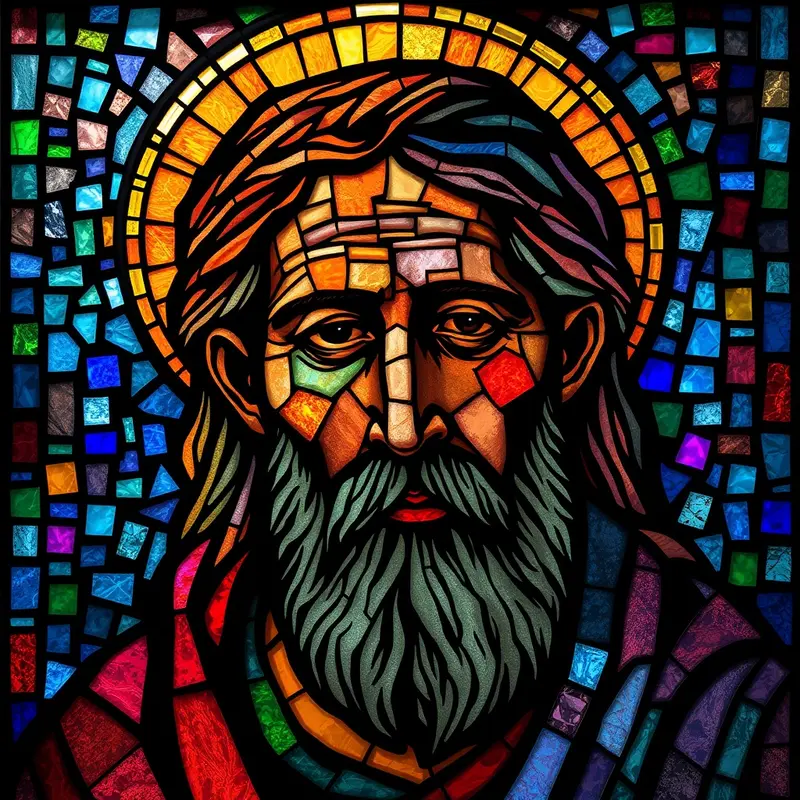
Biography
Bartimaeus, son of Timaeus, was a blind man who sat begging along the road near Jericho when Jesus passed by on his final journey toward Jerusalem (Mark 10:46–52). Upon hearing the crowd announce Jesus of Nazareth, he cried out persistently, 'Jesus, Son of David, have mercy on me!', an address carrying profound messianic significance. Despite the crowd's attempts to silence him, he shouted all the more until Jesus stopped and called for him. Casting aside his cloak, he leapt to his feet and came to Jesus, who asked what he wanted. Bartimaeus asked to receive his sight, was immediately healed, and, notably, chose to follow Jesus on the road toward Jerusalem rather than simply return to his former life. Mark's Gospel uniquely names him, suggesting he was known in the early Christian community.
Significance
Bartimaeus is a paradigmatic figure of saving faith in the Synoptic Gospels. His persistent cry, 'Son of David, have mercy on me,' is one of the clearest public messianic acclamations in the narrative leading to the Passion, functioning as a prelude to the triumphal entry. His faith is contrasted with the spiritual blindness of the religious leaders surrounding Jesus. Jesus' declaration, 'Your faith has healed you' (Mark 10:52), underscores that physical healing serves as a sign of spiritual restoration. His act of following Jesus on the way to Jerusalem models genuine discipleship: faith expressed in persistent prayer, met by grace, results in following Christ.
Verse Appearances (1)
Mark
References
- Orr, J. (ed.) (1915) The International Standard Bible Encyclopedia. Chicago: Howard-Severance Company. [Public Domain]
- Tyndale House, Cambridge (n.d.) Translators Individualised Proper Names with all References (TIPNR). STEPBible. Available at: https://www.stepbible.org. [CC BY 4.0]
- Church of England (1769) The Holy Bible, Authorized (King James) Version. [Public Domain]