
Belshazzar
Belshazzar, the last Emperor of Babylon, is mentioned in the book of Daniel as the son of Nebuchadnezzar (though historically known as the son of Nabonidus).
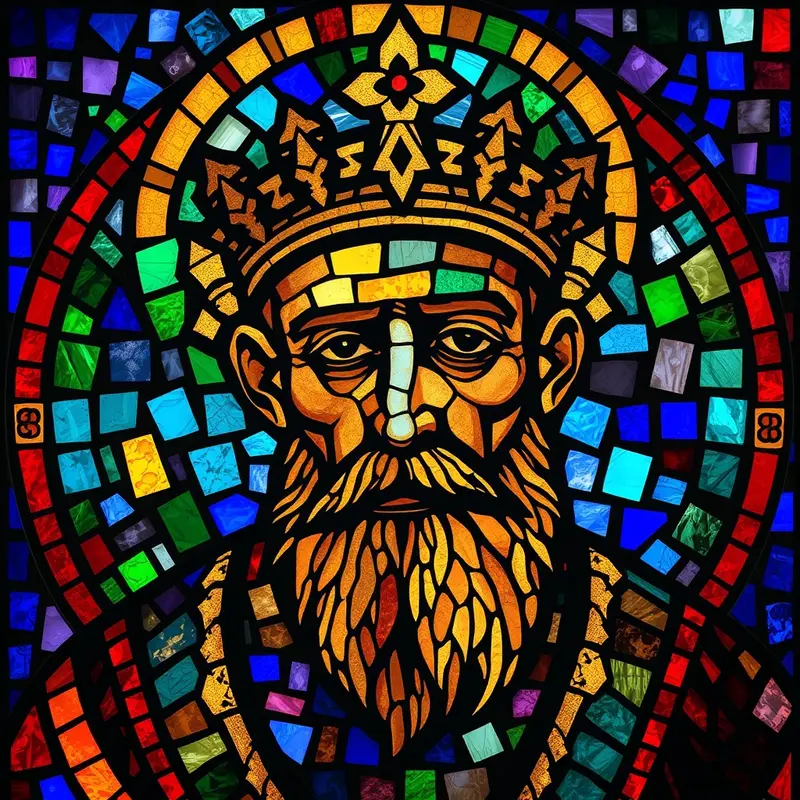
Biography
Belshazzar was the last royal figure of the Babylonian Empire, appearing prominently in Daniel 5. He hosted a lavish banquet for a thousand of his nobles, at which he commanded that the sacred vessels looted from the Jerusalem temple by Nebuchadnezzar be brought out for use as drinking vessels, an act of deliberate sacrilege against the God of Israel. During the feast, a disembodied hand appeared and inscribed the words 'Mene, Mene, Tekel, Parsin' on the wall. When the court's wise men failed to interpret the inscription, Daniel was summoned. Daniel rebuked Belshazzar for his arrogance and idolatry, then interpreted the writing as divine judgment: Belshazzar's kingdom was numbered, weighed, and divided. That very night Belshazzar was slain, and the Medo-Persian kingdom under Darius succeeded Babylon (Daniel 5:30-31).
Significance
Belshazzar's story is one of Scripture's most dramatic depictions of divine judgment against pride and sacrilege. His deliberate desecration of temple vessels, symbols of God's holiness, coupled with his boastful refusal to humble himself despite knowing what God had done to Nebuchadnezzar (Daniel 5:22), represents the height of presumptuous sin. Theologically, Belshazzar illustrates that God will not indefinitely tolerate contempt for His name or His covenant. His sudden end: 'weighed in the balances and found wanting' (Daniel 5:27), has become a universal metaphor for divine moral accounting. His story also affirms God's sovereignty over world empires, showing that no human power stands outside the reach of His judgment.
Verse Appearances (8)
References
- Orr, J. (ed.) (1915) The International Standard Bible Encyclopedia. Chicago: Howard-Severance Company. [Public Domain]
- Tyndale House, Cambridge (n.d.) Translators Individualised Proper Names with all References (TIPNR). STEPBible. Available at: https://www.stepbible.org. [CC BY 4.0]
- Church of England (1769) The Holy Bible, Authorized (King James) Version. [Public Domain]