
Bildad
Bildad the Shuhite was one of Job's three friends who came to comfort him during his affliction.
Biography
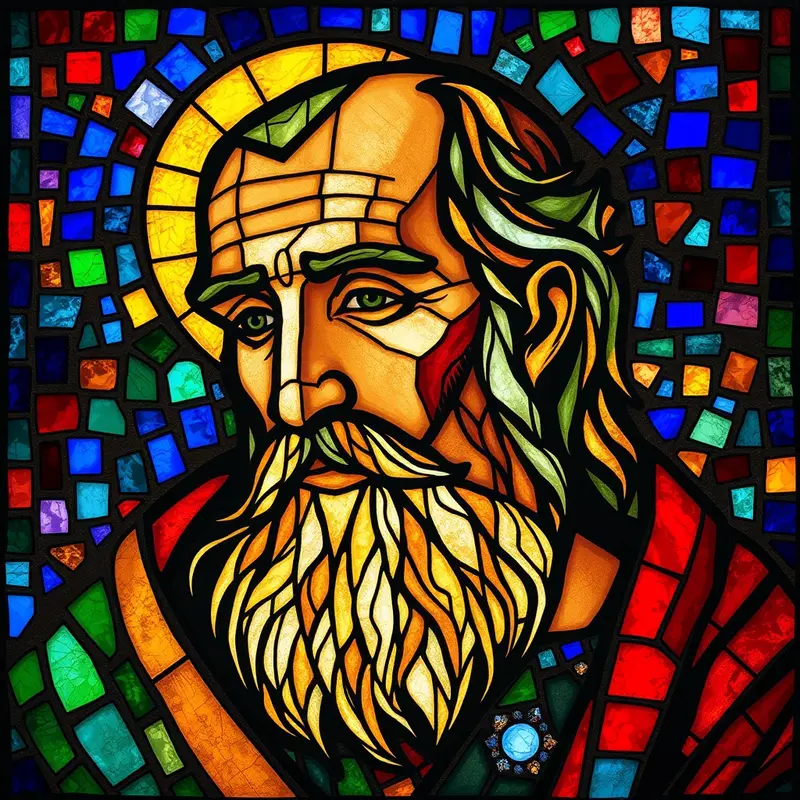
Bildad the Shuhite was one of the three friends who came to Job during his overwhelming suffering and sat with him in silence for seven days before speaking (Job 2:11-13). A descendant of Shuah, possibly a son of Abraham by Keturah (Genesis 25:2), Bildad represented the ancient wisdom tradition of the Near East. He delivered three speeches in the dialogue section of Job (chapters 8, 18, and 25), each marked by a rigid application of retributive theology: he insisted that Job's suffering was the direct consequence of hidden sin, either his own or his children's. His arguments, while eloquent and rooted in traditional wisdom, consistently failed to account for the actual nature of Job's situation, that of a righteous man tested by God. At the book's conclusion, God rebuked Bildad for not speaking what was right (Job 42:7-9).
Significance
Bildad serves as a theological foil whose function in Scripture is to expose the inadequacy of rigid, mechanistic applications of divine retribution as a complete explanation for human suffering. His confident declarations that God does not pervert justice and that the wicked always perish accurately reflect aspects of biblical truth but are deployed in a context where they become falsehoods, Job was not suffering for his sins. Bildad's divine rebuke in Job 42 is one of Scripture's sharpest critiques of theology that is technically orthodox yet pastorally and contextually wrong. His story calls all interpreters of suffering to humility, recognizing that God's ways exceed human theological systems and that the sufferer's experience must not simply be flattened by doctrinal formulas.
Verse Appearances (5)
References
- Orr, J. (ed.) (1915) The International Standard Bible Encyclopedia. Chicago: Howard-Severance Company. [Public Domain]
- Tyndale House, Cambridge (n.d.) Translators Individualised Proper Names with all References (TIPNR). STEPBible. Available at: https://www.stepbible.org. [CC BY 4.0]
- Church of England (1769) The Holy Bible, Authorized (King James) Version. [Public Domain]