
Delilah
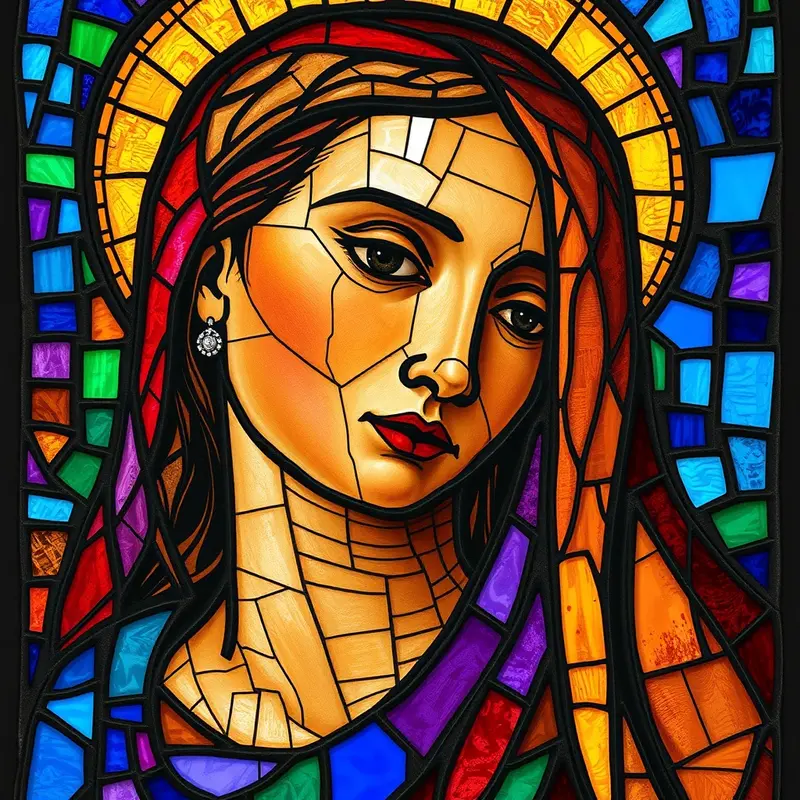
Delilah was a Philistine woman who deceived Samson into revealing the secret of his strength, leading to his capture. (Jdg.16.4,6,10,12,13,18)
Biography
Delilah was a woman from the Valley of Sorek whose association with the Philistines led her to betray Samson, the Israelite judge renowned for supernatural strength (Judges 16:4–22). The lords of the Philistines approached her with a bribe of eleven hundred pieces of silver each to discover the source of Samson's power. Through repeated, patient questioning across several failed attempts, during which Samson playfully lied, she finally wore him down, and he confessed that his uncut hair, as the sign of his Nazirite consecration to God, was the secret of his strength. She arranged for his hair to be shaved while he slept, called the Philistines, and the now-weakened Samson was captured, blinded, and imprisoned at Gaza.
Significance
Delilah is one of Scripture's most iconic figures of betrayal, her name becoming synonymous across cultures with seductive deception. Theologically, her role in Judges 16 functions as the culmination of Samson's long pattern of spiritual compromise, his repeated involvement with foreign women who drew him away from covenantal fidelity. Yet the narrative is not simply a morality tale about romantic danger. It ultimately frames Samson's downfall as the consequence of disclosing what was sacred to one who had no reverence for it. Paradoxically, Samson's capture led to his greatest act of faith-driven destruction (Judges 16:28–30), suggesting that God's redemptive purposes advance even through catastrophic human failure and betrayal.
Verse Appearances (6)
References
- Orr, J. (ed.) (1915) The International Standard Bible Encyclopedia. Chicago: Howard-Severance Company. [Public Domain]
- Tyndale House, Cambridge (n.d.) Translators Individualised Proper Names with all References (TIPNR). STEPBible. Available at: https://www.stepbible.org. [CC BY 4.0]
- Wikidata contributors (n.d.) Wikidata. Available at: https://www.wikidata.org. [CC0]
- Church of England (1769) The Holy Bible, Authorized (King James) Version. [Public Domain]