
Eber
Eber was an ancestor of Abraham, the father of Peleg and Joktan, and the eponymous ancestor of the Hebrews. (Gen.10.21,24,25; 11.14,15,16,17; Num.24.24; 1Ch.1.18,19,25; Luk.3.35)
Biography
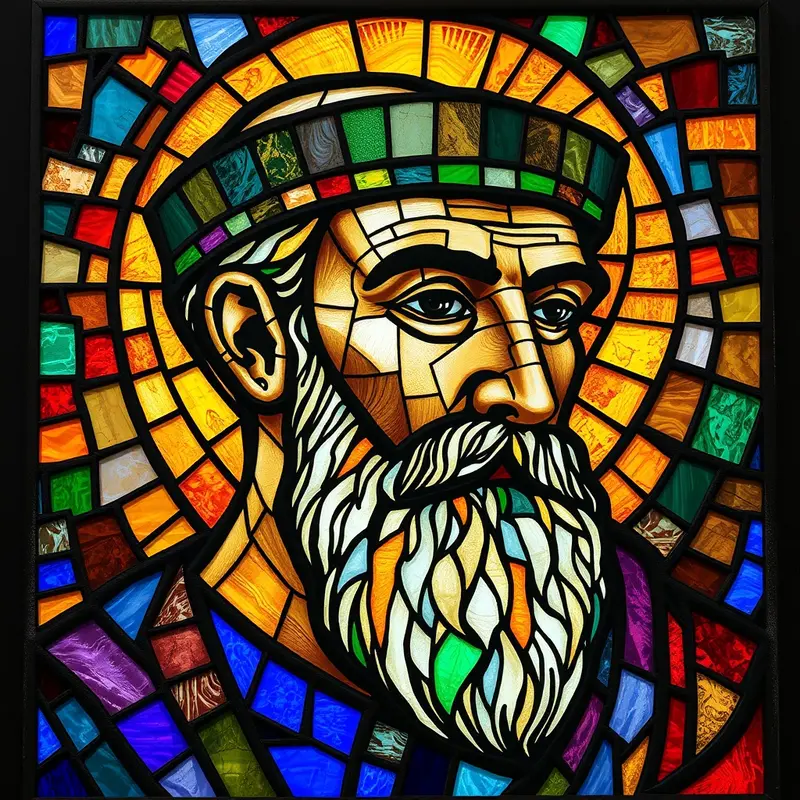
Eber was a pivotal figure in antediluvian and early post-diluvian genealogy, a great-grandson of Shem and great-great-grandfather of Abraham. According to Genesis 10:24-25 and 11:14-17, he lived 464 years and fathered two sons: Peleg, in whose days "the earth was divided," and Joktan, ancestor of numerous Arabian peoples. His name is widely regarded as the eponymous ancestor of the Hebrew people, the very term "Hebrew" (Ivri) likely derives from his name. He appears in the genealogical line connecting Noah to Abraham (Genesis 11; Luke 3:35) and is also referenced prophetically in Balaam's oracle (Numbers 24:24), where ships from Kittim are said to afflict Eber, linking his name to the broader Semitic world.
Significance
Eber holds exceptional theological importance as the ancestor whose name defines the Hebrew identity. His prominence in the Shemite genealogy (Genesis 10-11) places him at the intersection of ethnographic and redemptive history, for the covenant line from Shem to Abraham passes directly through him. His son Peleg's birth during the "division of the earth" (Genesis 10:25), possibly referencing the dispersal at Babel, marks Eber's era as a turning point in human history. Luke's inclusion of Eber in the genealogy of Jesus (Luke 3:35) confirms his place in the unbroken lineage through which the Savior entered the world, making him a quiet but indispensable figure in the story of redemption.
Verse Appearances (12)
References
- Orr, J. (ed.) (1915) The International Standard Bible Encyclopedia. Chicago: Howard-Severance Company. [Public Domain]
- Tyndale House, Cambridge (n.d.) Translators Individualised Proper Names with all References (TIPNR). STEPBible. Available at: https://www.stepbible.org. [CC BY 4.0]
- Wikidata contributors (n.d.) Wikidata. Available at: https://www.wikidata.org. [CC0]
- Church of England (1769) The Holy Bible, Authorized (King James) Version. [Public Domain]