
Noah
Noah was a righteous man who built the ark and survived the great flood with his family.
Biography
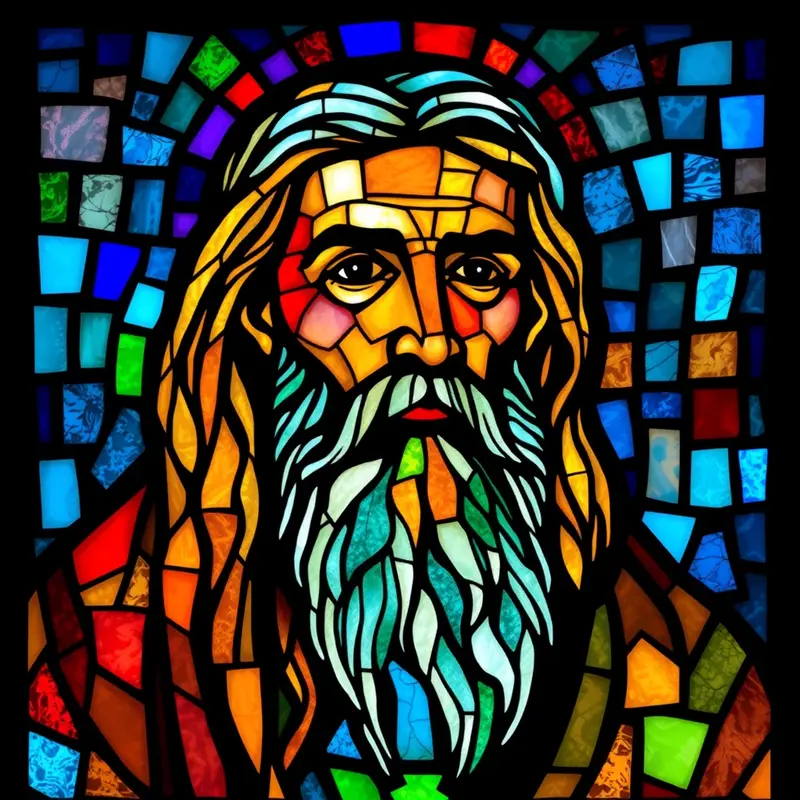
Noah, son of Lamech and tenth generation from Adam through the line of Seth, stands as one of the towering figures of biblical history. In an age when 'every inclination of the thoughts of the human heart was only evil all the time' (Genesis 6:5), Noah alone 'found favor in the eyes of the Lord' and 'walked faithfully with God' (Genesis 6:8-9). Commanded to build an enormous ark, he obeyed despite the unprecedented nature of the task, preserving his family and representative pairs of every living creature through the catastrophic global flood (Genesis 6-9). After the waters receded, Noah offered sacrifice, and God established a covenant with him, promising never again to destroy the earth by flood and sealing this promise with the rainbow. Noah lived 950 years, bridging the antediluvian and post-diluvian worlds and becoming the second father of all humanity.
Significance
Noah occupies a pivotal position in redemptive history as the agent through whom God preserved humanity and the created order for His ultimate purposes of salvation. The New Testament draws rich theological meaning from his story: Hebrews 11:7 presents him as a paradigm of faith, while 1 Peter 3:20-21 connects the flood waters to baptism as a symbol of salvation through judgment. Jesus Himself invoked the days of Noah as a typological warning about the suddenness of His return (Matthew 24:37-39). The Noahic covenant established universal principles of divine governance, including the sanctity of human life and God's commitment to sustaining creation. Noah demonstrates that even in the darkest periods of human history, God preserves a faithful remnant through whom His redemptive purposes continue.
Verse Appearances (47)
Genesis
1Chr
Isaiah
Hebrews
1Pet
2Pet
References
- Orr, J. (ed.) (1915) The International Standard Bible Encyclopedia. Chicago: Howard-Severance Company. [Public Domain]
- Tyndale House, Cambridge (n.d.) Translators Individualised Proper Names with all References (TIPNR). STEPBible. Available at: https://www.stepbible.org. [CC BY 4.0]
- Wikidata contributors (n.d.) Wikidata. Available at: https://www.wikidata.org. [CC0]
- Church of England (1769) The Holy Bible, Authorized (King James) Version. [Public Domain]
- Claus Westermann (1984) Genesis 1-11: A Commentary.Form-critical commentary with extensive comparative analysis of the flood narrative and ANE parallels.
- Gordon J. Wenham (1987) Genesis 1-15. Word Biblical Commentary, vol. 1.Critical commentary addressing the literary structure and theological significance of the Noah pericope.
- Andrew R. George (2003) The Babylonian Gilgamesh Epic: Introduction, Critical Edition and Cuneiform Texts. Available at: https://eprints.soas.ac.uk/1603/2/George%20Babylonian%20Gilgamesh%202.pdf.Definitive critical edition of Gilgamesh; essential for comparing the Utnapishtim flood with the Noah story.
- Lloyd R. Bailey (1989) Noah: The Person and the Story in History and Tradition. doi:10.2307/1519566.Traces the Noah figure through biblical, Jewish, and early Christian traditions using historical-critical methods.