
Jehudi
Jehudi was an official during King Jehoiakim's reign who read Jeremiah's scroll to the king, who then burned it piece by piece.
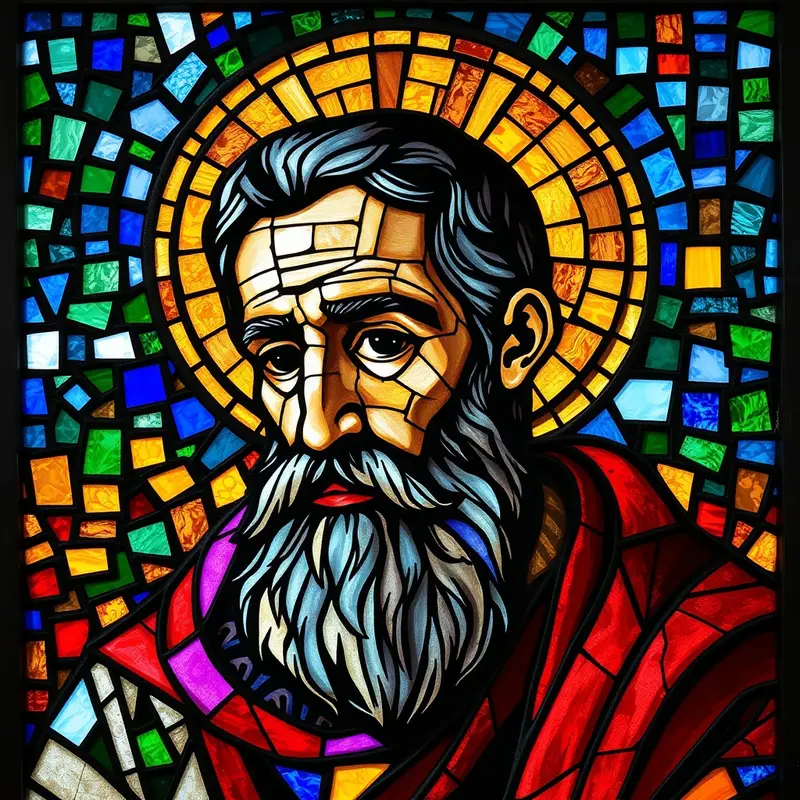
Biography
Jehudi, son of Nethaniah and a royal official in Jehoiakim's court, occupies a memorable if somber role in Jeremiah 36. At the command of the court princes, he retrieved the scroll that Baruch had dictated at Jeremiah's direction and carried it before King Jehoiakim. There, in the winter palace with a fire burning in the hearth, Jehudi read the scroll aloud column by column while the king systematically cut each portion with a penknife and cast it into the flames (Jeremiah 36:21–23). He thus became the unwilling instrument through which both the word of God and the king's contemptuous rejection of it were publicly dramatized. His lineage, traced back three generations to Cushi, may suggest partial foreign ancestry within the Judean court.
Significance
Jehudi's role in Jeremiah 36 serves as a powerful object lesson in the futility of human attempts to destroy the divine word. Jehoiakim's destruction of the scroll, with Jehudi as the reader, prompted God to command an expanded second scroll, demonstrating that Scripture cannot be silenced by royal decree or physical destruction (Jeremiah 36:27–32). Jehudi's obedient reading stands in implicit contrast to the king's defiant burning; he performed his duty while the king incurred judgment. This episode has profound canonical significance, affirming the indestructibility of God's revealed word and foreshadowing the ultimate fulfillment of every prophetic warning Jehoiakim sought to erase.
Verse Appearances (3)
References
- Orr, J. (ed.) (1915) The International Standard Bible Encyclopedia. Chicago: Howard-Severance Company. [Public Domain]
- Tyndale House, Cambridge (n.d.) Translators Individualised Proper Names with all References (TIPNR). STEPBible. Available at: https://www.stepbible.org. [CC BY 4.0]
- Wikidata contributors (n.d.) Wikidata. Available at: https://www.wikidata.org. [CC0]
- Church of England (1769) The Holy Bible, Authorized (King James) Version. [Public Domain]