
Maaseiah
Maaseiah was an ancestor of Jaazaniah, who was associated with the Rechabites during the reign of Jehoiakim (Jer.35.4).
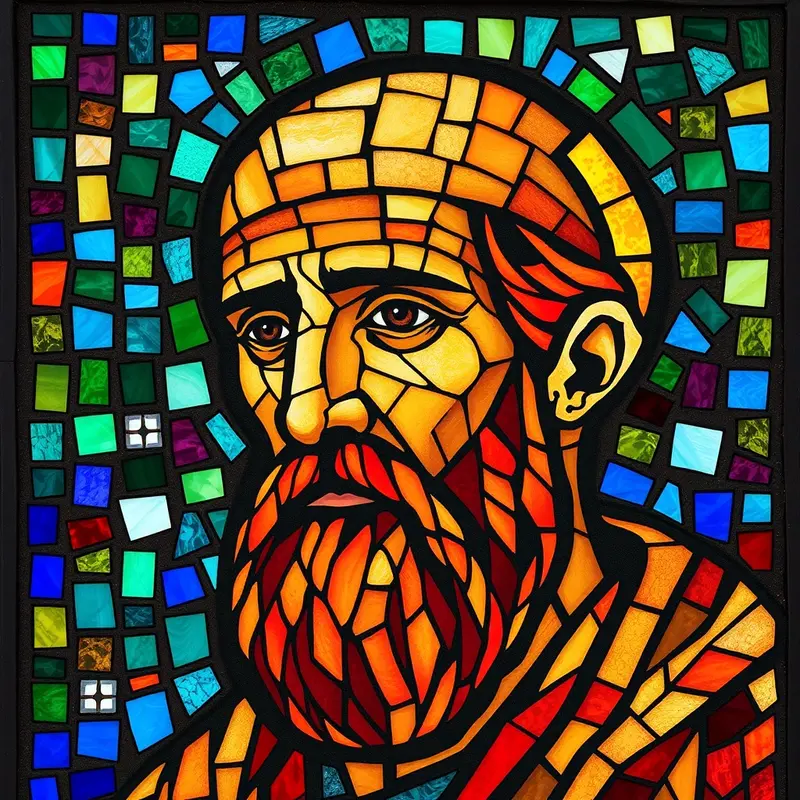
Biography
Maaseiah, identified as the son of Shallum, served as a keeper of the threshold of the temple during the reign of King Jehoiakim of Judah. He appears in Jeremiah 35:4, where the prophet Jeremiah was directed to bring the Rechabite family into one of the temple chambers, specifically into the room of the sons of Hanan son of Igdaliah, the man of God, which was near the chamber of Maaseiah son of Shallum. Maaseiah's role as a temple gatekeeper was a position of considerable responsibility, as these officials controlled access to the sacred precincts and maintained the security and sanctity of the temple complex. His grandson (or descendant) Jaazaniah was associated with the Rechabites whom Jeremiah tested for their faithfulness to ancestral vows.
Significance
Maaseiah's mention in the context of Jeremiah's test of the Rechabites places him within one of the most striking object lessons in prophetic literature. The Rechabites' unwavering loyalty to their ancestor Jonadab's commands stood in sharp contrast to Israel's persistent unfaithfulness to God's covenant. As a temple official during Jehoiakim's troubled reign, a period marked by prophetic conflict and approaching judgment, Maaseiah occupied a position at the very heart of Judah's religious establishment. His presence in this narrative reminds us that the temple's institutional structures continued to function even as the nation hurtled toward the catastrophe of Babylonian exile, illustrating the tension between outward religious form and genuine covenant obedience.
Verse Appearances (1)
Jeremiah
References
- Orr, J. (ed.) (1915) The International Standard Bible Encyclopedia. Chicago: Howard-Severance Company. [Public Domain]
- Tyndale House, Cambridge (n.d.) Translators Individualised Proper Names with all References (TIPNR). STEPBible. Available at: https://www.stepbible.org. [CC BY 4.0]
- Wikidata contributors (n.d.) Wikidata. Available at: https://www.wikidata.org. [CC0]
- Church of England (1769) The Holy Bible, Authorized (King James) Version. [Public Domain]