
Mary
Mary, the mother of Jesus and wife of Joseph, was a virgin when she conceived by the Holy Spirit (Mat.1.16,18,20; 2.11; 13.55; 27.56,61; 28.1; Mrk.6.3; 15.40,47; 16.1; Luk.1; 2.5,16,19,34; 24.10; Act.1.14).
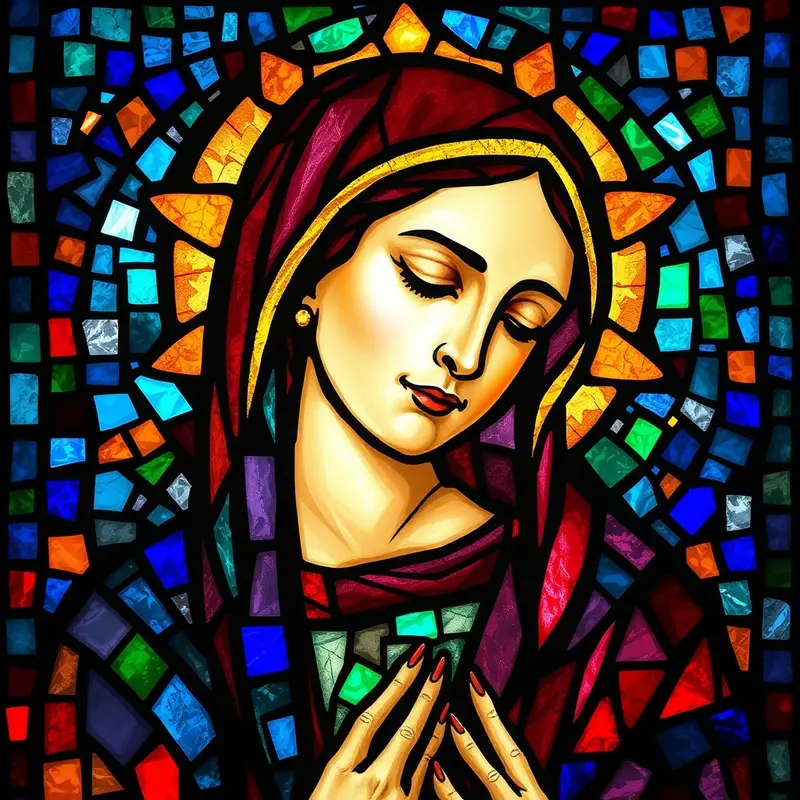
Biography
Mary, the mother of Jesus, holds a unique and exalted place in Scripture as the woman chosen by God to bear the incarnate Son. A young Jewish woman from Nazareth betrothed to Joseph, she received the angelic announcement that she would conceive by the Holy Spirit and bear a son named Jesus (Luke 1:26-38). Her response, "Let it be to me according to your word," stands as one of history's supreme acts of faith and submission. Mary traveled to visit her relative Elizabeth, where she sang the Magnificat, a prophetic hymn celebrating God's faithfulness to His promises (Luke 1:46-55). She endured the scandal of an unexplained pregnancy, gave birth in Bethlehem, fled to Egypt, and raised Jesus in Nazareth. She stood at the cross (John 19:25) and was present with the disciples at Pentecost (Acts 1:14).
Significance
Mary's significance in redemptive history is unparalleled among women of Scripture. She is the fulfillment of Isaiah's prophecy that a virgin would conceive (Isa. 7:14; Matt. 1:22-23), making her the human vessel through whom the eternal Word became flesh. Her Magnificat reveals her deep knowledge of Israel's scriptures and her understanding that God's work through her was the culmination of His covenant promises to Abraham. Mary models radical faith: saying yes to God despite personal cost, social risk, and the sword that would pierce her own soul (Luke 2:35). Her presence at both the incarnation and the cross frames the entire earthly ministry of Christ, and her inclusion in the upper room at Pentecost places her within the founding community of the church.
Verse Appearances (7)
References
- Orr, J. (ed.) (1915) The International Standard Bible Encyclopedia. Chicago: Howard-Severance Company. [Public Domain]
- Tyndale House, Cambridge (n.d.) Translators Individualised Proper Names with all References (TIPNR). STEPBible. Available at: https://www.stepbible.org. [CC BY 4.0]
- Wikidata contributors (n.d.) Wikidata. Available at: https://www.wikidata.org. [CC0]
- Church of England (1769) The Holy Bible, Authorized (King James) Version. [Public Domain]
- Raymond E. Brown (1977) The Birth of the Messiah: A Commentary on the Infancy Narratives in the Gospels of Matthew and Luke.Comprehensive critical study of the Marian infancy narratives in their Jewish and early Christian contexts.
- Beverly Roberts Gaventa (1995) Mary: Glimpses of the Mother of Jesus.Exegetical study of all NT texts featuring Mary, emphasizing their theological rather than biographical character.
- Stephen J. Shoemaker (2002) Ancient Traditions of the Virgin Mary's Dormition and Assumption. doi:10.1093/0199250758.003.0003.Critical study of early Christian traditions about Mary's death and glorification using patristic sources.
- Mary F. Foskett (2002) A Virgin Conceived: Mary and Classical Representations of Virginity.Compares Lukan portrayal of Mary's virginity with Greco-Roman literary and religious parallels.