
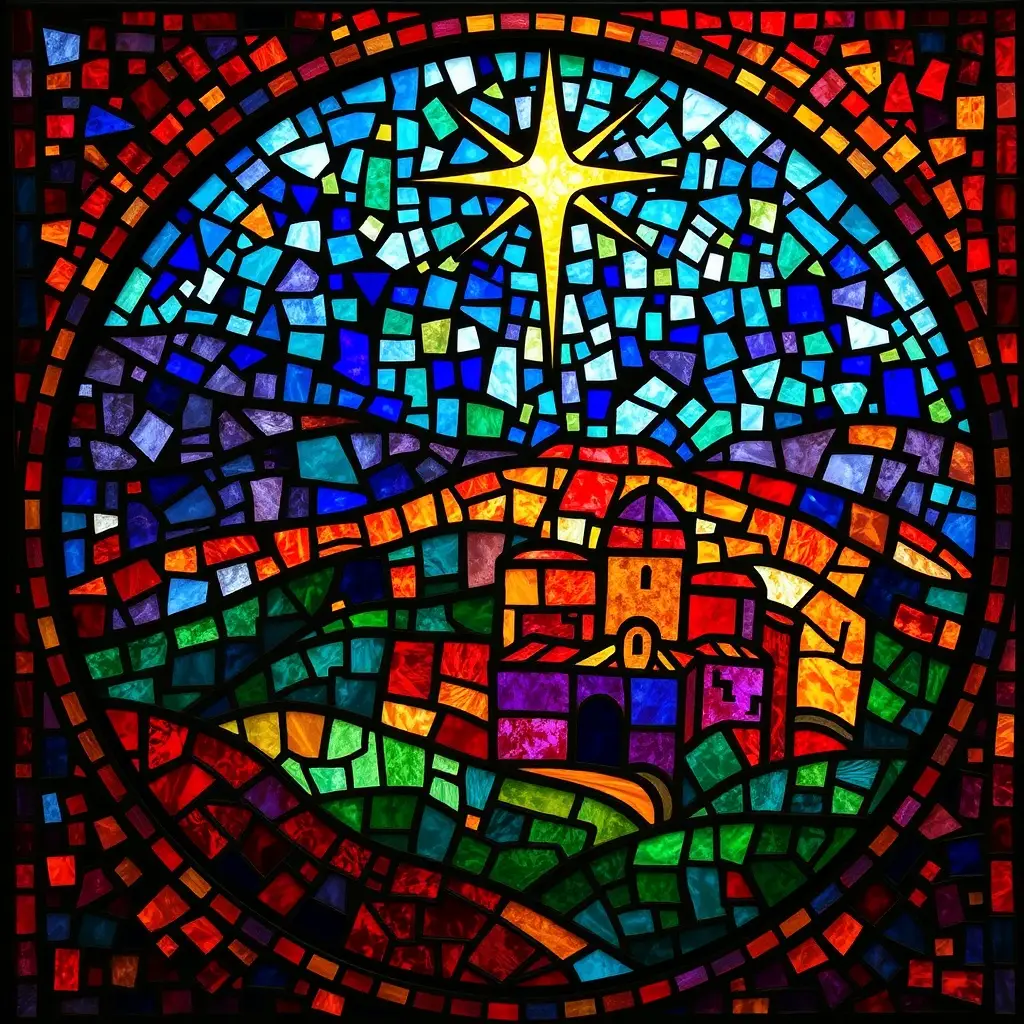
Bethlehem
Bethlehem is an ancient city mentioned in both the Old and New Testaments, located in the region of Judea in modern-day Israel. It appears across 52 verses in Scripture.
Biblical History
Bethlehem of Judea, meaning "house of bread" in Hebrew, is among the most theologically laden place names in all of Scripture. Its story begins with grief: Rachel died and was buried near Bethlehem while giving birth to Benjamin (Genesis 35:19). The book of Ruth unfolds entirely in and around Bethlehem, where the Moabite Ruth accompanied her mother-in-law Naomi home and was redeemed by the kinsman Boaz, a narrative that culminates in the ancestral lineage of David (Ruth 4:17-22). David himself was born and anointed in Bethlehem; Samuel came there secretly at God's command to anoint the youngest son of Jesse as the future king of Israel (1 Samuel 16:1-13). Centuries later, the prophet Micah declared: "But you, Bethlehem Ephrathah, though you are small among the clans of Judah, out of you will come for me one who will be ruler over Israel" (Micah 5:2). That prophecy found its fulfillment when Mary and Joseph, traveling to register in the census, arrived in Bethlehem and Jesus was born there (Luke 2:1-7; Matthew 2:1). The arrival of the Magi, Herod's massacre of the innocents, and the subsequent flight to Egypt all radiate outward from Bethlehem as the birthplace of the Son of God. In Christian theology, Bethlehem stands at the center of the Incarnation narrative.
Archaeological & Historical Notes
Modern Bethlehem, in the West Bank approximately 8 kilometers south of Jerusalem, has been continuously inhabited since the Middle Bronze Age. The Church of the Nativity, built over a traditional cave birthplace by Emperor Constantine in the fourth century AD and extensively renovated by Justinian in the sixth century, is among the oldest continuously operating churches in the world. Archaeological work beneath and around the church has confirmed ancient cisterns and cave structures consistent with the region's use in the Roman period. Herodian and Roman-era remains in the area, including pottery, coins, and architectural fragments, attest to the town's vitality in the first century. Bethlehem is recognized by UNESCO as a World Heritage Site (2012).
Verse Appearances (52)
2Chr
Ezra
Neh
Jer
Mic
References
- Orr, J. (ed.) (1915) The International Standard Bible Encyclopedia. Chicago: Howard-Severance Company. [Public Domain]
- OpenBible.info (n.d.) Bible Geocoding. Available at: https://www.openbible.info/geo/. [CC BY 4.0]
- Bagnall, R. et al. (eds.) (n.d.) Pleiades: A Gazetteer of Past Places. Available at: https://pleiades.stoa.org. [CC BY 3.0]
- Wikidata contributors (n.d.) Wikidata. Available at: https://www.wikidata.org. [CC0]
- Lawrence, D. et al. (2025) Villages to Empires: a settlement dataset for the Southern Levant. doi:10.5281/zenodo.15111732. [CC BY 4.0]
- Church of England (1769) The Holy Bible, Authorized (King James) Version. [Public Domain]