
Paul
Paul, also known as Saul, the apostle to the Gentiles and author of many New Testament epistles.
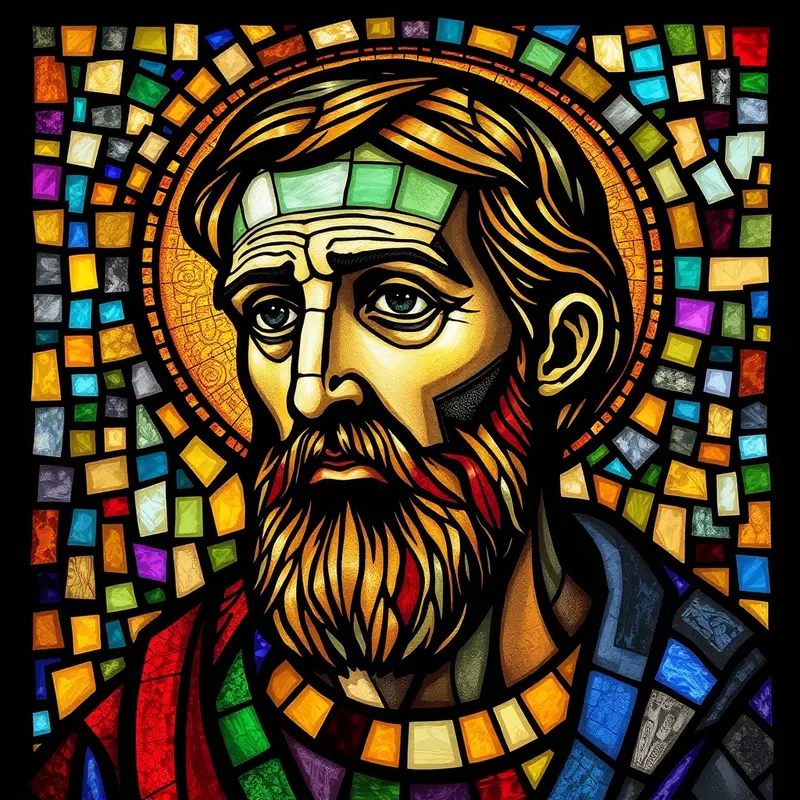
Biography
Born as Saul in Tarsus of Cilicia, Paul was a Pharisee of the tribe of Benjamin, educated under Gamaliel in Jerusalem, and initially a zealous persecutor of the early church. His dramatic encounter with the risen Christ on the road to Damascus (Acts 9) transformed him into the most influential missionary in Christian history. Commissioned as the apostle to the Gentiles, Paul undertook multiple missionary journeys across Asia Minor, Greece, and the Mediterranean world, establishing churches in cities such as Corinth, Ephesus, Philippi, and Thessalonica. He authored at least thirteen New Testament epistles that form the theological foundation for Christian doctrine on justification by faith, the body of Christ, and the work of the Holy Spirit. Ultimately imprisoned in Rome, tradition holds he was martyred under Emperor Nero around AD 64-67.
Significance
Paul stands as arguably the most transformative figure in church history after Jesus Christ Himself. His theological articulation of salvation by grace through faith (Ephesians 2:8-9), the relationship between Law and Gospel (Romans and Galatians), and the unity of Jew and Gentile in Christ (Ephesians 2-3) permanently shaped Christian theology. His life demonstrates God's sovereign power to redeem even the most hostile opponent of the Gospel, from holding the cloaks of those who stoned Stephen to becoming the chief architect of Gentile Christianity. Paul's missionary strategy of planting urban churches that could evangelize surrounding regions established a model followed for centuries. His letters, addressing everything from ecclesiology to eschatology, remain the most extensively studied texts in the New Testament canon.
Verse Appearances (182)
Acts
Romans
Galatians
Ephesians
Phil
1Thess
2Thess
1Tim
Titus
2Pet
References
- Orr, J. (ed.) (1915) The International Standard Bible Encyclopedia. Chicago: Howard-Severance Company. [Public Domain]
- Tyndale House, Cambridge (n.d.) Translators Individualised Proper Names with all References (TIPNR). STEPBible. Available at: https://www.stepbible.org. [CC BY 4.0]
- Wikidata contributors (n.d.) Wikidata. Available at: https://www.wikidata.org. [CC0]
- Church of England (1769) The Holy Bible, Authorized (King James) Version. [Public Domain]
- E. P. Sanders (1977) Paul and Palestinian Judaism: A Comparison of Patterns of Religion. doi:10.1111/j.1748-0922.1978.tb00009.x.Foundational work of the New Perspective on Paul; reframes Paul's relationship to Second Temple Judaism.
- James D. G. Dunn (1998) The Theology of Paul the Apostle.Comprehensive systematic treatment of Pauline theology from a New Perspective standpoint.
- N. T. Wright (2013) Paul and the Faithfulness of God.Magisterial study placing Paul's thought within Jewish covenantal theology and imperial context.
- Victor Paul Furnish (1984) II Corinthians. Anchor Bible, vol. 32A.Major critical commentary illuminating Paul's apostolic self-understanding and rhetorical strategy.
- Wayne A. Meeks (1983) The First Urban Christians: The Social World of the Apostle Paul. doi:10.2307/4349549.Sociological analysis of Pauline communities; essential for understanding Paul's missionary context.