
Pharaoh
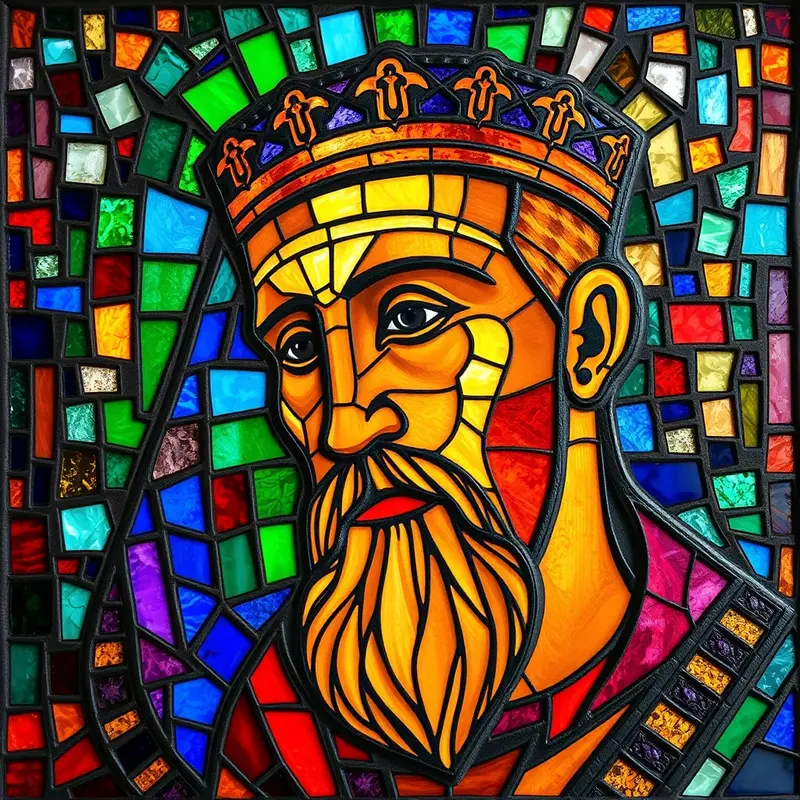
Pharaoh, the Egyptian ruler who elevated Joseph to a position of authority and welcomed his family to Egypt during a severe famine.
Biography
This Pharaoh, who ruled during the patriarchal period, played a decisive role in the preservation of both Joseph's family and the entire ancient Near East during a catastrophic seven-year famine. After interpreting Pharaoh's prophetic dreams of seven fat and seven lean cows (Genesis 41), Joseph was elevated from prisoner to second-in-command over all Egypt. Pharaoh gave Joseph his signet ring, dressed him in fine linen, and bestowed upon him the Egyptian name Zaphenath-Paneah along with Asenath as his wife (Genesis 41:42-45). When Joseph's family later arrived seeking grain, Pharaoh graciously welcomed Jacob's entire clan, offering them the choice land of Goshen and instructing Joseph to bring his family without concern for their possessions, declaring that "the best of all the land of Egypt" was theirs (Genesis 45:18-20). Acts 7:13 references this episode in Stephen's speech.
Significance
This Pharaoh stands as one of Scripture's most striking examples of a pagan ruler serving as an instrument of divine providence. His receptivity to Joseph's God-given wisdom and his extraordinary generosity toward a foreign family demonstrate that God's sovereign purposes operate through all nations and rulers. Theologically, this Pharaoh's actions fulfilled God's earlier promise to Abraham that his descendants would sojourn in a foreign land (Genesis 15:13). By welcoming Israel into Egypt, he unknowingly set the stage for the nation's formation, the Exodus, and ultimately the entire redemptive narrative. His role illustrates the principle that God orchestrates geopolitical events to preserve the covenant community through whom salvation would come to all peoples.
Verse Appearances (70)
Genesis
References
- Orr, J. (ed.) (1915) The International Standard Bible Encyclopedia. Chicago: Howard-Severance Company. [Public Domain]
- Tyndale House, Cambridge (n.d.) Translators Individualised Proper Names with all References (TIPNR). STEPBible. Available at: https://www.stepbible.org. [CC BY 4.0]
- Wikidata contributors (n.d.) Wikidata. Available at: https://www.wikidata.org. [CC0]
- Church of England (1769) The Holy Bible, Authorized (King James) Version. [Public Domain]