
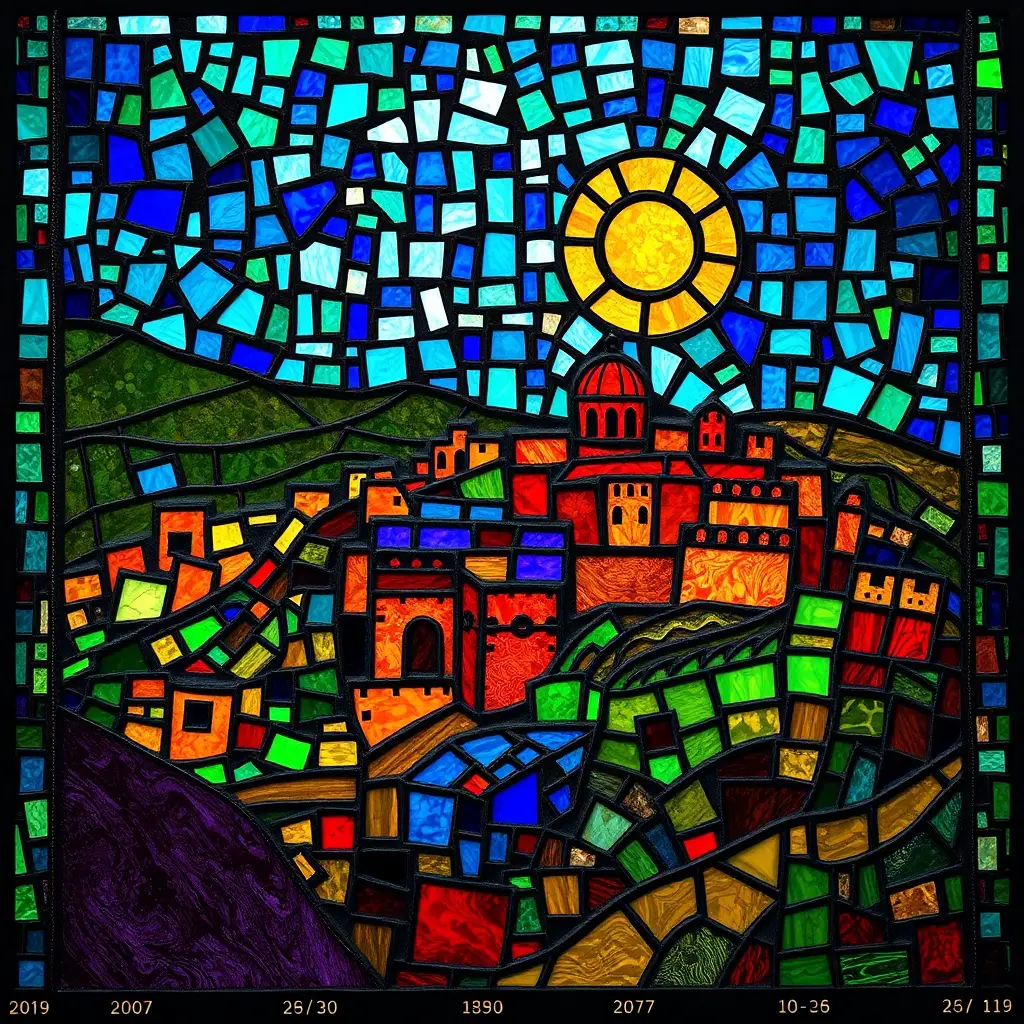
Gilead
Gilead is an ancient city mentioned in the Old Testament, located in the region of Transjordan in modern-day Israel. Known today as Tell edh Dhahab esh Sherqiyeh. It appears across 1 verse in Scripture.
Biblical History
This Gilead appears as a city reference, likely corresponding to the town mentioned in Hosea 6:8: 'Gilead is a city of evildoers, tracked with blood', or to the settlement at Tell edh-Dhahab esh-Sherqiyeh in the Transjordanian highlands. The city of Gilead, distinct from the larger region bearing the same name, occupied the hill country east of the Jordan River in what is today northern Jordan. The Transjordanian highlands were associated with the tribes of Gad, Reuben, and the half-tribe of Manasseh from the time of the initial settlement (Numbers 32). The prophet Hosea's indictment of Gilead as a 'city of evildoers' reflects the moral corruption that characterized the northern kingdom during its final decades before the Assyrian conquest of 722 BC. The city likely served as a regional administrative and cultic center in the highlands, and its condemnation by Hosea alongside other sinful places underscores the widespread apostasy that the prophet believed would bring divine judgment upon Israel. The name Gilead itself derives from a Hebrew root possibly meaning 'rocky region' or 'witness heap,' recalling the covenant monument erected by Jacob and Laban (Genesis 31:47–48).
Archaeological & Historical Notes
The city of Gilead is associated with Tell edh-Dhahab esh-Sherqiyeh (the eastern 'golden hill') in the Zarqa River valley of northern Jordan, though identification is not universally agreed upon. Archaeological surveys of the Zarqa triangle have documented Bronze and Iron Age occupation across several tels in the region. The site has not been subjected to systematic large-scale excavation. The broader Gilead region has been explored through Jordan's Department of Antiquities surveys, which have confirmed dense Iron Age settlement consistent with the tribal territories of Gad and Manasseh. Inscriptional confirmation of the city name from local excavations has yet to be recovered.
Verse Appearances (1)
Hos
References
- Orr, J. (ed.) (1915) The International Standard Bible Encyclopedia. Chicago: Howard-Severance Company. [Public Domain]
- OpenBible.info (n.d.) Bible Geocoding. Available at: https://www.openbible.info/geo/. [CC BY 4.0]
- Bagnall, R. et al. (eds.) (n.d.) Pleiades: A Gazetteer of Past Places. Available at: https://pleiades.stoa.org. [CC BY 3.0]
- Wikidata contributors (n.d.) Wikidata. Available at: https://www.wikidata.org. [CC0]
- Lawrence, D. et al. (2025) Villages to Empires: a settlement dataset for the Southern Levant. doi:10.5281/zenodo.15111732. [CC BY 4.0]
- Church of England (1769) The Holy Bible, Authorized (King James) Version. [Public Domain]