
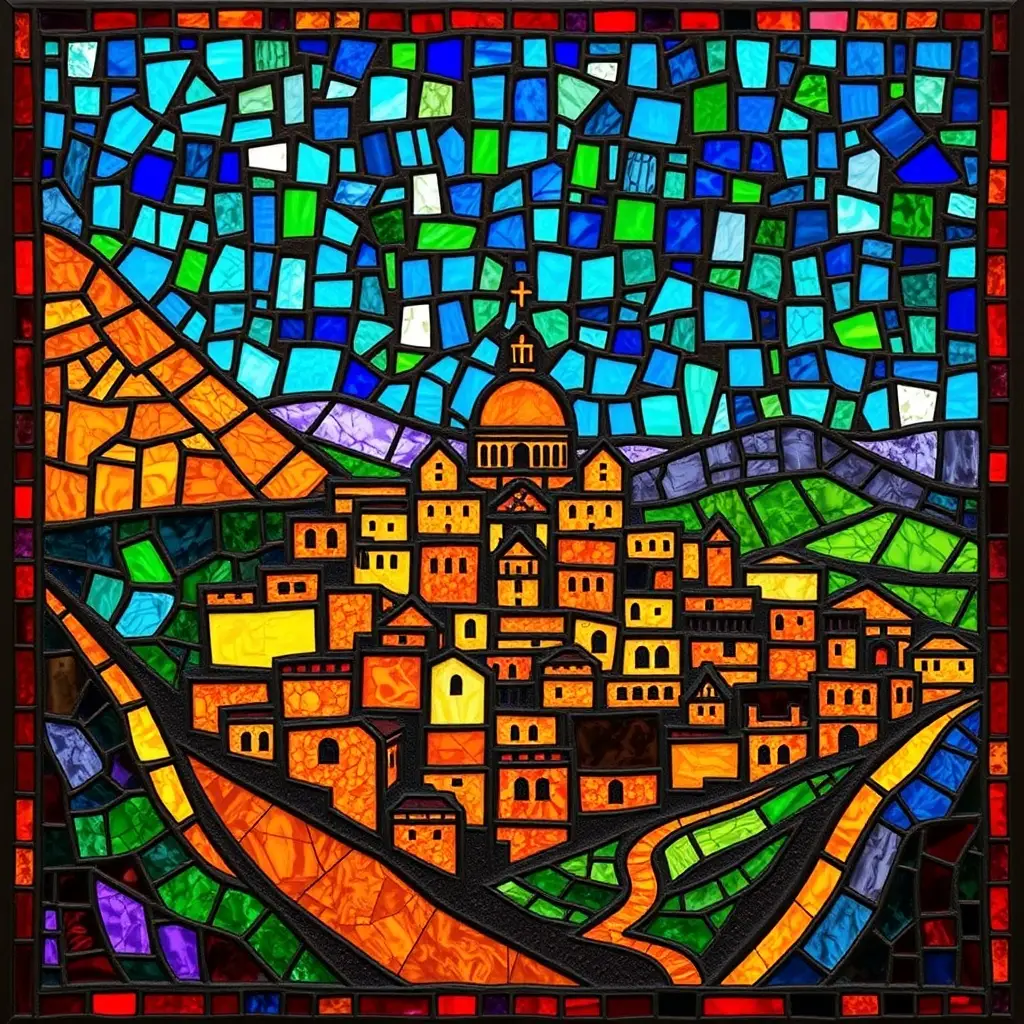
Samaria
Samaria is an ancient city mentioned in the Old Testament, located in the region of Samaria in modern-day Israel. It appears across 113 verses in Scripture.
Biblical History
Samaria, the city, was founded by King Omri of Israel around 880 BC as his new capital, purchased from Shemer for two talents of silver (1 Kings 16:24). Under Omri and his son Ahab, the city became a center of Baal worship, with Ahab constructing a temple to Baal at Jezebel's instigation (1 Kings 16:32). The prophets Elijah and Elisha conducted significant ministries in and around Samaria, including Elisha's role during the Aramean siege when miraculous deliverance came through divine intervention (2 Kings 6:24-7:20). The city witnessed the dramatic downfall of Ahab's dynasty through Jehu's revolution (2 Kings 10). Multiple Aramean sieges tested the city's defenses throughout the ninth century BC. The prophets Amos and Hosea pronounced severe judgment against Samaria's corruption, luxury, and idolatry (Amos 3:9-12; 4:1; Hosea 7-8). Their warnings were fulfilled in 722 BC when the Assyrians under Shalmaneser V and Sargon II captured Samaria after a three-year siege, deporting its inhabitants and ending the northern kingdom of Israel (2 Kings 17:1-6).
Archaeological & Historical Notes
The ancient city of Samaria is located at Sebastia (Sebaste), a prominent hill northwest of Nablus in the West Bank. Major excavations by Harvard University (1908-1910) and a joint British-American-Hebrew University expedition (1931-1935) uncovered impressive remains including the royal acropolis with Omri and Ahab's palace complex, featuring finely dressed ashlar masonry. The famous Samaria Ivories, exquisite carved ivory inlays from the palace, likely correspond to Ahab's "ivory house" mentioned in 1 Kings 22:39. Over sixty inscribed ostraca (pottery fragments) from the eighth century BC document administrative records. Herod the Great later rebuilt the city as Sebaste, adding a massive temple to Augustus, a colonnaded street, and a stadium. The site is now an archaeological park surrounded by the Palestinian village of Sebastia.
Verse Appearances (113)
1Kgs
2Kgs
References
- Orr, J. (ed.) (1915) The International Standard Bible Encyclopedia. Chicago: Howard-Severance Company. [Public Domain]
- OpenBible.info (n.d.) Bible Geocoding. Available at: https://www.openbible.info/geo/. [CC BY 4.0]
- Bagnall, R. et al. (eds.) (n.d.) Pleiades: A Gazetteer of Past Places. Available at: https://pleiades.stoa.org. [CC BY 3.0]
- Wikidata contributors (n.d.) Wikidata. Available at: https://www.wikidata.org. [CC0]
- Lawrence, D. et al. (2025) Villages to Empires: a settlement dataset for the Southern Levant. doi:10.5281/zenodo.15111732. [CC BY 4.0]
- Church of England (1769) The Holy Bible, Authorized (King James) Version. [Public Domain]