
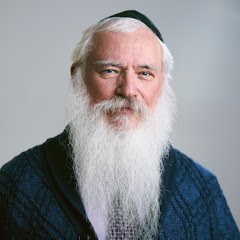
Rabbi Manis Friedman
Chassidic rabbi - Torah commentary, Jewish philosophy, and Kabbalistic insights
About Rabbi Manis Friedman
Rabbi Menachem Manis HaKohen Friedman is one of the most widely watched Jewish educators on YouTube and a prominent figure in contemporary Chassidic philosophy and outreach. Born on February 14, 1946, in Prague, Czechoslovakia, into a Hasidic Ashkenazi Jewish family of priestly (Kohen) lineage, he emigrated with his family to the United States in 1950. He received rabbinic ordination at the Rabbinical College of Canada in 1969, and his subsequent career has been shaped by his deep commitment to the teachings of the Lubavitcher Rebbe, Rabbi Menachem Mendel Schneerson, the seventh Rebbe of Chabad-Lubavitch.
In 1971, inspired by the Rebbe, Friedman co-founded the Bais Chana Women International, an institute for Jewish studies in Minnesota that has provided transformative Jewish education to thousands of women, many of whom had little or no prior formal Jewish background. Bais Chana became a model for outreach-oriented Jewish education, combining academic rigor with personal warmth and the mystical insights of Chassidic thought. Friedman serves as its dean and has been the primary intellectual and spiritual voice of the institution for more than five decades.
The YouTube Channel
The Rabbi Manis Friedman YouTube channel, operating at @manisfriedman, has attracted over 450,000 subscribers and features more than 575 videos spanning a wide range of topics in Jewish philosophy, ethics, spirituality, relationships, and contemporary life. The channel has been recognized as among the most popular rabbinic presences on YouTube, a distinction reflecting both the appeal of Friedman's distinctive teaching style and the breadth of his subject matter. His videos are often relatively short, ranging from a few minutes to thirty or forty minutes, making them accessible as standalone reflections rather than requiring viewers to commit to extended lecture series.
A characteristic feature of the channel is Friedman's willingness to engage with questions that other teachers might avoid, including questions about suffering and divine justice, about the nature of intimacy and relationships from a Jewish perspective, about the relationship between Torah and secular culture, and about what it means to be Jewish in a post-Holocaust world. He approaches these questions with a combination of intellectual rigor, emotional directness, and a dry, self-deprecating humor that has made him beloved by audiences far beyond the traditionally observant Jewish community.
Theological Position and Chassidic Philosophy
Friedman teaches squarely within the Chabad-Lubavitch tradition, one of the major branches of Hasidic Judaism founded by Rabbi Schneur Zalman of Liadi in the late eighteenth century. The Chabad tradition is distinguished by its emphasis on intellectual engagement with mystical texts, particularly the Tanya and the Zohar, alongside the Torah and Talmud. Unlike some Hasidic traditions that emphasize emotional intensity and ecstatic prayer as the primary vehicles of spiritual life, Chabad has historically prized the integration of intellect (sekhel) with emotion (middot), seeing the path to God as running through the rigorous engagement of the mind as well as the heart.
Friedman's teaching reflects this tradition deeply. He approaches classic Jewish texts, including the Torah, the Talmud, Kabbalistic literature, and the writings of the Lubavitcher Rebbe, as living documents that speak directly to the experiences and questions of contemporary life. His interpretations are often surprising and counterintuitive, deliberately subverting what he sees as the superficial or sentimentalized readings that have domesticated Jewish wisdom for contemporary ears. He is especially known for his teachings on love, marriage, and relationships, which draw on Kabbalistic understandings of masculine and feminine principles and on the concept of the Divine image in human beings.
Torah Commentary and Parshah Teaching
A significant portion of the channel's content consists of weekly Torah portion (parshah) teachings, in which Friedman explores the weekly reading from the Pentateuch as it is assigned in the traditional Jewish liturgical calendar. These teachings follow the Chabad tradition of finding in each parshah layers of meaning that range from the literal (peshat) through the allegorical and ethical to the mystical (sod). Friedman is particularly skilled at identifying the spiritual or philosophical question embedded in an apparently technical or narrative passage and then unfolding the Chassidic teaching that addresses that question.
His parshah teachings draw heavily on the commentaries of Rashi, Maimonides, and especially the Lubavitcher Rebbe's collected discourses, known as the Likkutei Sichos. The Rebbe's teaching is a constant reference point, and Friedman often presents himself as a transmitter of the Rebbe's wisdom to contemporary audiences rather than as an independent theological voice, though his own distinctive style and personality are always clearly present.
Engagement with Contemporary Questions
One of the features that has made the Rabbi Manis Friedman channel particularly distinctive is its engagement with questions that arise at the intersection of Jewish tradition and contemporary life. Friedman has addressed questions about relationships and intimacy, mental health and spiritual wellbeing, the nature of God's relationship to a world that includes the Holocaust, the meaning of Jewish identity in an era of widespread assimilation, and the relationship between Torah observance and personal fulfillment. He engages with these questions not as a polemicist defending traditional positions but as a genuine teacher trying to help people understand how Jewish wisdom addresses the deepest concerns of human experience.
His book Doesn't Anyone Blush Anymore? generated considerable discussion for its frank engagement with questions of relationships and modesty from a traditional Jewish perspective, and his teaching on marriage and intimacy has been widely shared beyond observant Jewish circles. Similarly, his reflections on suffering, on the meaning of negative experiences, and on the Chassidic understanding of divine providence have reached audiences far beyond those familiar with the Chabad tradition.
Interfaith Resonance and Broader Appeal
While Friedman teaches from within a specific and highly particular tradition, his channel has attracted substantial viewership from non-Jewish audiences, including Christians, Muslims, and people of no religious affiliation who find his approach to spiritual questions both challenging and illuminating. His emphasis on the positive, even joyful dimensions of Jewish religious life, his refusal to moralize or guilt his audience, and his genuine delight in the paradoxes and surprises of Chassidic wisdom give his teaching an appeal that transcends denominational boundaries.
For students of comparative religion and interreligious dialogue, the Rabbi Manis Friedman channel offers an unusually rich window into Chassidic Judaism as a living intellectual and spiritual tradition. The channel presents not a museum exhibit of historical Jewish practice but an active, engaged tradition that has developed sophisticated responses to modernity, suffering, and the enduring questions of human existence. It stands as one of the most important resources for anyone seeking to understand Jewish thought from the inside, in the voice of a master teacher whose audience spans the globe.
Audience and Study Context
The Rabbi Manis Friedman channel serves a diverse audience that includes observant Chabad Jews seeking deeper engagement with their tradition, Jews from other backgrounds exploring Jewish spirituality, converts and those considering conversion, and a substantial non-Jewish audience drawn by the universal resonance of his philosophical and ethical teaching. His conversational style, genuine humor, and willingness to address difficult questions directly make the channel accessible to viewers with no prior knowledge of Chassidic thought, while the depth of his engagement with classic Jewish sources rewards sustained study.
Most-Discussed Verses
Bible Books Covered
Notable Videos
Want to watch more from Rabbi Manis Friedman?
Visit Rabbi Manis Friedman on YouTube