
Baruch
Baruch, son of Neriah, served as Jeremiah's scribe and faithfully recorded and delivered his prophecies.
Biography
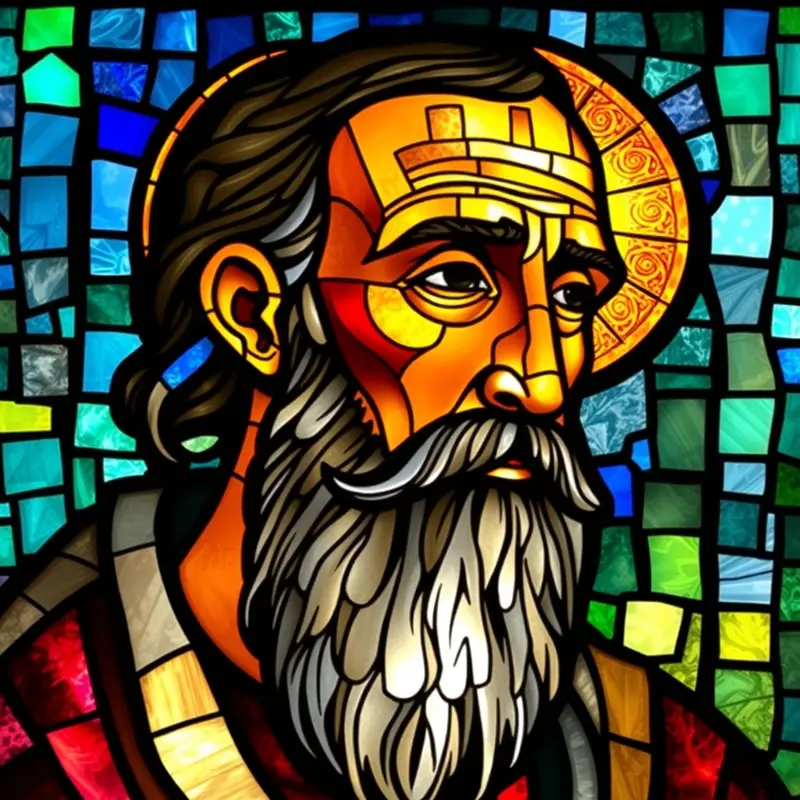
Baruch son of Neriah was the devoted scribe and closest companion of the prophet Jeremiah during one of Israel's most turbulent eras. He transcribed Jeremiah's dictated prophecies onto a scroll (Jeremiah 36:4) and publicly read them at the Temple and before the royal court, an act of considerable personal courage given the hostility of King Jehoiakim. When that scroll was burned, Baruch rewrote it with additions (Jeremiah 36:32). He also served as the legal witness for Jeremiah's symbolic purchase of a field at Anathoth, preserving the deed as a sign of future restoration (Jeremiah 32:12–16). After Jerusalem's fall he accompanied Jeremiah to Egypt. He received a personal divine message in Jeremiah 45 acknowledging his sorrow and promising him his life as a prize amidst catastrophe.
Significance
Baruch son of Neriah illustrates the vital ministry of those who preserve and transmit prophetic revelation. Without his faithful labor, much of Jeremiah's message, among the most theologically rich prophetic literature in the Old Testament, might have been lost. The personal oracle addressed to him in Jeremiah 45 is striking in its intimacy, revealing that God attends to the suffering of those who serve his messengers. Baruch's willingness to suffer public opposition alongside Jeremiah models the cost of aligning oneself with divine truth in a hostile culture. He is a prototype of the prophetic secretary whose scribal faithfulness ensures the Word of God endures across generations.
Verse Appearances (21)
References
- Orr, J. (ed.) (1915) The International Standard Bible Encyclopedia. Chicago: Howard-Severance Company. [Public Domain]
- Tyndale House, Cambridge (n.d.) Translators Individualised Proper Names with all References (TIPNR). STEPBible. Available at: https://www.stepbible.org. [CC BY 4.0]
- Wikidata contributors (n.d.) Wikidata. Available at: https://www.wikidata.org. [CC0]
- Church of England (1769) The Holy Bible, Authorized (King James) Version. [Public Domain]