
Maacah
Maacah, the daughter of King Talmai of Geshur, was one of David's wives and the mother of Absalom (2Sa.3.3; 1Ch.3.2).
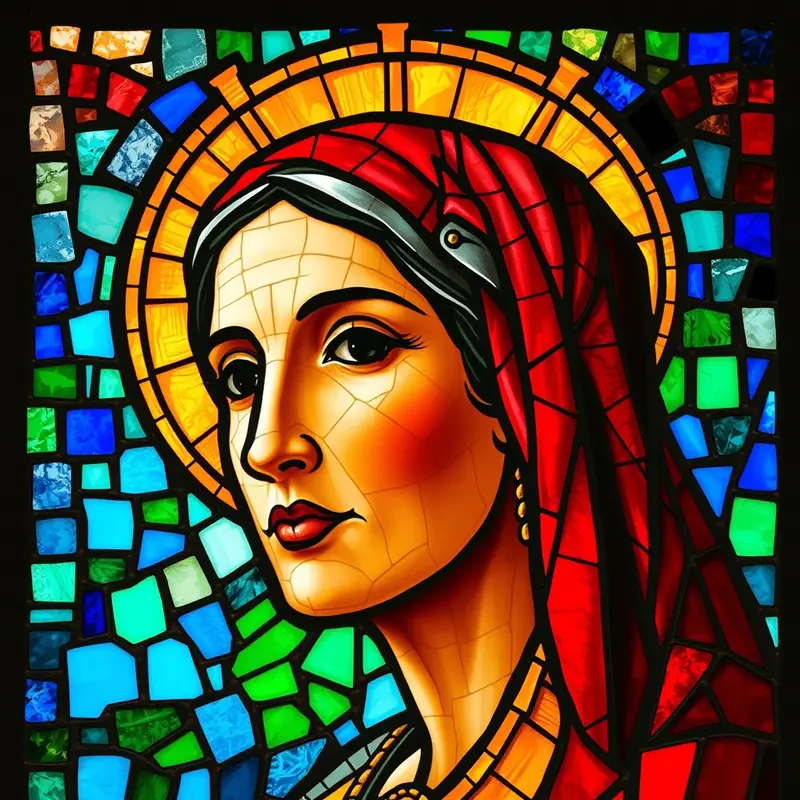
Biography
Maacah was a princess of Geshur, the daughter of King Talmai, who became one of David's wives during his reign in Hebron. Their union was likely a diplomatic marriage, securing an alliance between David and the Aramean kingdom of Geshur located northeast of the Sea of Galilee. Maacah bore David his third son, Absalom, and a daughter, Tamar (2 Samuel 3:3; 1 Chronicles 3:2). Both children would play dramatic roles in the narrative of David's household. Absalom, renowned for his beauty, would eventually lead a devastating rebellion against his father, while Tamar's assault by her half-brother Amnon became the catalyst for Absalom's vengeful rage. Maacah's foreign royal heritage may have contributed to Absalom's sense of princely entitlement and his later flight to Geshur after killing Amnon (2 Samuel 13:37-38).
Significance
Maacah occupies a pivotal position in the troubled narrative of David's household, as the mother of both Absalom and Tamar, two figures whose stories expose the painful consequences of sin within even divinely chosen families. Her Geshurite origins reflect David's practice of political marriages, a strategy that brought short-term diplomatic advantages but contributed to the complex family dynamics that ultimately fractured his kingdom. Absalom's rebellion, rooted partly in the grievances connected to Tamar, fulfilled Nathan's prophecy that the sword would never depart from David's house (2 Samuel 12:10). Through Maacah's story, Scripture honestly portrays the human cost of polygamy and political calculation, even among those whom God has anointed for leadership.
Verse Appearances (8)
References
- Orr, J. (ed.) (1915) The International Standard Bible Encyclopedia. Chicago: Howard-Severance Company. [Public Domain]
- Tyndale House, Cambridge (n.d.) Translators Individualised Proper Names with all References (TIPNR). STEPBible. Available at: https://www.stepbible.org. [CC BY 4.0]
- Wikidata contributors (n.d.) Wikidata. Available at: https://www.wikidata.org. [CC0]
- Church of England (1769) The Holy Bible, Authorized (King James) Version. [Public Domain]