
Saul
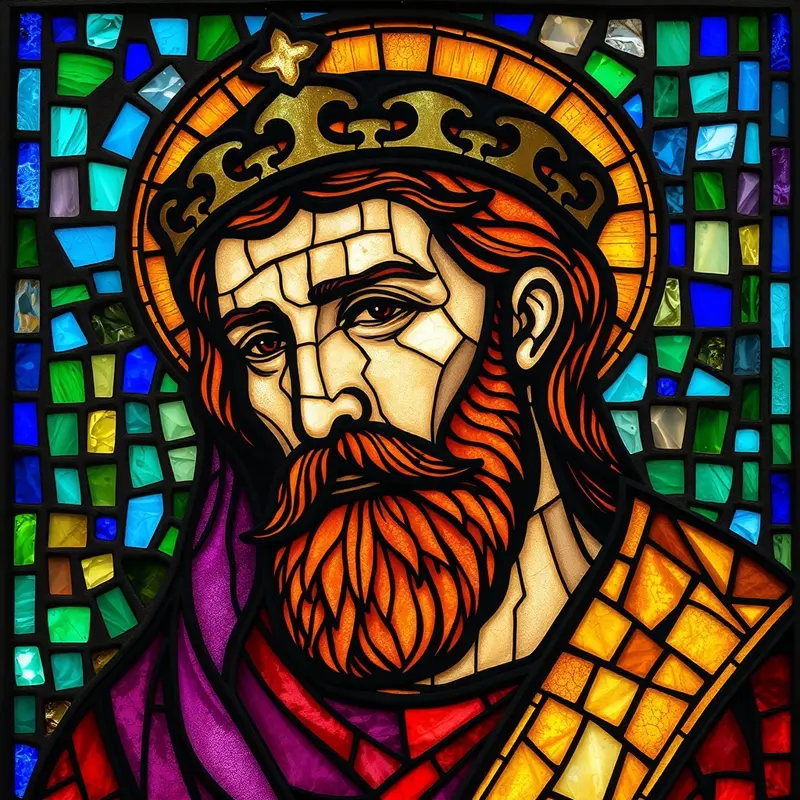
Saul was the first king of Israel, anointed by the prophet Samuel, who initially followed God but later disobeyed and was rejected as king.
Biography
Saul, son of Kish from the tribe of Benjamin, was anointed by the prophet Samuel as Israel's first king in response to the nation's demand for a monarch like the surrounding nations (1 Samuel 8–10). Tall, handsome, and initially humble, Saul showed early promise but repeatedly demonstrated a failure to trust and obey the LORD fully. His offering of an unauthorized sacrifice at Gilgal (1 Samuel 13) and his incomplete execution of God's judgment against Amalek (1 Samuel 15) resulted in Samuel's pronouncement that the kingdom would be taken from him. Thereafter Saul was tormented by an evil spirit, became consumed with jealousy toward David, and descended into increasing instability. He died at the battle of Mount Gilboa, falling on his own sword rather than be captured by the Philistines (1 Samuel 31). His reign lasted approximately forty years (Acts 13:21).
Significance
Saul's reign stands as a complex theological statement about the nature of true kingship and the cost of disobedience. His failure reveals that external qualifications, impressive stature, tribal heritage, popular approval, cannot substitute for wholehearted obedience to God. Samuel's famous rebuke, 'To obey is better than sacrifice' (1 Samuel 15:22), encapsulates the core failure of Saul's kingship and the standard against which all subsequent Israelite kings are measured. Saul's story also provides the negative foil against which David's kingship is defined, clarifying that God seeks a ruler 'after his own heart' (1 Samuel 13:14). In the New Testament, Paul drew on Saul's rejection to announce God's sovereign appointment of David (Acts 13:21–22), situating both kings within the unfolding plan of redemption.
Verse Appearances (327)
1Sam
2Sam
1Chr
Isaiah
Acts
References
- Orr, J. (ed.) (1915) The International Standard Bible Encyclopedia. Chicago: Howard-Severance Company. [Public Domain]
- Tyndale House, Cambridge (n.d.) Translators Individualised Proper Names with all References (TIPNR). STEPBible. Available at: https://www.stepbible.org. [CC BY 4.0]
- Wikidata contributors (n.d.) Wikidata. Available at: https://www.wikidata.org. [CC0]
- Church of England (1769) The Holy Bible, Authorized (King James) Version. [Public Domain]