
Beer
Beer is a location mentioned in the Old Testament, located in the region of Transjordan in modern-day Israel. Known today as Wadi eth Themed. It appears across 1 verse in Scripture.
Biblical History
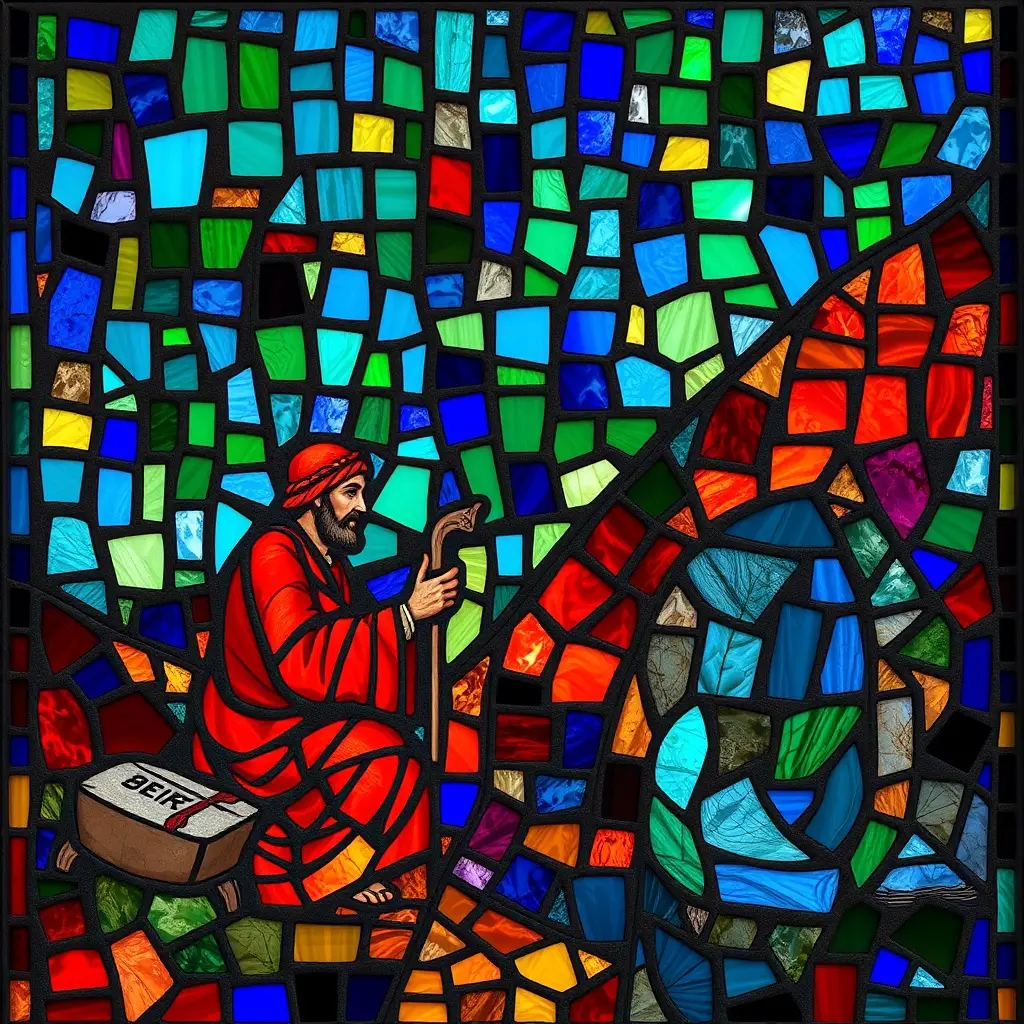
Beer, meaning 'well' in Hebrew, appears as a stopping point in Israel's wilderness journey through Transjordan, mentioned in Numbers 21:16-18. After their encampments at the Arnon and Mattanah, Israel arrived at Beer, a place the Lord designated as the source of water for the people. At Beer, God commanded Moses: 'Gather the people together and I will give them water.' In response, the leaders of Israel and the nobles dug the well with their staffs, and the people celebrated its discovery with a spontaneous song: 'Spring up, O well! Sing about it, about the well that the princes dug, that the nobles of the people sank, the nobles with scepters and staffs.' This brief but joyful episode stands in deliberate contrast to earlier episodes of water provision during the wilderness wandering, where Israel had complained bitterly and required miraculous divine intervention. At Beer, the tone is celebratory rather than murmuring, with the community actively participating in drawing out the gift God promised. The well at Beer thus represents a moment of faithful cooperation between God's provision and human effort in the journey toward the Promised Land.
Archaeological & Historical Notes
Beer of Numbers 21 is tentatively associated with the region of Wadi eth-Themed in Transjordan, though positive identification of this wilderness station has not been established through archaeological excavation. The name Beer simply means 'well,' and numerous sites across the Transjordanian steppe bore this generic designation in antiquity. Archaeological surveys of the Transjordanian plateau east of the Dead Sea and along the traditional route of the Israelite wilderness wandering have documented Bronze Age and Iron Age encampment sites. Water sources, whether springs, wells, or seasonal wadis, were critical determinants of settlement and movement in this semi-arid region, and the biblical geography of numbered wilderness stations reflects genuine knowledge of the regional hydrology and topography.
Verse Appearances (1)
Num
References
- Orr, J. (ed.) (1915) The International Standard Bible Encyclopedia. Chicago: Howard-Severance Company. [Public Domain]
- OpenBible.info (n.d.) Bible Geocoding. Available at: https://www.openbible.info/geo/. [CC BY 4.0]
- Bagnall, R. et al. (eds.) (n.d.) Pleiades: A Gazetteer of Past Places. Available at: https://pleiades.stoa.org. [CC BY 3.0]
- Wikidata contributors (n.d.) Wikidata. Available at: https://www.wikidata.org. [CC0]
- Lawrence, D. et al. (2025) Villages to Empires: a settlement dataset for the Southern Levant. doi:10.5281/zenodo.15111732. [CC BY 4.0]
- Church of England (1769) The Holy Bible, Authorized (King James) Version. [Public Domain]