
Massah
Massah is a location mentioned in the Old Testament, located in the region of Sinai in modern-day Egypt. Known today as Wadi Rufaiyil. It appears across 5 verses in Scripture.
Biblical History
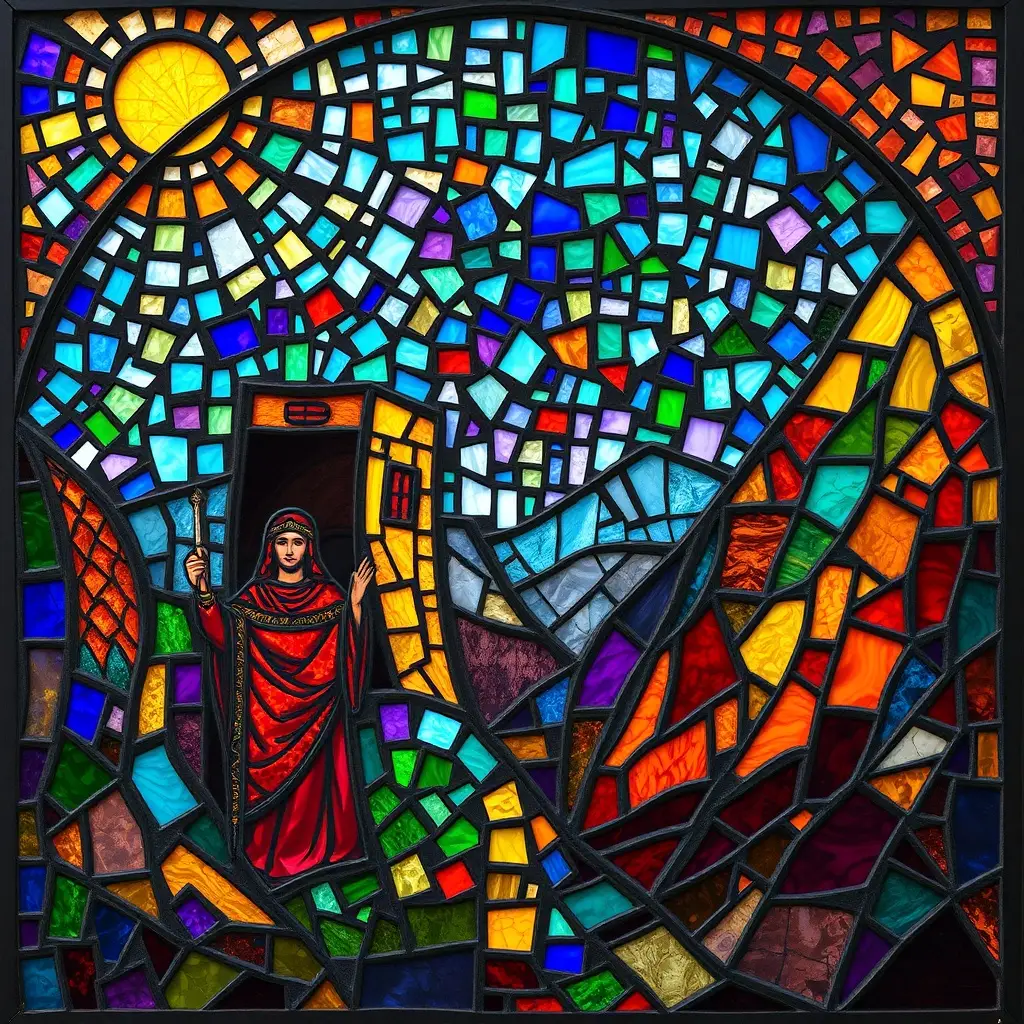
Massah, meaning "testing" or "trial," is the name given to the place at Rephidim where the Israelites quarreled with Moses and tested God during the wilderness wanderings. When the people thirsted and complained bitterly, Moses cried out to the Lord, who instructed him to strike the rock at Horeb with his staff. Water flowed forth, and Moses named the place Massah and Meribah, meaning "testing and quarreling" (Exodus 17:1-7). This event became a defining moment of Israel's unfaithfulness, referenced repeatedly as a warning against hardness of heart. In Deuteronomy 6:16, Moses commands Israel not to put the Lord to the test as they did at Massah. Deuteronomy 9:22 lists Massah among places where Israel provoked God. Deuteronomy 33:8 connects Massah with the testing of the Levites. Most powerfully, Psalm 95:8-9 pleads, "Do not harden your hearts, as at Meribah, as in the day of Massah in the wilderness." The author of Hebrews later applies this psalm as a warning to the early church (Hebrews 3:7-11).
Archaeological & Historical Notes
Massah is traditionally located near Rephidim in the Sinai Peninsula, with one proposed identification being Wadi Rufaiyil (also Wadi Refayid) near the traditional site of Mount Sinai at Jebel Musa. The exact location remains uncertain, as the wilderness itinerary sites are notoriously difficult to pinpoint. The region around Jebel Musa features granite formations with natural springs and water seepage points consistent with the biblical narrative. Saint Catherine's Monastery, built in the sixth century AD nearby, preserves traditions associated with several Exodus events. No archaeological evidence directly confirms the specific site of Massah, and the identification depends largely on which mountain one accepts as Mount Sinai.
Verse Appearances (5)
References
- Orr, J. (ed.) (1915) The International Standard Bible Encyclopedia. Chicago: Howard-Severance Company. [Public Domain]
- OpenBible.info (n.d.) Bible Geocoding. Available at: https://www.openbible.info/geo/. [CC BY 4.0]
- Bagnall, R. et al. (eds.) (n.d.) Pleiades: A Gazetteer of Past Places. Available at: https://pleiades.stoa.org. [CC BY 3.0]
- Wikidata contributors (n.d.) Wikidata. Available at: https://www.wikidata.org. [CC0]
- Lawrence, D. et al. (2025) Villages to Empires: a settlement dataset for the Southern Levant. doi:10.5281/zenodo.15111732. [CC BY 4.0]
- Church of England (1769) The Holy Bible, Authorized (King James) Version. [Public Domain]